



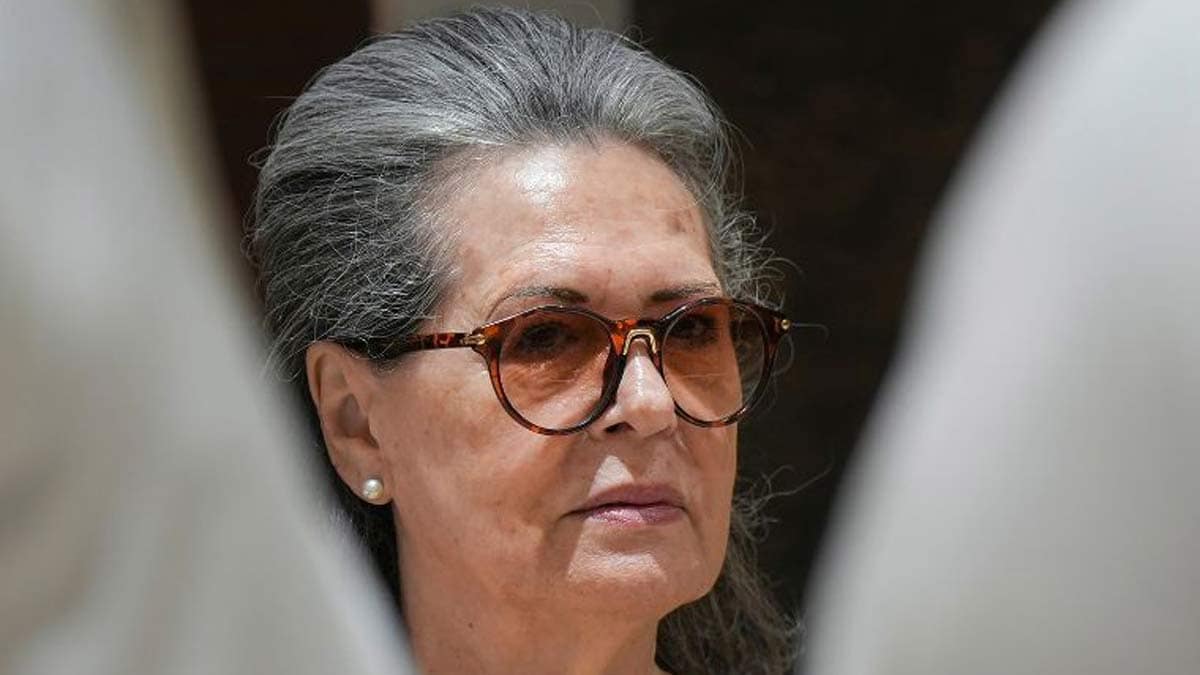
Amid a renewed debate over freedom of speech and the right to protest following the recent police crackdown on anti-government demonstrations in Delhi, Congress Parliamentary Party Chairperson Sonia Gandhi has shared her views on the Emergency.
In an interview with The Hindu, Gandhi acknowledged that democratic rights were curtailed during the Emergency but maintained that the restrictions were imposed constitutionally. She said Indira Gandhi, the then Prime Minister, was struggling to cope with rapidly deteriorating circumstances, including widespread organised unrest.
"It was only after the Emergency that I came to know the true gravity of what had been happening. Yes, democratic rights had been curtailed, and there was a suspension of habeas corpus, but it was done constitutionally," the former Congress president told the newspaper.
"Yet, when I take myself back to that period and try to see it from Mrs Gandhi's point of view, I see her struggling to cope with the rapidly deteriorating prevailing circumstances: violent protests, government offices and public transport set on fire, widespread organised unrest and even a call for the bureaucracy and armed forces to disobey orders," Gandhi said.
Gandhi's candid remarks on the Emergency assume significance as the period remains a key point of criticism for the BJP, which frequently invokes it in response to questions about free speech and human rights.
The Congress leader also noted that Indira Gandhi, her mother-in-law, had later publicly expressed regret and apologised for the excesses committed during the Emergency.
Gandhi also addressed questions about the contrasting views of her late husband, Rajiv Gandhi, and brother-in-law, Sanjay Gandhi, on the imposition of the Emergency. She said there had been considerable pressure on Indira Gandhi at the time.
"It was not only Sanjay, though in the public mind he is often seen as synonymous with the Emergency. There was a lot of pressure from some of her senior colleagues, and I think there were very few people around her like Rajiv who had a different point of view," she said.
"I think eventually my mother-in-law began to understand the situation through her own wisdom and took actions to remedy it," she added.
The interview comes ahead of the launch of Gandhi's book, Belonging: A Journey of Love, scheduled for November 10.
