



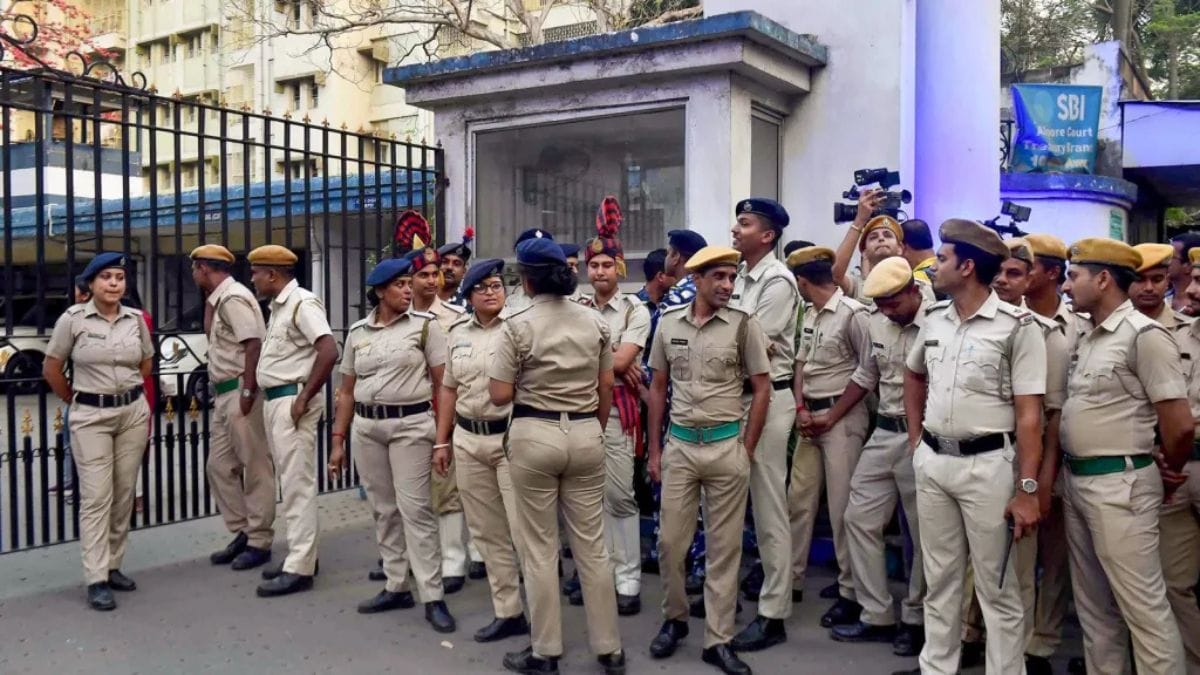
There have been three police encounters in West Bengal since July, after the BJP government came into power.
A human rights organisation, Association for Protection of Democratic Rights (APDR), went on a fact-finding mission and collated a report, which finds discrepancies in the police version versus what might have happened. The recent fact-finding report is on a case from Samsergunj in the Murshidabad district, in which Samsaul Sheikh, accused in BJP worker Sujit Mondol’s death, was shot dead in a police encounter on October 27.
The incident occurred during a crime reconstruction on the first floor of the Bhutu market near Dak Bunglow, where Sheikh rented a house with the co-accused, who is now in jail custody.
According to the report, the Criminal Investigation Department (CID), which took over the case from local Samsergunj Police on the day of the encounter, arrived in the district, and took the accused to the room around 4:00 PM.
According to the owner of the room, Mustafizur Rahman, the area was surrounded by central forces and police, and they heard no gunshots. An ambulance then took the body away. The APDR team spoke to the Inspector-in-charge at Samsergunj, Kunal Kanti Das, who said a local officer from the police station had not been present during the encounter.
The market’s CCTV footage since Mondol’s death was with the police and there were no cameras too at the spot since then. Hence, there is no evidence of the encounter. The APDR fact-finding team was not allowed to enter the crime scene, and were restricted to the foot of the stairs, which had a locked collapsible gate.
“The body was handed over to family members for cremation and raised questions over Sheikh being shot behind the ear and killed with one shot. The police knew where to shoot to kill a person. There were no signs of struggle as seen in an encounter,” said Ranjit Sur, Vice President, APDR.
In the report, it also mentions that the body of the BJP worker Mondol was not found—only a body part—alleging that Sheikh was framed in the murder case. Sheikh’s wife Rajeda Bibi says her husband was in jail for three months in a murder case 12 years ago, and not after their marriage. The wife wanted a job rather than to fight a case.
Rajeda Bibi said she met Sheikh in the Jangipur jail a day before his encounter and was told he would get bail, and hence believes her husband was framed in the encounter. The following day, the family was informed of the death at 11:30 PM at night. According to the report, the family also questions why the postmortem was conducted in Berhampore, which is 60km away, instead of Jangipur.
APDR has submitted a Memorandum of Understanding (MoU) with the Murshidabad District Magistrate (DM), asking for a departmental enquiry led by a sitting Calcutta High Court judge, into the custodial death.
The human rights organisation also asks for the immediate suspension of all CID officers involved and to initiate murder cases against them, a second postmortem report at a government-controlled hospital outside the state, compensation of ₹50 lakh for Sheikh’s wife, and the state to bear educational and medical expenses of the children until they are self-reliant.
“If there is no plausible action taken, we will approach the Calcutta High Court. There is also a case pending on the Baruipur encounter case and the state government’s response to our affidavit has passed the given date. We will see that encounters do not go unnoticed so that this state does not become like Uttar Pradesh,” added Sur.
The Baruipur encounter took place on July 8, where Prabhas Mondol, the main accused in the gang rape of a 12-year-old girl, was shot dead in a police encounter during a crime reconstruction scene. On October 27, 23-year-old Prahlad Das, the main accused in the rape and murder of a 17-year-old girl in Gaighata in the North 24 Parganas district, was killed in a police encounter on the same day as Sheikh. The ADPR is still collecting data from the Gaighata encounter.
