



Just as the Congress government in Karnataka found itself facing mounting criticism over successive increases in milk prices and public transport fares, it has found a new issue to take the political battle to the BJP-led Union government. This time, the target is petrol.
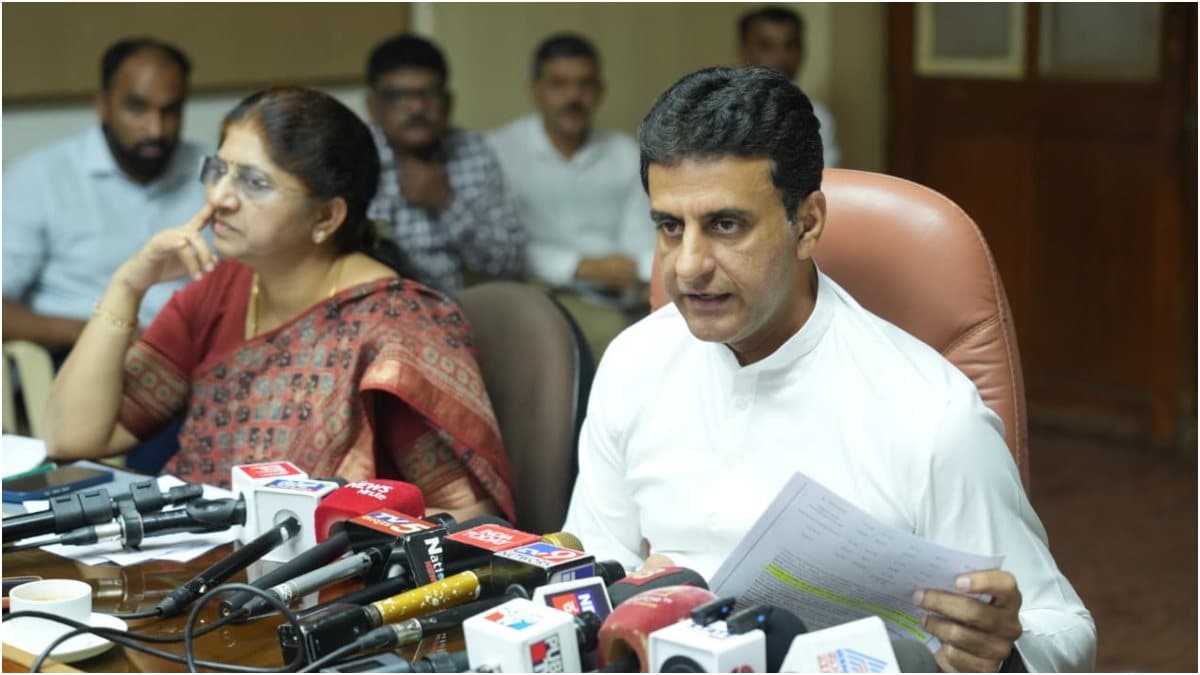
On Friday, Food and Civil Supplies Minister Rizwan Arshad announced that laboratory tests conducted on petrol samples collected across Karnataka had revealed ethanol content significantly higher than the prescribed 20 per cent blending level under the E20 programme. Some samples, he claimed, contained more than 30 per cent ethanol.
The announcement comes barely a day after the revised bus fares came into effect across Karnataka’s four state-run transport corporations. It also follows the November 1 increase in Nandini milk prices, which made basic toned milk costlier by ₹8 per litre, from ₹46 to ₹54.
The two successive price increases had handed the Opposition BJP and JD(S) an opportunity to attack the Congress government over the rising cost of living. Criticising the government, the Opposition alleged that its guarantee schemes had bankrupted the state government. Opposition parties had organised protests across the state, accusing the government of passing the financial burden of its welfare guarantees and administrative failures on to ordinary people. Arshad’s announcement has now shifted some of the political attention towards the Centre.
According to the minister, the state government collected 63 petrol samples from seven districts: Bengaluru, Kolar, Chikkaballapura, Bengaluru Rural, Ramanagara, Mangaluru and Tumakuru. The samples were subjected to laboratory examination after oil marketing companies allegedly failed to disclose ethanol content in their initial test reports.
The results released by the department showed that 11 of the 14 samples listed in its test-results table exceeded 20 per cent ethanol. An Indian Oil Corporation sample recorded 31.2 per cent, while an HPCL sample contained 30.5 per cent. Other samples from HPCL, BPCL, Nayara Energy and Shell recorded levels ranging between 22.6 and 27 per cent.
The tests were conducted by Bengaluru-based Shriram Research Institute, an NABL-accredited laboratory, using gas chromatography.
Arshad alleged that oil companies were withholding crucial information from consumers. He questioned how petrol sold under the E20 category could contain substantially higher proportions of ethanol.
“This is a criminal breach of trust by the Central government on the people,” he said, demanding accountability from oil marketing companies and the Union government.
The state has also sought an E20 compensation fund for motorists whose vehicles may have suffered damage, mandatory disclosure of ethanol content at petrol pumps and an option for consumers to choose different fuel blends.
The government estimates that reduced mileage and additional vehicle maintenance could impose an annual burden of nearly ₹1.01 lakh crore on consumers. However, this is the state’s estimate and has not been independently established.
The political significance of the announcement cannot be overlooked.
The Congress government has been struggling to defend its decision to increase milk prices and bus fares. The average increase in fares across KSRTC and other corporations is around 23 per cent, while BMTC fares have risen by 33 to 35 per cent. The government has justified the revision by citing mounting operational costs and accumulated losses.
By raising the ethanol issue, Congress has found an opportunity to shift public ire towards the BJP, diverting attention from its own price-hike decisions to the Centre’s fuel policy. It also gives the state government an opportunity to position itself as a defender of consumers against alleged irregularities by central public-sector oil companies.
Oil companies are yet to comment on the Karnataka government’s claims. However, the ethanol controversy has given Congress a fresh political counterattack.
Commenting on the issue, Chief Minister D K Shivakumar said the Union government cannot speak of the benefits of ethanol blending and energy security while turning a blind eye to violations of prescribed E20 norms. Excessive ethanol blending could impose an additional financial burden on ordinary consumers through reduced mileage, potential vehicle damage and higher maintenance costs. Consumers cannot be expected to bear these costs while oil companies continue to report substantial profits.
He demanded that the Centre publicly disclose the actual ethanol content in petrol, initiate strict legal action against companies violating blending limits, make petrol pump-level audit reports public, establish an E20 Damage Compensation Fund for affected vehicle owners and ensure mandatory disclosure of blending levels at fuel stations, with consumers having the choice of fuel suitable for their vehicles. He said the Karnataka government would continue inspections and stand firmly with consumers to ensure transparency, accountability and the right to quality fuel.
