



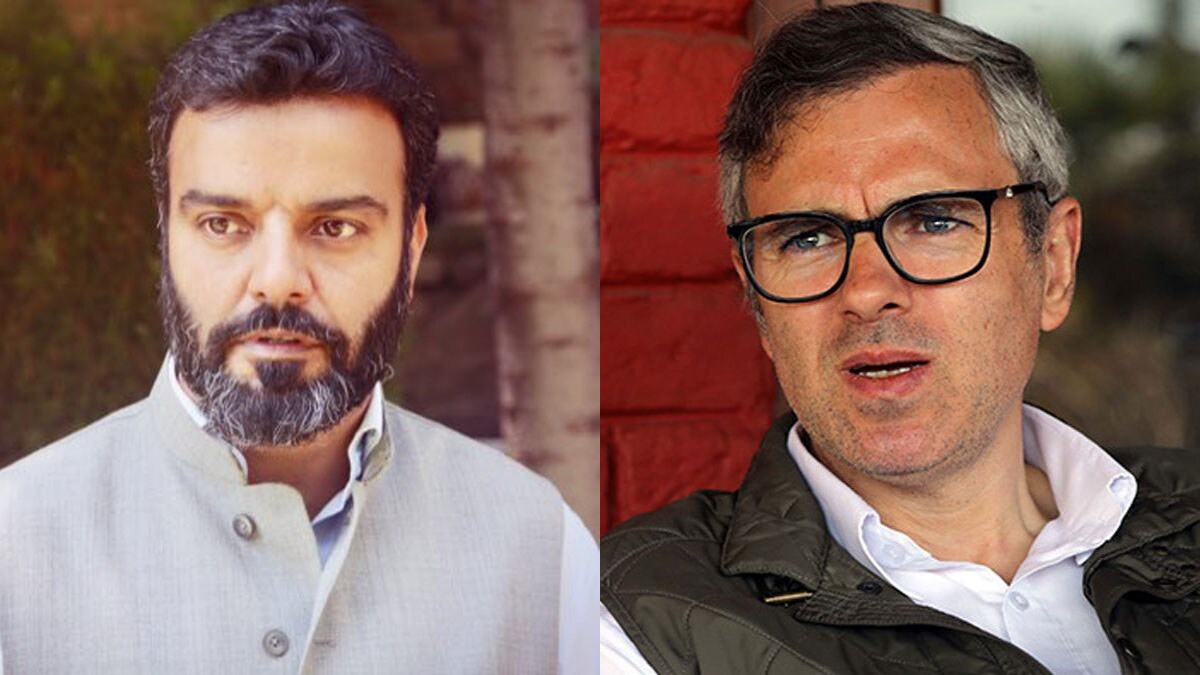
When Aga Syed Ruhullah Mexchdi resigned from the National Conference and tendered his resignation from the Srinagar Lok Sabha seat on November 3, two years after winning it in the 2024 general elections, he brought back memories of another politician who had represented the same constituency before him. Tariq Hamid Karra, who defeated Farooq Abdullah in the 2014 Lok Sabha elections, had also resigned from his party and Parliament in 2016, barely two years after his victory.
The similarity between the two goes beyond the timing of their resignations. Both leaders had emerged as dissenting voices within their respective parties before deciding to walk out.
In 2016, Karra, one of the founding members of the PDP, resigned from the party and Parliament in protest against the PDP-BJP alliance and the government's handling of the unrest in 2016. He was particularly critical of the political direction taken by his party under the alliance with the BJP.
Karra had been an influential figure in the PDP and had served as finance minister in the PDP-Congress government in the 2000s. Following Mufti's death in January 2016, the party's internal dynamics had also begun changing. Karra's differences with the leadership deepened as the PDP continued its alliance with the BJP, which he believed was compromising the party's political and ideological position in Kashmir.
Ten years later, Ruhullah has taken a similar route, although the circumstances are not entirely the same.
A three-time MLA from Budgam and a senior National Conference leader, Ruhullah had been increasingly vocal against his own party's leadership, particularly Chief Minister Omar Abdullah. His differences with the party became pronounced after the NC formed the government in October 2024.
He has repeatedly questioned the government's position on the restoration of Article 370, statehood, reservation and the political commitments made to voters during the Assembly elections. In his resignation, Ruhullah accused the NC leadership of failing to honour the public mandate and compromising on issues on which it had sought votes.
What is particularly striking is that both Karra and Ruhullah have questioned the political direction of their parties and their relationship with the BJP. While Karra opposed the PDP's formal alliance with the BJP, Ruhullah has accused the NC leadership of compromising on the political rights and interests of Jammu and Kashmir after coming to power.
There is, however, a difference in their political journeys after resignation. Karra joined the Congress in February 2017, a few months after leaving the PDP. He is now the president of the Congress's Jammu and Kashmir unit and has established a close working relationship with the party's central leadership.
Ruhullah, on the other hand, has indicated that he wants to build a political platform of his own. Addressing supporters in Budgam on November 3, he called for like-minded people, particularly the youth, to join a new political movement. He has not yet laid out a complete organisational structure for the proposed outfit.
One section of political observers believes that Ruhullah understands the political vacuum emerging in Kashmir. A considerable section of voters who supported the National Conference in the 2024 Assembly elections, partly out of concern that the BJP could gain ground, is now disillusioned with the government. By raising issues such as Article 370, statehood, reservation and the political rights of Kashmiris, Ruhullah could be attempting to consolidate this section of voters into a new political constituency.
However, the National Conference government also faces structural limitations. Jammu and Kashmir remains a Union Territory, and the elected government does not enjoy the full powers of a state government. Omar Abdullah has repeatedly demanded the restoration of statehood, which the Centre had promised after the reorganisation of Jammu and Kashmir in 2019. This has also constrained the government's ability to exercise authority over several important areas of administration.
Another section of political observers, however, believes that Ruhullah's exit could ultimately benefit the BJP. According to this interpretation, weakening the National Conference, the principal regional political force in the Valley, could create political space that the BJP would attempt to occupy. They point to the PDP's decline as an example of how the weakening of a regional party can alter Kashmir's political landscape.
"Ruhullah Mehdi is ambitious and interesting when he speaks. He also speaks about issues that Kashmiris want to hear. Therefore, he has been able to gather a considerable amount of support in the Valley and other Muslim-majority areas of the Union Territory," a senior Congress leader said.
The political challenge for Ruhullah, however, will be to convert this support into an organisational structure and an electoral base. Raising issues that resonate with people is one thing; building a political party capable of sustaining that support across constituencies is another.
For now, he has emerged as one of the most prominent dissenting voices against the ruling National Conference in Kashmir, even as the BJP remains the principal opposition party in the Assembly.
The Srinagar constituency has, therefore, witnessed an unusual political pattern. Two consecutive MPs, elected in 2014 and 2024, respectively, resigned from their parties and Parliament after roughly two years in office. Whether Ruhullah's next political move follows Karra's trajectory or takes Kashmir's politics in a different direction remains to be seen.