



What if some of the challenges confronting bureaucracy could be resolved not with another set of circulars, or directions, or rules, but, counter-intuitively, without any of them?
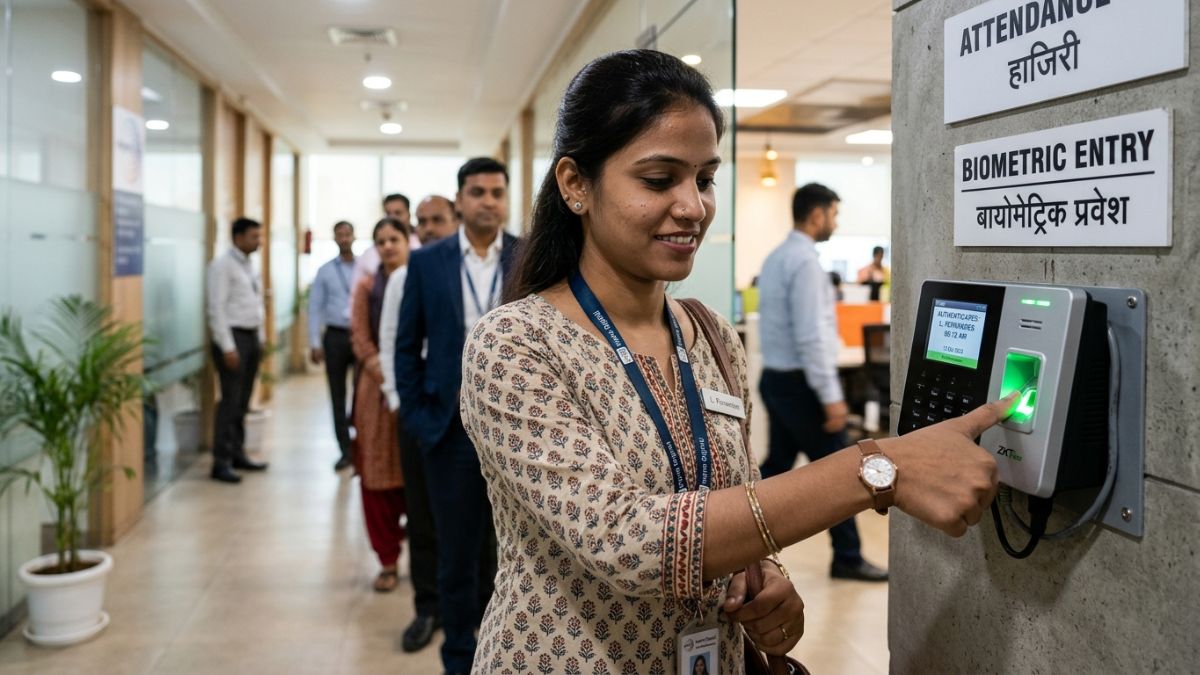
As seeing is believing, doing is knowing, and experimenting is revealing, here is a different type of intervention on punctuality that illustrates how a small change in approach can produce a significant change in staff behaviour. This intervention is a departure from the conventional approaches I observed in office after office, since joining service: first, circulars will be issued directing staff to reach office on time. As intended outcomes will generally not happen, then a set of reminders will be issued; these may include threat of disciplinary action. Yet absolute punctuality would remain a mirage. Even employment of technology, such as biometric machines will show results initially, but like the ‘elastic principle’, staff will, over passage of time, revert to their usual way of coming to office.
An old maxim says that if you keep doing what you have always done, you will keep getting the same results. The bureaucracy, in its wisdom, has improved upon this by doing what has always been done, but doing even harder. Yet what is really required is a set of different practices to get different results.
Therefore, I tried something different in my posting at Raipur in 2019. No circulars were issued with directions to staff to be punctual. Instead, a simple message was conveyed to the Staff Supervisor that every morning, the name of the staff who enters office last, after the opening time (9:30 am) would be intimated to me. And, crucially, a copy was endorsed to the entire staff. There was not a trace of any threat of punishment, or explanation for late arrival. Silence on these aspects proved to be the winner.
The next morning presented a picture that had never been witnessed before: all staff were in office before 9.30 am and it was the first occasion that “full staff strength” was a reality at the official opening hour. Till that day, the entire staff knew that the office opens at 9.30 am, but nobody believed it; on that day, everyone did.
Now, how did this happen and, more significantly, without extra cost, or squandering of resources, or expending energy at strict vigil? The answer is: the arrangement for punctuality was redesigned, shifting the question from who was late to who would be the last one identified for being late. The dynamic changed and no one wanted to be identified in this manner. A small change in the way information was made visible altered behaviour dramatically. Moreover, the old system required a policeman; the new one required only a little psychology. The old system produced obedience when someone was watching; the new one ensured punctuality even when nobody was watching. This was the quiet power of a gentle ‘nudge’ to staff.
My first brush with ‘nudge’ theory was through an article about how ‘nudges’ brought a remarkable change in university students’ eating habits in a cafeteria. Earlier exhortations to eat healthy food had few takers. Then an experiment was conducted: the layout of the cafeteria was redesigned. As students entered, the first tables they encountered had healthy food items: salads, green vegetables, fruits, and healthy carbohydrates. Unhealthy foods, especially fried foods, red meat were kept at the far end of the hall, or on less prominent shelves. Healthy foods were given more salient labelling. The outcome was striking: more students started taking healthy food not because someone instructed them but simply because the environment gently ‘nudged’ them towards better choices. I found this very impressive, as ‘nudge’ seemed to offer a compelling alternative in different contexts.
The idea of ‘nudge’ has deeper roots, arising from a more nuanced understanding of human behaviour; the intellectual foundations of the idea were shaped by the work of Daniel Kahneman, Richard Thaler and Cass Sunstein. Kahneman showed how people often rely on intuition and mental shortcuts rather than making perfectly rational choices; then, Thaler and Sunstein took these insights into the realm of economics and everyday decision-making, helping shape and popularise what is now known as the nudge.
Put forth simply, a small difference in context, indirect cue, manner of presenting choices, or slight change in environment can often move behaviour more than a long list of orders. This insight equally applies to bureaucracy: staff behaviour, too, can often be changed likewise.
Another insight from the punctuality experiment was that proper conceptualisation of a problem preconceives the solution; right concepts will lead to right practices and vice versa. The problem wasn't that bureaucracy lacked rules; it was that rules were being used to solve a behavioural problem which required a behavioural intervention.
In my next posting in Andhra Pradesh, I designed more ‘nudges’, and this time with a focus on emotion and identity. My first nudge was for an emotional connection, as this was my first posting in South India. Rudimentary Telugu was learnt, which was not enough to debate, but enough to greet, to thank, to say a few lines without an interpreter. I then addressed our 24,000-strong workforce through videos by speaking in Telugu, and coined a simple slogan, yet with profound significance for our Circle: “Make AP Circle Great”. (AP Circle ni Goppaga Nilabedadam; in Telugu). It resonated with our staff and they said it feels different when someone speaks to them in Telugu, even if haltingly.
From this perspective, a point was conveyed with conviction that all levels of staff were equal in stature because everyone’s contribution mattered in making “AP Circle Great”. This was different from the usual exercise where hierarchy often decided whose voice carried greater weight. The had a favourable impact by softening hierarchies and dissolving rigid channels, thereby motivating everyone to contribute.
A vexatious issue in office was ensuring timely completion of tasks. In previous cases, it was noticed that officers were quick to write “urgent” and “immediate” on files for specific tasks; the urgency somehow disappeared after the file left their hands. The request was urgent; the completion was not. I then redesigned the approach: a Board was placed in a public space in the corridor. Important tasks for the month were discussed with the concerned staff and a mutually agreed timeline was fixed. On the Board, the designation of the staff, the specific task, and the due date for completion were entered in separate columns. The last column was deliberately left blank: the date on which the task was actually completed.
What happened next was remarkable: the tasks were completed well on time and, sometimes, the staff themselves entered the date of completion showing that the task had been completed ahead of time.
There was no warning here; no memorandum; and no threat, just plain visibility. The ‘nudge’ through the Board had quietly changed the environment in which the choice was made. A task that was once merely “urgent” had now acquired a name, a date and a public presence.
Next ‘nudge’ was through the setting-up of Think Tanks, but with a difference. Unlike the usual Think Tanks that are created almost in perpetuity, I identified talent among the staff, and then constituted Think Tanks with periodic rotation of team members. The idea was simple: give some staff an opportunity to contribute first, and then give others their turn.
The results of this ‘nudge’ were surprising: fresh ideas began to emerge and creativity thrived. Staff who had remained almost invisible in the formal hierarchy suddenly had something valuable to offer. Office work became less routine and more experimental. This way, everyone got a chance to own a task, to show what they could do and make meaningful contributions.
Another ‘nudge’ aimed at discovering and unlocking the hidden talent of our staff. One-on-one discussions were held with staff to discern their talent. Now, a designation tells where a person sits in an organisation; it does not always tell what that person can do. On the basis of these conversations and identification of talent, staff doing routine work were made Project Officers and assigned with different tasks, including Postal Life Insurance, Savings Bank, Marketing, Social Media, and Technology. The Project Officers came forward with several new ideas and initiatives that had never been imagined when working in the old, hierarchical mode. Their enthusiasm was high, as they had not got such an opportunity before. This ‘nudge’ was a reminder of the Pygmalion Effect: when higher expectations are placed on people, and they are given the opportunity to respond, they often rise to the occasion.
These instances at the office are illustrative and not exhaustive. Besides, office became less as the usual workplace, and more as a laboratory where ideas were tested and refined; then, I experimented with more ‘nudges’ for various office tasks, such as training, investigations, drives for opening of savings accounts, budget utilisation, to name a few, with better outcomes than mere directions or commands. The basic insights are broadly replicable across Ministries and Departments at low or no extra cost because a significant and hitherto neglected portion of the administrative apparatus is behavioural in origin and it can be addressed by deliberate design.
This could well be at the cusp of a quiet revolution in bureaucracy: fewer commands, more design; less pressure, more psychology; not more policing, but better ‘choice architecture’ with better decisions by staff that are in their own interest, as well as of the organisation they serve.
The author is former additional secretary at Ministry of Communications and recipient of the National Anubhav Award for 2026.
