



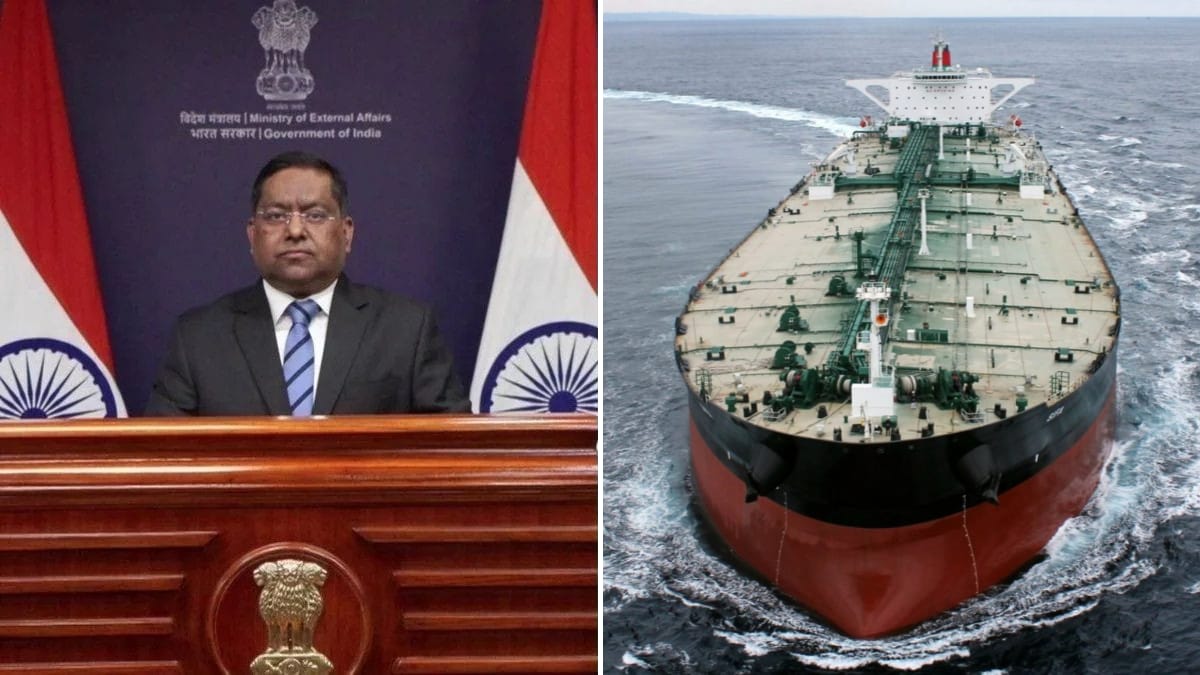
India on Sunday condemned the attack on the El Gaia (IMO: 9325336), an Indian-crewed oil products tanker that was struck by an unknown projectile off the coast of Oman while transiting the Strait of Hormuz.
This had led to a fire onboard the vessel, after which 13 of the 14 Indian-origin crew members aboard the Panama-flagged ship were evacuated by local authorities, while a search operation is on for the last missing person.
Maritime trackers show that the ship's AIS transponder has been turned off for more than five days, before which it had called at the Port of Fujairah.
"We reiterate our call for immediate de-escalation of tensions and pursuance of dialogue and diplomacy to bring peace to the region. The targeting of commercial shipping, seafarers, civilians, and civilian infrastructure in the region is unacceptable," read a statement from the Ministry of External Affairs (MEA).
The United Kingdom Maritime Trade Operations (UKMTO) Centre, which monitors the safety of commercial ships at sea, confirmed news of the fire with a red alert.
This comes after multiple security firms reported that Iran's Persian Gulf Strait Authority (PGSA) recently added 11 vessels to its Non-Compliant Vessels List, bringing the published total to 57 entries, as per a Riviera Maritime report citing Vanguard.
The El Gaia was among the list of 57 vessels that the PGSA had said would face restrictions during future transits through the Strait of Hormuz, including fines, seizure, or confiscation.
It added that even vessels found engaging in ship-to-ship transfers or other transactions with listed ships would be subject to its restrictions.
However, no country has claimed responsibility for the attack on the El Gaia yet.
Notably, the safety of seafarers amid heightened tensions in West Asia and the disruption of global shipping was a key point discussed at the two-day BRICS Summit 2026, which concluded on Sunday.
In fact, on Saturday, PM Modi also proposed a seafarers' emergency support network among BRICS members to provide distress alerts, medical aid, set up communication channels, and offer evacuation support during difficult situations at sea.
The issue had also come up in his meeting with Iranian President Masoud Pezeshkian on Friday. The MEA said that the PM had underscored the need to ensure the “freedom of navigation and commerce, and the safety and well-being of seafarers” during discussions on the conflict in West Asia.
Attacks on seafarers concern New Delhi, which emerged as the second-biggest supplier of seafarers in the world after the Philippines, contributing 311,936 people—or about 12.16 per cent—of the global maritime workforce, as per the BIMCO-ICS Seafarer Workforce Report 2026.
In July, the Centre had also said in Parliament that Indian seafarers were among the worst-hit in the West Asia crisis, with 10 seafarers among 16 nationals killed since the US-Iran war began, while 75 others were injured.
