



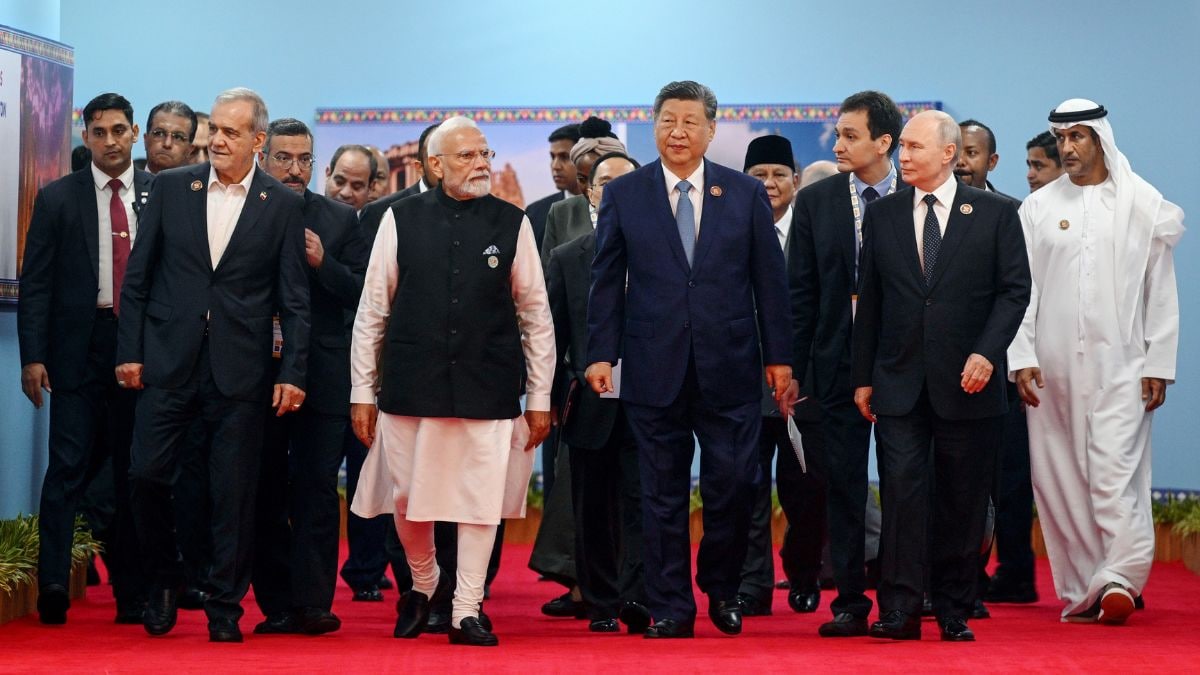
With BRICS nations backing India's bid to play a greater role in the United Nations, there is a fresh call to induct New Delhi as the sixth permanent member of the Security Council. A UN official also backed the idea of making the United Nations inclusive, saying that Global South was punished twice.
Responding to a question on whether the UN believes that developing countries currently have adequate representation in the institutions where global rules are made, Stéphane Dujarric, Spokesperson for the UN Secretary-General, told ANI, "The short answer is 'No'. It is clear for everyone to see. That is beyond fairness because when the system was set up, so many countries in the Global South were colonies. So, they were punished twice. They were punished by colonialism in itself and they were punished by not being at the table when the blueprints for these institutions were designed and approved."
On Saturday while addressing the BRICS summit hosted by India, Prime Minister Narendra Modi said the Global South must have equal participation in the development of future technologies and the rules governing them.
“Today’s discussion makes it evident that the changing world cannot be steered by outdated institutions; reforms are essential in representation, responsiveness, and rule-making. The gap between decisions and their outcomes must be bridged through partnership and collective action,” said Modi. “The New Delhi Declaration adopted today provides a clear direction for our shared resolve. It is now our responsibility to translate these resolutions into tangible results. I extend my heartfelt gratitude to all of you for your valuable contributions, constructive spirit, and commitment as the BRICS Chair.”
The New Delhi Declaration pressed for the need to make the United Nations more democratic and representative while increasing the representation of developing countries in the Council’s membership “so that it can adequately respond to prevailing global challenges and support the legitimate aspirations of emerging and developing countries from Africa, Asia and Latin America, including BRICS countries, to play a greater role in international affairs, in particular in the UN, including its Security Council”.
In July, External Affairs Minister S. Jaishankar launched India's campaign for a non-permanent seat on the UN Security Council for the 2028-29 term and held talks with UN Secretary General Antonio Guterres at the UN headquarters.
India has always maintained that the five permanent and 10 non-permanent seats do not reflect the geopolitical realities of the 21st century.
