



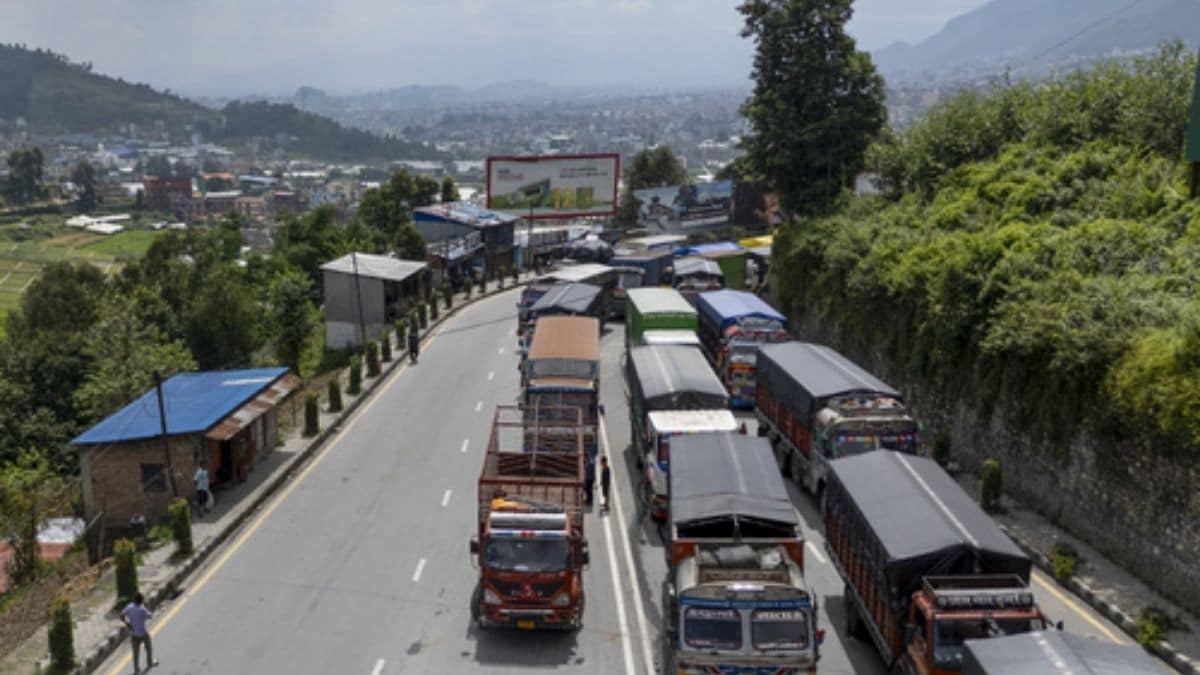
Cross-border trade between India and Nepal might be disrupted following the severe flash flood that struck central Nepal on Wednesday. Indian goods vehicles travelling to Kathmandu and other parts of the country via Maharajganj in Uttar Pradesh have been significantly affected.
A queue of around 16 km of cargo trucks has formed on the Indian side of the Sonauli border in Maharajganj as they wait to enter Nepal. The line has stretched to Nautanwa, 8 km away from Sonauli, raising concerns about the traffic movement on the national highway (NH24).
The area is under the surveillance of security agencies and police personnel, who are attempting to regulate the movement of vehicles.
"Surveillance at the Sonauli border has been intensified, and police station heads in the border areas have been directed to remain alert," said Circle Officer Basant Singh.
However, officials have warned that the situation could worsen if road connectivity in Nepal is not restored.
While the Sonauli border itself has not been affected by the floods, the route is actively being used as a safe exit passage. As the main gateway for overland tourism toward Lumbini, tourists fleeing the country are returning to Uttar Pradesh through this checkpoint.
The Maharajganj district administration has also placed the entire border region on high alert, as they continuously monitor the surging water levels of the Gandak River in Maharajganj.
As Nepal’s largest trading partner, India accounts for over 62 per cent of the country’s total external merchandise trade and makes a trade surplus of approximately $6 billion to $7.4 billion. Mineral fuels, petroleum products, iron and steel are some of the largest Indian exports to the country.
As Nepal is landlocked, the majority of the cargo moves by road and rail transport. While two-thirds of the country’s trade is handled through the Birgunj-Raxaul corridor, Bhairahawa-Sunauli in western Nepal is the major trade point for commercial trucks carrying heavy machinery, automobiles and consumer goods.
Traders are flagging the disruption at the border. One trader told IANS India, “Trade is being affected significantly because the routes in Nepal have been cut off due to the flow of water, and all the routes for movement and trade have been closed.”
A similar incident took place in 2015, when Nepal's Mahadeshi people blocked the country’s Indian border as part of a protest against changes to the constitution. The blockade stopped trade from flowing in and hampered the recovery efforts of the April 2015 Nepal earthquake. Supplies of petroleum, LPG, food and life-saving medicines dwindled, affecting the functioning of schools, markets and public transport.
