



Saniya Parveen, 21, was one of the student activists leading the Jharkhand protests from the front. During the protests, she had frequently addressed crowds at Jaipal Singh Munda Stadium, in the rain and under the sun. When news broke that Chief Minister Hemant Soren had agreed to the students’ demands, she was at home, sick from exhaustion. “It was decided that nobody will talk about caste, religion, and politics at the protest site,” she says while celebrating the decision. "The protests were just for reforms in education."
The movement, joined by thousands of students from across the state, had resented paper leaks, buying of government posts, and faulty exams for a long time. "We were just waiting for someone to take the lead, and on the eighth day I joined the protest, I said to myself, if not now, then when?" Parveen says.
Soren finally had to cede to the demands. He decided to cancel examinations linked to outsourced agency TSR Data Processing Pvt Ltd (TDPL), which had shown innumerable shortcomings in its procedure to conduct exams. The decision came after 23 days of protests and negotiations, with the leaders of the movement thanking the government for showing a big heart in addressing the issue.
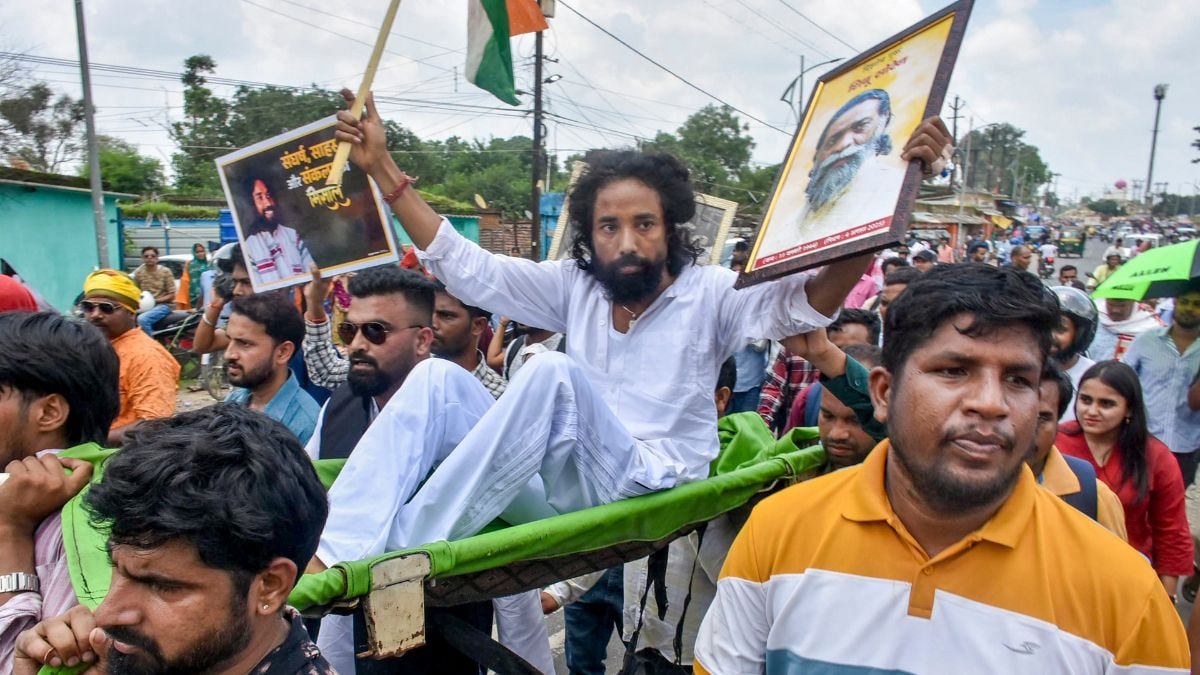
The leading figure of the protest, Devender Nath Mahto, thanked the government after breaking his 16-day fast, saying it had taken a bold step. “The government has proved, Hemant hai toh himmat hai,” said another student leader, Umme Habiba.
Students say everyone understood from the beginning that the protest was against the state government and that opposition parties, primarily the BJP, could try to take political benefit from the situation. “Everybody who was fighting for better education was aware enough to know that the movement could take a political turn, so the protests were measured and only directed towards education reforms,” Parveen adds.
The protests travelled to Jharkhand after the Cockroach Janata Party took to the streets in Delhi last month, seeking the resignation of Union Education Minister Dharmendra Pradhan. The non-political movement had initially spread to BJP-ruled states like Maharashtra and Bihar, showing signs of a wider anti-saffron sentiment.
The first major political intervention at the national level came when Leader of Opposition in the Lok Sabha, Rahul Gandhi, stepped up the pressure on the BJP-led Centre by sitting outside Prime Minister Narendra Modi’s official residence in protest, a day after the massive Parliament Chalo march on July 20, in an attempt to corner the government from all sides.
But when the protests reached Jharkhand, a state ruled by a JMM-Congress coalition, it soon became an arena for political one-upmanship between the BJP and Congress.
“Since the JMM-Congress coalition is in power in Jharkhand, and Congress was quite instrumental in amplifying the central movement of students in Delhi, this provided the BJP fodder to play its role in the student protest in Jharkhand and to counter the Congress,” Alok Kumar Gupta, professor of political science at the Central University of Jharkhand, says.
But the political script of the Jharkhand protest took a different turn when the student protest leaders acknowledged the efforts of the government. This was markedly different from the CJP protest, whose leaders have continued to target the BJP, its leaders, and institutions under the Union government even after calling off their protest.
Jharkhand Rural Development Minister Deepika Pandey Singh, who helped the students break their fast, tells THE WEEK that the situation in Jharkhand was fundamentally different in its nature and handling.
“Here, the government chose dialogue, engagement, and negotiation with students. We are aware that they are our children, and we treated them exactly like that. No one labelled our students as foreign-funded, anti-national, Naxal, or by any such terms,” she says.
She says the protesting students have acknowledged the government’s response. “That is a reflection of a democratic government working with its youth, rather than against them. The objective was never to defeat a protest, but to resolve the underlying concerns.”
As one group of protesters in Jharkhand continues to demand an inquiry from central agencies, the BJP, too, joins in. Aditya Sahi, state BJP president and MP, said the BJP wants a CBI inquiry so that those involved in the alleged scam are exposed. “Who are the big people involved in the scam? All the faces should come out so that in the future, nothing like this happens. All the jobs were sold by stealing the jobs of the youth. The CM should do it,” he says.
But Mahto has shown little inclination towards pushing for either a CBI or CID inquiry, saying the students have seen such inquiries before, and they seldom do justice. “We want a leak-proof process and assurances. We want a guarantee that nobody leaks the papers,” he says.
The state government had resisted the students’ demands for more than three weeks before deciding to address them. Rahul Gandhi, who was repeatedly questioned over his stance on the Jharkhand student protests after taking up the issue against the BJP-ruled Centre, eventually made an official request to his alliance partner. The timing is significant. On the 23rd day of the protest, Rahul Gandhi wrote to Soren, asking him to hear the students and address their concerns. Soren met the students the same day.
JMM Lok Sabha MP Vijay Hansdak said the government had to consider all possibilities before taking a decision, as many people were involved. “We kept talks open and did not want to take an outright decision only for the court to raise objections later. Our government will set things right and hold those who misused the system accountable.”
The CJP movement drew celebrities and public personalities, pushed the Centre on the defensive when it spread around Parliament on July 20, and then travelled into different states. While the national movement led by the satire party continues to take on the BJP-led government and continues to find faults in their rule of 12 years, in Jharkhand, however, the leaders of the movement praised the government.
The BJP had to pay a political cost at the end as the protests checkmated one of its prominent cabinet players, Pradhan. The Jharkhand protesters are willing to back the state government in its pursuit for reforms in education.
The BJP is still trying to keep the Jharkhand issue alive through its demand for a CBI inquiry. For the students, however, the immediate demand remains simpler: a process that is leak-proof and guarantees that the problems that brought them to the streets do not return.
