



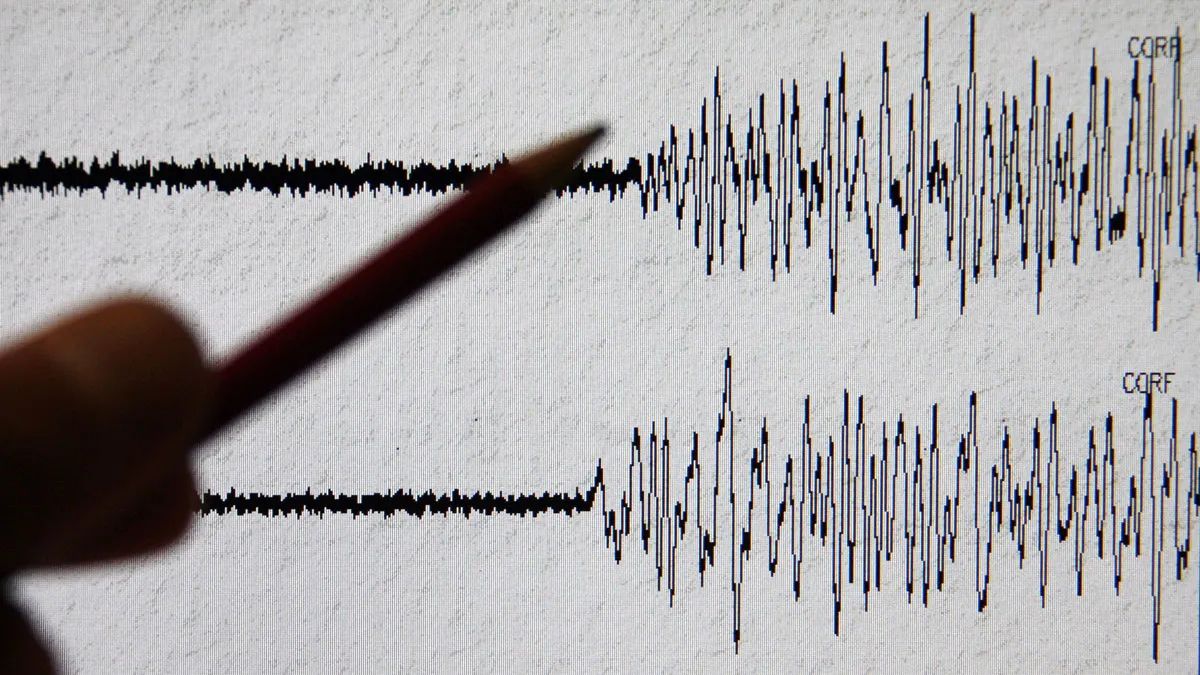
A series of 29 small-scale earthquakes hit Maharashtra over the past two weeks, sparking questions of whether a disaster was incoming.
Also called tremors, the small quakes were mainly focused in the Nashik and Palghar areas over the past 16 days, in what experts have since called an "earthquake swarm".
Between July 30 and August 14, 24 tremors were recorded in and around Nashik, four in Palghar and one in Nagpur, with magnitudes ranging from 2.0 to 4.3. These were found to occur at depths of roughly 5-8km.
The largest of these tremors was a magnitude 4.3 earthquake recorded in Nashik on August 8, which occurred at a depth of 5km.
“There is indeed an alarming rise in the number of small earthquakes. However, this is not uncommon,” Professor Deepankar Choudhury, an earthquake specialist and civil engineering professor at IIT Bombay, told The Indian Express.
An earthquake swarm is a series of small quakes that occur over a particular area over a relatively short epriod of time. The last time that this happened to Maharashtra was in September 2023, and before that, February 2019.
In that regard, Choudhury said that since earthquake swarms do not typically travel very far due to their shallow depth, the recent one is not likely to reach Mumbai. Still, experts have noted that the swarm should be monitored.
Why do they happen?
Choudhury explained that Nashik falls under the Deccan Plateau region, which houses mostly basaltic rock at the tectonic level.
Over the course of the monsoon, these rocks, which often have cracks in them, get filled up with water, which generates pressure in them over time, that gets released in the form of small, surface-level tremors after a while.
Under Part 1 of the Indian Standard (IS) 1893, Nashik and Palghar fall under Seismic Zone III for a moderate earthquake risk.
In that regard, though the Deccan Plateau is considered relatively stable, experts have urged that ensuring buildings and infrastructure in such areas comply with earthquake-resistant construction under IS 1893 Part 1 will be important to avoid accidents in the future.
