



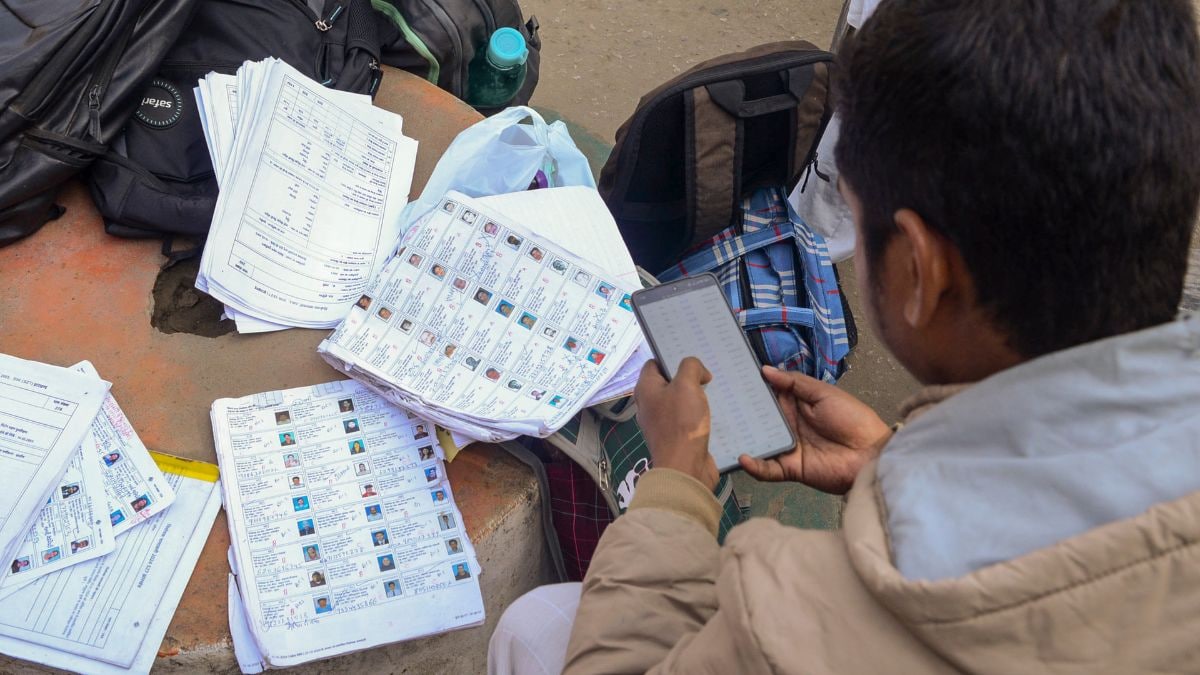
On July 11, Telangana Congress state in-charge Meenkashi Natarajan had expressed frustration about the number of votes the state was going to lose in the SIR process. Local media outlets estimated that the vote loss could be around 1 crore, raising alarm across the political spectrum and among commoners. The Hyderabad metropolitan area lagged behind rural areas, with a good number of constituencies in the city likely to lose more than 50 per cent of the existing votes.
Telangana currently has a total of 3,38,26,448 voters. By the August 10 deadline, only 2,64,30,494 voter enumeration forms (78.14 per cent) were digitised. That effectively means 73,39,234 voters did not submit their enumeration forms. On August 11, the Election Commission officials announced that they had found anomalies in the records of 88,13,207. The EC officials said that most of the voters would submit additional documentation and 90 per cent of them could be cleared after further verification.
However, this may not be as worrying a scenario as it appears, as these numbers miss a most important fact – the mega cities generally have a larger number of extra voters than their actual population. While the state has a total estimated population of 3,87,60,000 people, it has a registered voter population of 3,38,26,448. However, this goes against reality, as the under-18 population could be around 1,08,00,000, which brings down the eligible voter numbers to around 2,79,60,000.
“There are about 56 to 68 lakh additional voters in Telangana, especially in Hyderabad. The SIR deletions could roughly correspond to this number,” said Dr Jayaprakash Narayan, president of Lok Satta, a movement that advocates voter rights, talking to THE WEEK. He explained that the SIR could be mostly deleting these extra voters. Lok Satta’s surveys in Hyderabad in 2009 and 2015 have shown the city has at least 22 per cent additional voters due to different reasons, including migration and duplicate voter registration.
However, extra voters don’t necessarily mean extra voting. “We have several safeguards in place, including voter identity cards with photos, local agents, and indelible ink marks. So, save for some exceptions, large-scale bogus voting won’t be possible,” he explained. Even if some genuine voters were missed in the current SIR, they could enrol themselves during the regular updating process of voter rolls, he added.
