



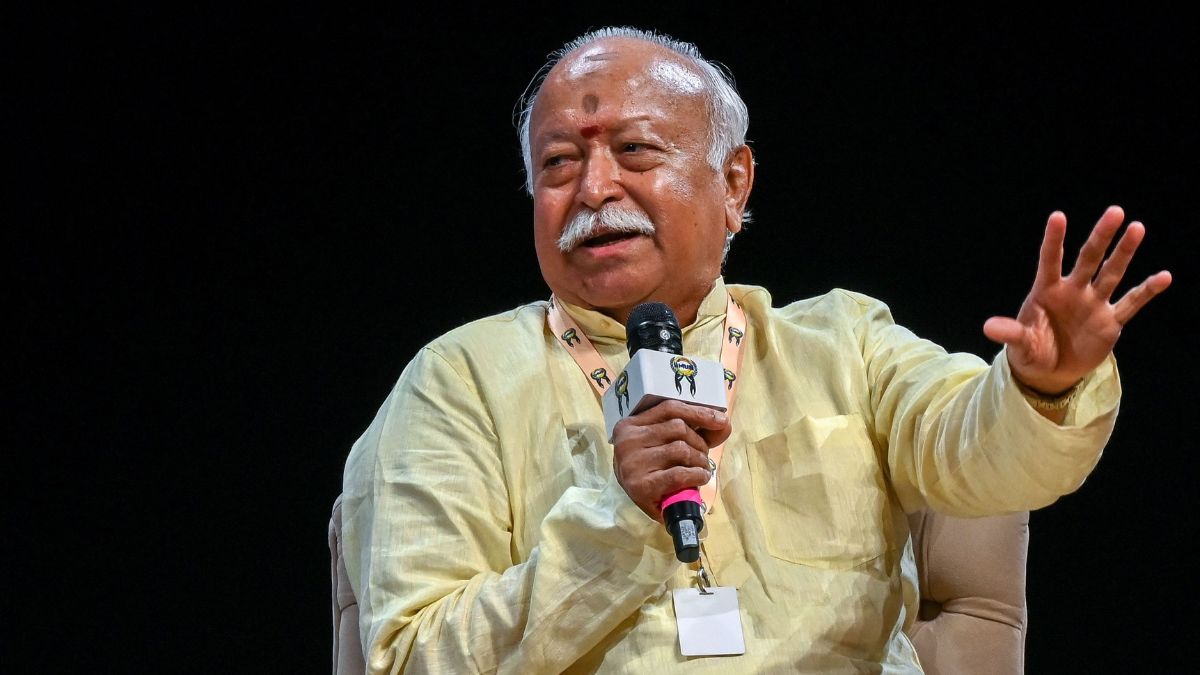
Rashtriya Swayamsevak Sangh (RSS) chief Mohan Bhagwat on Thursday asserted that students have every right to protest for a better system, pointing out that protest is a legitimate form of dialogue.
"Protest is also a way of dialogue. In a democracy, protest is a way of building consensus. Different views come together and a consensus evolves after discussion," he said. "If, for various reasons, concerns are not heard through dialogue, people may turn to agitation. But the purpose of all this is to build consensus, not to create divisions. The Gen Z grievances are genuine and I believe in their honesty."
The comments came in the backdrop of student protests in Jantar Mantar over NEET paper leak row, following which Union Education Minister Dharmendra Pradhan stepped down.
Addressing a gathering of around 2,000 Gen Z and Gen Aplha members at India's International Movement to Unite Nations (IIMUN) 15th anniversary event in Mumbai, Bhagwat said the concerns being raised over India's education system are genuine.
On allegations about labelling youth protesting on streets as anti-nationals, he said the younger generation should be listened to. "I want to make it clear that if Gen Z engages in any agitation, they are not anti-national. They are our own people; they are our next generation. There should be a feeling of compassion and understanding. Today’s generation is the most honest generation. They should be heard and felt heard," he said.
Responding to reports on use of pellet guns and lathi charge, Bhagwat said authentic information is required regarding these allegations.
"If I had to believe, I will believe Gen Z. But we do not know the reality. Both of us are conversing on the basis of information available through reports. There have also been reports of some anti-social elements in this movement. But we cannot talk without authentic information," he said.
