



On June 29, 2026, at precisely 3:17 pm, Delhi achieved a milestone that deserves to be remembered for more than just a number. The State Load Dispatch Centre (SLDC) recorded the capital’s highest-ever electricity demand of 8,748 MW, making it not only the highest peak of the current financial year but also the highest demand ever served in Delhi’s history.
For years, Delhiites associated record electricity demand with power cuts, overloaded transformers and prolonged outages. Every new peak was accompanied by apprehension that the distribution system would fail under pressure. On 19 June 2024, at the last record peak, that fear was proved right. In the BSES Yamuna area, a cable fault at Karawal Nagar and a failed transformer near Mandoli cut power to over 4,400 consumers, some for nearly an hour. Tata Power-DDL logged four separate faults, a snapped conductor, a burnt low-tension cable, a fallen tree, leaving another 2,000 without supply. None of this came from far away. It happened inside Delhi's own wires, at the exact hour the city needed them most.
This year, carrying a heavier load than ever, even on the day Delhi carried its heaviest-ever electrical load, Tata Power-DDL recorded a single interruption, affecting 259 consumers. BSES Yamuna reported no major network outage. BSES Rajdhani's high-tension breakdowns fell from 24 to 14, even while supplying more power than in any year before.
The trend behind that one day is telling. During the peak-load slot, Tata Power-DDL's outage numbers have gone from 3.6 lakh consumers in FY24, to 41,000 in FY25, to 2,503 in FY26, to 259 this year, at the highest demand the company has ever carried.
The hour the grid has to survive
Peak demand is the single hour the grid has to survive without failing, the moment every air conditioner, cooler and fridge in the city runs at once alongside the Metro, hospitals, industry, data centres and the water supply. A power system is only as good as its worst hour. This year's trigger was brutal: Safdarjung recorded a high of 40.5°C, 3.1 degrees above normal, with a night low of 30.2°C, humidity that kept cooling systems running longer and harder.
This matters beyond its size. Peak demand can only be recorded when the grid is strong enough to meet it. Where the network buckles, real demand stays hidden, since consumers are cut off from power they need. A weak grid always reports a smaller number. Put simply, 8,748 MW is proof Delhi could finally deliver, not just want, more electricity.
The backbone we inherited, and rebuilt
None of this happened by chance. When this government took charge, we ordered a full review of Delhi Transco's assets. The findings were hard to ignore: 78 of DTL's 183 power transformers, 42 per cent, had outlived their working life. Tenders had been cancelled repeatedly, demand kept climbing regardless.
I tell my officers this often: buying more power is pointless if the wires cannot carry it. There is no use buying water if the pipes are cracked.
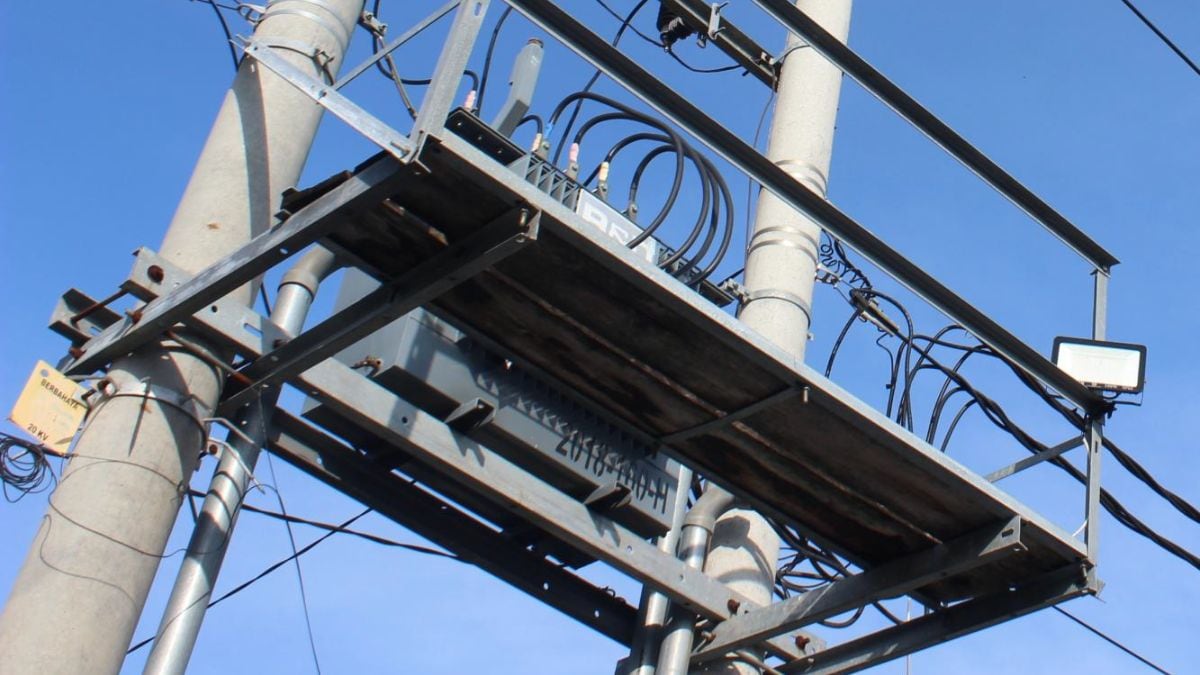
So this year's work was physical, not just administrative. Tata Power-DDL installed eight power transformers and 362 distribution transformers, and laid 156 circuit-kilometres of feeders. BSES Rajdhani expanded capacity beyond its three-year average. BSES Yamuna reinforced the exact corridors that failed in 2024. At the transmission level, twelve ageing Delhi Transco transformers are already being replaced, with nineteen more planned. The numbers from 29 June are the return on that work.
Racing the thermometer
Preparation began months before the heat did. In July 2025, I asked the Power Department, Delhi Transco and all three DISCOMs to build a joint summer roadmap. Power was secured well in advance through long-term contracts, bilateral purchases and market procurement, with banking arrangements to trade seasonally with other states.
We also used tools that did not exist for earlier peaks: AI-driven forecasting, digital twins, smart-meter analytics and predictive maintenance to catch weak points early, plus battery storage for flexibility under strain. Behind it all sat the SLDC's control room, running round the clock with SCADA monitoring, thermal scans, night managers, and repair teams stationed with spares before trouble started.
Delhi now runs two summer peaks rather than one: the familiar afternoon peak from offices and shops, and a sharper one near midnight, driven almost entirely by homes. A decade of SLDC data shows each extra degree of summer heat adds roughly 120 MW to the peak, and more than half of Delhi's annual consumption is now weather-driven. It is that midnight peak, arriving once every office has shut, that increasingly decides how we plan the grid. Rising incomes have added to the load too, consumption climbing from 29,416 million units in 2015-16 to 38,276 million units in 2024-25, per the Delhi Economic Survey.
None of this is an abstraction to people living through it. A student studies without the lights cutting out. A hospital keeps running. A family sleeps through a brutal summer night. Citizens do not feel good governance in a report; they feel it in the current that stays on.
The next number we're chasing
This is not the finish line. It is one step towards Prime Minister Shri Narendra Modi Ji's vision of Viksit Bharat, reflected in a Viksit Delhi under the leadership of Hon'ble Chief Minister Rekha Gupta Ji, where reliable power reaches every citizen as a right, not a privilege. The Central Electricity Authority expects Delhi's peak to touch 9,100 MW this year, and SLDC's own projections put it past 10,000 MW by 2028-29. Delhi's demand will keep rising with its economy and its standard of living. Our job is to make the grid rise faster still. We met the test of 8,748 MW. We are already building for 9,000, and whatever comes next.
Ashish Sood is the Minister for Home, Power, Education, Higher Education and Training & Technical Education, Government of NCT of Delhi
The opinions expressed in this article are those of the author and do not purport to reflect the opinions or views of THE WEEK.
