



What happens when a strongman with assets worth crores of rupees encroaches upon a layout of middle-class families? How likely are they to get justice in government offices and courts? The conclusion is almost a foregone one. It was one of the cases the Hyderabad Disaster Response and Asset Protection Agency (HYDRAA) is handling. While hundreds of middle-class families bought flats in “FCI Layout” in Gachibowli, an area known for the IT industry, a businessman named Sridhar Rao allegedly took control of the whole layout after buying a large number of flats, eventually taking over the entire area.
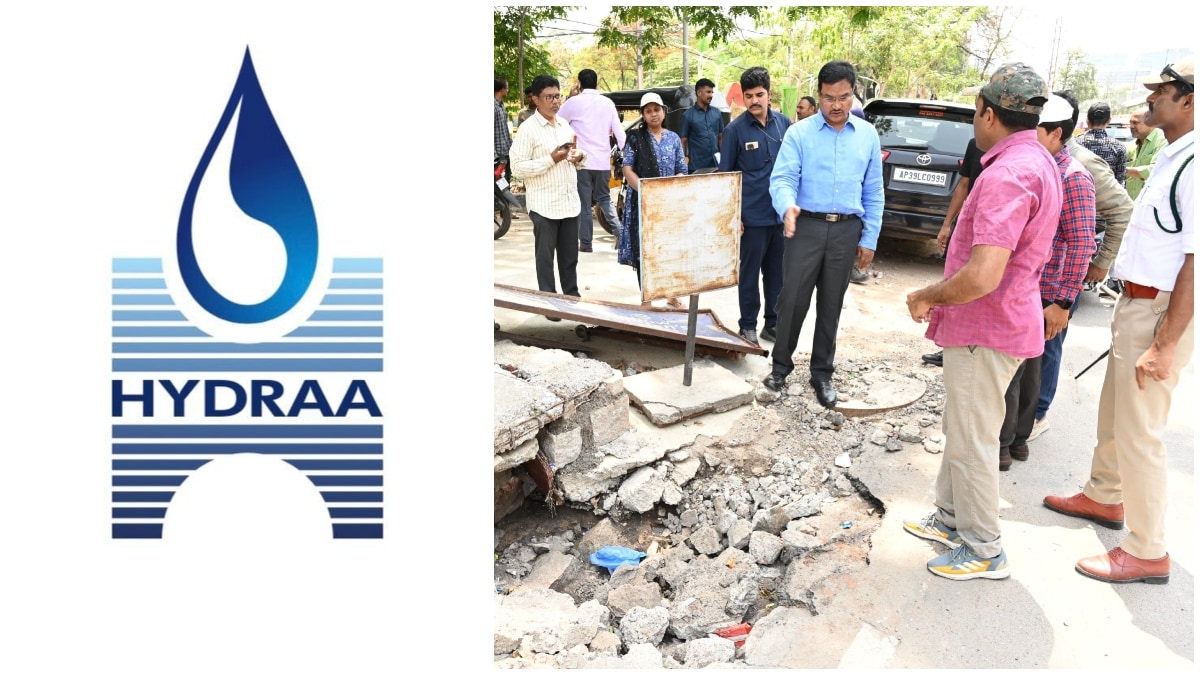
HYDRAA Commissioner A.V. Ranganath and Cyberabad Municipal Commissioner G. Srijana visited the FCI layout on July 8 and concluded that Sridhar Rao is continuing with construction despite a court stay order to maintain the status quo. The HYDRAA and municipal officials concluded that the public spaces of the layout, such as the lands allocated for roads and parks, were encroached upon. This is a clear governance innovation.
Generally, when such encroachments take place, the civic authorities express their helplessness and suggest the victims go to the courts. Though the judiciary per se is not corrupt, it is clearly amenable to interests that can spend the most on litigation. That is the structural crisis the Indian judiciary is facing. Though this is no universal truth, it could be the case in most litigation. That is why the court does not inspire hope among the citizenry.
Here came the innovation from HYDRAA. The asset protection agency not only acts upon lands that are government-owned, but it also acts on lands allocated for common purposes such as roads, schools, and hospitals. This power is now being used to take up “civil disputes”. HYDRAA gets about 50 complaints every week, and civil disputes are a part of these complaints. Once they get such complaints, the HYDRAA officials not only visit the spots but also run different checks on the ownership documents and gather evidence.
In a previous case, a realtor-cum-educationist, Nalla Malla Reddy, built walls around a colony named Divya Nagar and had been taking his cut for each property sale in that colony. The 200-acre layout, where more than 2,200 plots were reportedly sold, was developed by him.
He continued to own a significant portion of the unsold plots, and this allowed him to maintain considerable control over the venture, including the construction of a compound wall and regulated entry through security personnel. This wall was preventing free road access to surrounding colonies that have thousands of residents. Even the plot owners reported that their movements were being restricted by Malla Reddy's security setup.
HYDRAA intervened in the problem and made it clear that a developer's rights do not extend to restricting access to public roads or treating an approved residential layout as a private gated community without the requisite permissions. It was this distinction that formed the basis of HYDRAA's action to demolish the wall and restore public access.
“We don’t treat private encroachments of common purpose lands as civil disputes. When we enter a layout looking for common lands, we will obviously see the original legal establishment of the layout, and in that process, the victims also benefit. We show them their plots as per the government records,” explained Ranganath, talking to THE WEEK. However, he said that they do not enter civil cases that have no common lands, as they are to be decided by the courts.
HYDRAA has saved quite a few layouts by using this method. Its commissioner, Ranganath, said they are helping helpless people wherever possible by using this method. However, the present case may not be as easy as the previous one.
“Sridhar Rao has a battery of lawyers, and he previously sent the wife of an army officer to jail for questioning his actions. She fought all the way to the Supreme Court, and the apex court questioned how this case was even booked and set aside the High Court orders,” explained the commissioner, regarding how Sridhar Rao manipulated the systems. The victim, Mala Choudary, went to the Supreme Court after the Gachibowli police harassed and imprisoned her.
The Supreme Court pointed out that “the approach of the High Court in casually disposing of the petition filed by the appellants, seeking quashing of the proceedings, without addressing the merits of the matter to be absolutely laconic and perfunctory.” The High Court's failure to examine the merits of the case, as later noted by the Supreme Court, also illustrates how ordinary citizens can struggle to secure timely judicial relief when confronted by powerful and resourceful adversaries.
The victims of the FCI Society Layout could continue their struggle, and the only reprieve they have received so far is the intervention from HYDRAA and the Cyberabad Municipal Commission.
