



With the southwest monsoon arriving in Delhi and the National Capital Region (NCR) on Thursday, intense rain was reported across the region.
This comes as a relief in the extreme heat as the monsoon arrived five days after its normal onset date of June 27. Compared to the extreme heat till last week, maximum temperatures are expected to come down to 32 to 34 degree Celsius.
IMD recorded the highest rainfall in Tukmirpur at 20 mm while Chhatarpur saw 18.5 mm rain. A yellow alert was issued in Delhi by the India Meteorological Department (IMD), which predicted thunderstorms, gusty winds and generally cloudy skies.
Till July 6, the Delhi-NCR will is expected to witness light to moderate rainfall, thunderstorms and winds of up to 50 kmph speed.
Since 2021, this is the first time that southwest monsoon has arrived in the Delhi-NCR region in July. The 2021 monsoon onset was recorded on July 13 while it arrived on June 30 in 2022, June 25 in 2023, June 28 in 2024 and June 29 in 2025, according to the Met department. In the past decades, Delhi monsoon arrival came as early as June 15 in 2008 and as late as July 19 in 2002.
The southwest monsoon is also expected to arrive in remaining parts of Rajasthan, Gujarat, Haryana and Punjab soon.
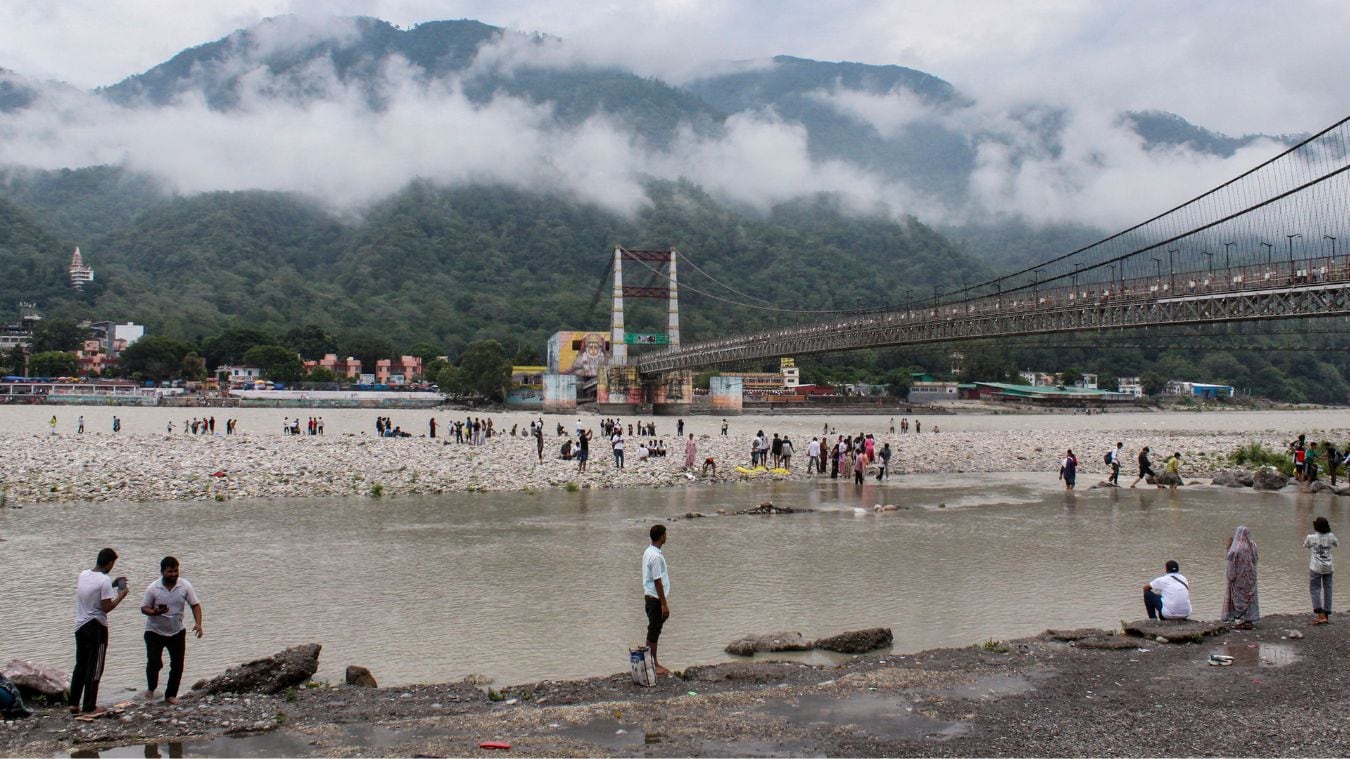
Uttarakhand also received widespread rainfall on Thursday. Traffic congestion was reported on Badrinath National Highway in Chamoli district and the Kedarnath Yatra route in Rudraprayag district.
An orange alert was issued for Dehradun, Tehri, Pauri, Nainital, and Bageshwar districts due to heavy to very heavy rainfall at isolated places.
Due to the rain, temperatures have dropped across the state. During the past 24 hours, the maximum temperatures in both plains and hills were significantly below normal.
In Chamoli district, debris from a hill near Gulabkoti village between Chamoli and Joshimath blocked the Badrinath National Highway amid heavy rainfall since morning. Very heavy rain was forecast on July 3, followed by heavy rain on July 4 to 7.
