



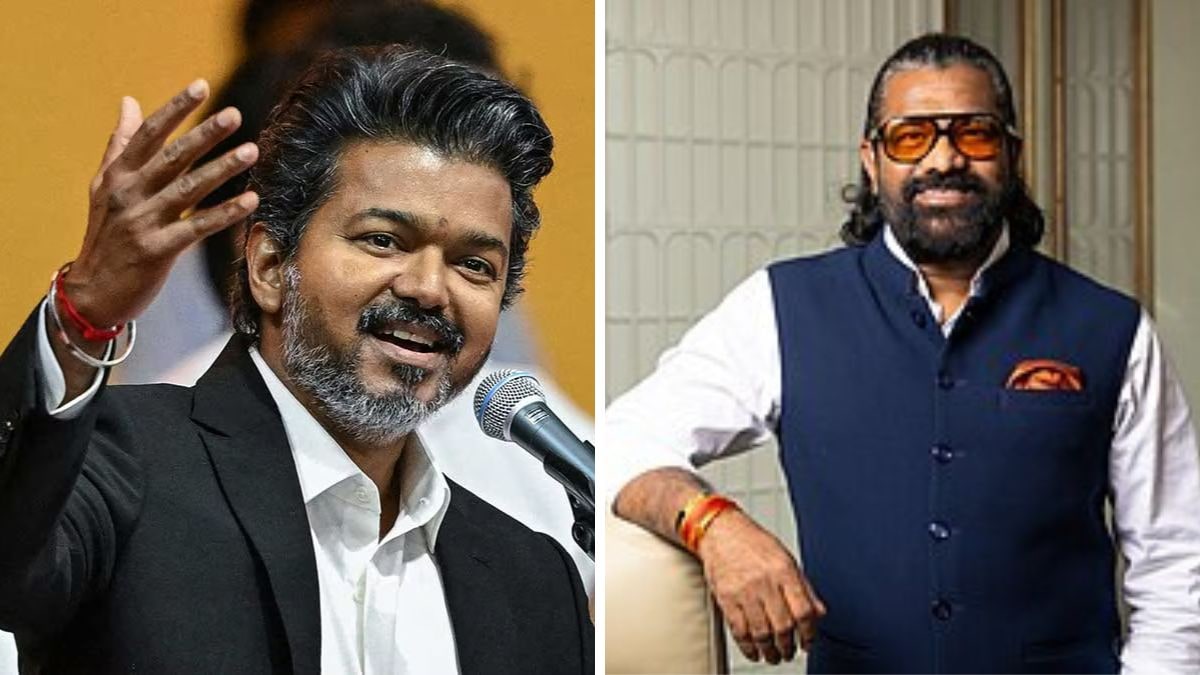
K. Venkat Narayana, the producer of Tamil Nadu chief minister C. Joseph Vijay’s cinematic swan song, Jana Nayagan, and the founder of KVN Productions has been appointed the Tamil Nadu government’s Special Representative at New Delhi. The appointment has led to a political storm in the state.
Narayana, a resident of Bengaluru is former CEO of a Karnataka-based real estate group. The official Government Order (GO) issued by Chief Secretary M. Sai Kumar, dated June 23, 2026, announced the appointment of Narayana as the special representative. However, this administrative decision has drawn immediate scrutiny, as it follows a pattern of unconventional staffing choices that have characterised the early days of the Vijay administration. This is the fourth such appointment by the chief minister’s office that has turned into controversy. The controversial and subsequently aborted appointment of the Chief Minister’s personal astrologer, Rickey Radhan Pandit Vettrivel, as OSD (Political) in the CMO—a decision withdrawn only after significant public outcry. Later, the appointment of his strategist John Arokiasamy as his special secretary became a point of contention. And then the appointment of his longtime associate and friend Jagadish Palanisamy as chief minister’s private secretary was also questioned by his detractors.
Narayana, a personal choice of the chief minister himself, according to sources, is the founder of KVN Productions and the producer of Vijay’s swan song film, Jana Nayagan. This clearly indicates his deep personal ties to the chief minister. Critically, Jana Nayagan has been stuck with the Central Board of Film Certification (CBFC) for six months and the appointment may facilitate navigating union-controlled boards. Narayana, who was the former CEO of the Bengaluru-based Prestige Group, is proficient in Tamil, Telugu (mother tongue), Kannada, and English. And as a long-term resident of Bengaluru, his appointment raises severe optics issues regarding state loyalty during active interstate water disputes.
According to sources, Narayana will act as a bridge between the Union government and the TVK administration in Tamil Nadu, led by Vijay. The fledgling administration of Chief Minister C. Joseph Vijay has signalled a distinct, albeit unconventional, strategy in its approach to federal relations with the Union government. By prioritising personal trust and private-sector networking over traditional political appointments, the administration seeks to redefine the state’s presence in the national capital. This orientation is most clearly evidenced by the recent appointment of a close associate to a pivotal liaison role, a move intended to streamline communication between Chennai and New Delhi.
The appointment has turned into a debate in the state while exposing a significant friction between the chief minister's administrative discretion and the demands for political accountability. While the government maintains its right to choose its representatives, the opposition argues that such discretion should not supersede the state’s broader interests.
Historically, the post of Special Representative in New Delhi has been reserved for seasoned political figures who possess a deep understanding of both state politics and federal machinery. Breaking this tradition marks a significant shift in the administrative architecture of Tamil Nadu, moving away from a political person to a businessman-producer. Previous appointees to this post have traditionally been veteran politicians from the major Dravidian parties, including A.K.S. Vijayan, Thalavai Sundaram, Nagai Asokan, Cumbum Selvendiran and S.T.K. Jagakaiyan. The transition from these established political figures to a corporate executive represents a departure from the norms that have long defined the state's presence in New Delhi. While the government justifies this as a move toward a more connected liaison, the departure from precedent remains the primary driver of the current political storm. As of late June 2026, the specific terms and conditions of Narayana’s appointment remain pending notification, leaving the full scope of his authority and compensation yet to be officially defined.
In the sphere of high-ranking diplomatic and state-representative roles, an appointee's professional trajectory and personal background serve as the primary indicators of their suitability. For a role that requires navigating the complex bureaucracy of the Union government, the blend of industry expertise and linguistic versatility is often prioritised to ensure effective advocacy for the state’s interests.
