



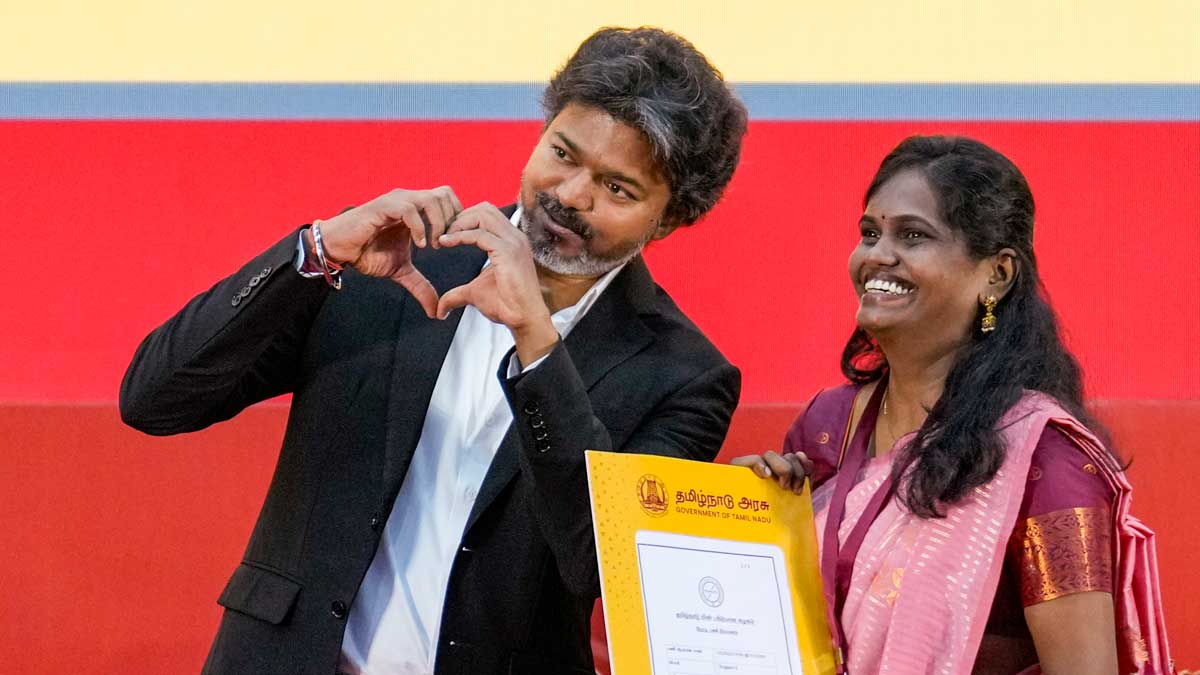
On June 23, the concluding day of the first session of the 17th Assembly, Chief Minister C. Joseph Vijay was all in smiles as he rose to reply to the motion of thanks on Governor Rajendra Viswanath Arlekar's address to the House. With a black dot on his forehead and a red thread tied around his wrist, Vijay launched a scathing attack on the opposition DMK, whom he had positioned as his opponents. The legislators seated behind him in the treasury benches were elated, thumping their desks and cheering as Vijay continued his broadside.
As Vijay dominated the floor of the House, the DMK staged a walkout, while the AIADMK remained in the opposition benches, smiling and enjoying the mood. The moment sent out multiple messages beyond the chamber, as viewers watched the proceedings live on television. Notably, this was the first time an Assembly session was being broadcast live, offering a wider audience a direct view of the chief minister’s address and further reinforcing his image as a “people’s CM”.
In a state where loud rhetoric has often been central to electoral and political strategy, Vijay ensured that his timed appearances and occasional speeches could prove to be victorious. His style of politics in the past 40 days has fundamentally altered the state's political narrative, signalling a weakening of the DMK’s long-standing “blanket anti-BJP” positioning.
Transitioning from a cinematic icon to the floor of the legislative assembly, Vijay has adopted a “governance-first” approach, marking a shift from his predecessor’s confrontational style. While the previous administration relied heavily on a “Tamil Nadu vs. Delhi” rhetoric that voters eventually found unproductive for the state's growth, Vijay has pivoted towards administrative realism. His style signals a transition from a star-driven populist appeal to a results-oriented governance model. By prioritising tangible service delivery over ideological grandstanding, Vijay seems to be repositioning the state’s political brand.
This shift, of course, is a calculated attempt to manage voter expectations in a post-Dravidian landscape where charismatic appeal must be backed by fiscal and administrative efficiency. The foundation of this new paradigm is a calibrated, non-confrontational relationship with the Union government—a strategic necessity for a state navigating complex revenue constraints.
For a resource-dependent state like Tamil Nadu, administrative harmony with the central government is a prerequisite for progress. The Vijay doctrine adopts a give-and-take approach, drawing parallels with the governance template associated with former AIADMK leader J. Jayalalithaa—maintaining a professional rapport with the BJP-led central government to secure state interests while remaining brutally unsparing in domestic political rhetoric. This strategy recognises that perpetual friction with the Centre jeopardises the flow of essential funds.
For instance, the TVK, unlike the DMK, ensured that there is high cooperation with the governor. While former governor R.N. Ravi refused to read the customary address, Arlekar read the full cabinet-prepared speech. Senior bureaucrats in the corridors of power term it as a “strategic departure from the previous regime”. They say that Vijay allows the state to fight for its rights without the collateral damage of an administrative breakdown. “This pragmatic federalism provides the fiscal breathing room necessary to focus on domestic integrity and the dismantling of entrenched patronage systems,” said a senior official.
But more than this, integrity seems to be the central pillar of Vijay’s political brand. His “single paisa” pledge in the Assembly positions his administration as a strict custodian of public funds. In his speech, he signalled an aggressive stance toward investigating the misuse of funds by previous regimes, framing corruption as a betrayal of the common man.
“We will not allow anyone to be corrupt, and we will not allow anyone who is corrupt to escape the rule of law,” he said in the assembly.
By suggesting that “disguises are falling apart”, Vijay frames allegations of corruption against his rivals as an existential threat to the state’s welfare, thereby setting the stage for a governance model that is more directly representative of the public will.
Vijay has demonstrated that his pragmatic cooperation with the centre is not submission. This was most evidenced by his refusal to join the NDA despite significant pressure from a CBI case regarding the "Karur stampede", in which he was summoned as a witness. This rejection of political alliance in the face of legal pressure bolsters his image as a leader of uncompromised integrity.
His rhetoric and political mimicry in the assembly showcased the strategic use of humour and popular culture to disarm his rivals. By using cinematic storytelling and gestures, Vijay’s idea is to maintain a connection with the masses while delivering carefully aimed political jabs that dominate the media cycle.
