



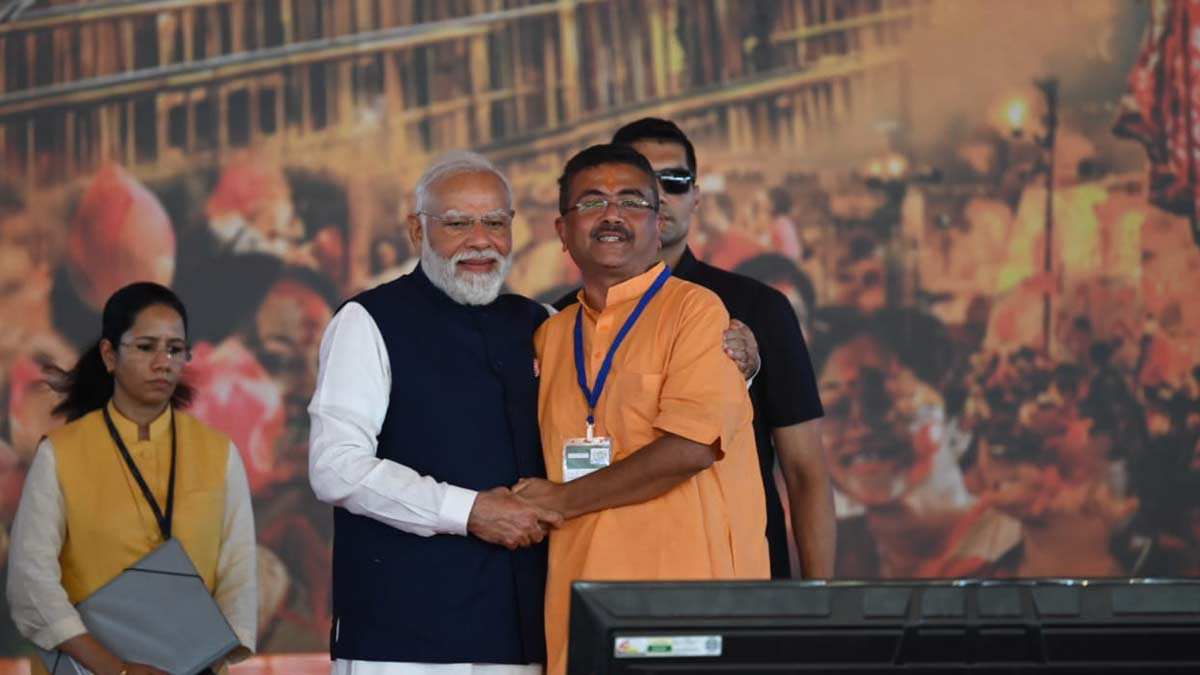
Elaborate security arrangements have been put in place across Kolkata ahead of the swearing-in ceremony of BJP leader Suvendu Adhikari as the Chief Minister of West Bengal—an event being seen as a major political turning point in the state.
The oath-taking ceremony will be held at Brigade Parade Grounds and is expected to be attended by Prime Minister Narendra Modi, Union Home Minister Amit Shah, Defence Minister Rajnath Singh, and BJP president Nitin Nabin. Senior leaders from the BJP and the NDA, including chief ministers from several states, are also likely to be present.
Along with Adhikari, several newly elected BJP MLAs are expected to be sworn in as members of the first BJP council of ministers in West Bengal. While the party has not officially announced the cabinet list, reports suggest representation is likely from north Bengal, the Junglemahal region, Matua-dominated areas, and tribal belts.
A multi-layered security system comprising central forces and Kolkata Police has been deployed at the venue and across key parts of the city to manage crowds and ensure order.
Thousands of BJP supporters from north Bengal and neighbouring states, including Jharkhand, have begun arriving in Kolkata for the ceremony. Carrying party flags and raising slogans, they have gathered at multiple points in the city before moving towards the Brigade Parade Grounds.
The BJP secured a decisive victory in the recent Assembly elections, winning 207 seats in the 294-member House, ending the Trinamool Congress’s 15-year rule. The TMC was reduced to 80 seats. Adhikari registered a notable win over Chief Minister Mamata Banerjee in Bhabanipur while also retaining his Nandigram seat.
Once a prominent face of the Trinamool Congress and a key figure in Mamata Banerjee’s anti-land acquisition movement in Nandigram, Adhikari joined the BJP in 2019—a move that significantly reshaped West Bengal’s political landscape.
His victory against Mamata in the 2021 Nandigram assembly election further cemented his state-wide political stature. Over the last five years, he rose through the BJP ranks thanks to his mass appeal and aggressive political style.
Hailing from Purba Medinipur district, Adhikari is set to become the first Chief Minister of West Bengal in over five decades to come from outside Kolkata’s traditional political establishment.
