



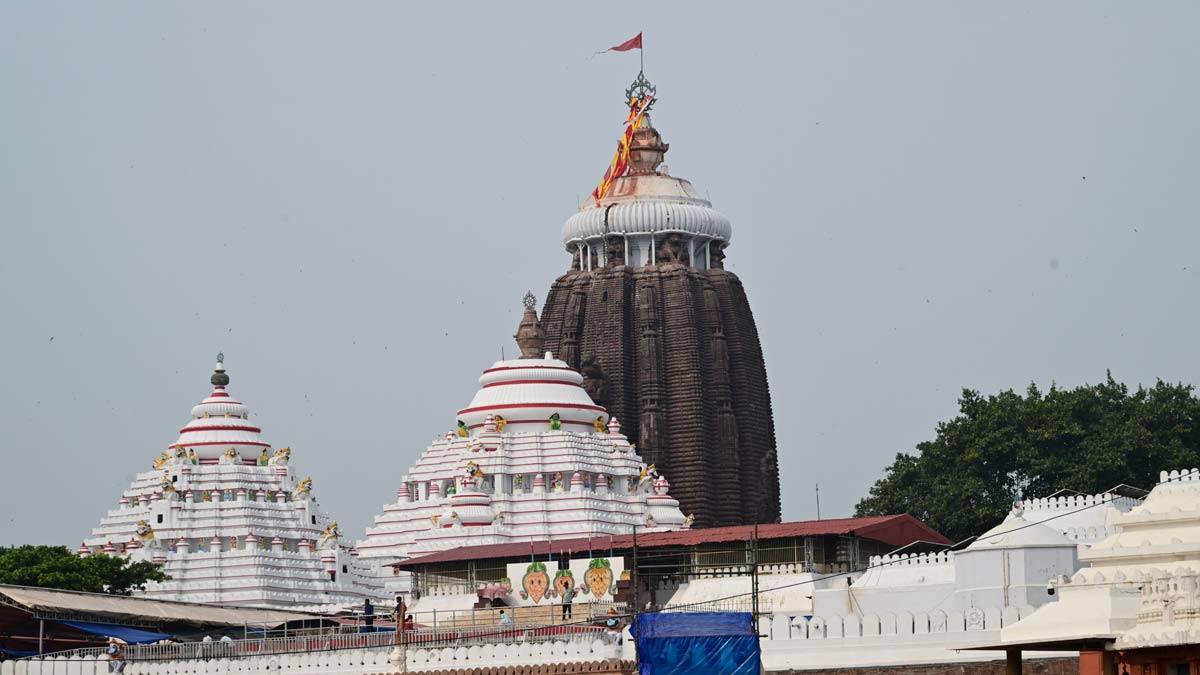
In politics, issues from one election do not have a carry-over effect on the next one. The Ratna Bhandar row of Puri Shri Jagannath Temple was one of the key factors that led to the end of Naveen Patnaik-led Biju Janata Dal's 24-year regime in the 2024 Lok Sabha election in Odisha. Ironically, the issue may now bring some relief to the beleaguered Opposition if the present trend of a fresh inventory continues till the end. The last inventory of the Ratna Bhandar of the 12th-century temple had been done in 1978, and before the 2024 assembly elections, the then Opposition (BJP) and even Prime Minister Narendra Modi had raised the issue of alleged theft of its keys. The present inventory started by the state's BJP government has shown no discrepancy so far, as per temple authorities. Of course, only 20 per cent of the stock has been checked, and the rest of the valuable materials will be taken up for checking most likely after May 11, according to sources.
Ever since the first phase of the Ratna Bhandar inventory, which started on March 25, got over, the main opposition party, Biju Janata Dal, and the ruling BJP have been trading charges against each other. Since, before the 2024 Lok Sabha election, the latter had made it a political issue to corner Naveen Patnaik’s BJD government, naturally, the statement of Puri Shri Jagannath Temple’s Administrator Dr Aravind Padhee, IAS, that all items inventoried have matched the 1978 audit list, has come as some sort of clean chit to the previous government. This has led to BJD leaders accusing the BJP of spreading misinformation to pocket votes during the last election, and Law Minister Prithviraj Harichandan issuing strong counters.
What is the Ratna Bhandar controversy?
The Ratna Bhandar issue of the 12th-century Puri temple revolves around the ongoing inventory to verify the stock of jewellery and valuables in the temple's treasure trove. Since the ruling BJP had raised concerns over the missing keys of the Ratna Bhandar and suspected missing items before the 2024 elections to the state assembly and Lok Sabha held together, it took up the fresh inventory as per its promise.
In 1978, it had taken 72 days to complete the inventory. This time, the ornaments kept in three compartments – Chalanti (daily use), Bahar (used in special festivals like Sunabesha), and Bhitar Ratna Bhandar –were to be counted. Inventory of the first two has been completed, and the last one’s counting has been suspended because of temple rituals like Chandan Yatra, which will conclude on May 10. So, it is expected that the next phase of inventory will start from May 11, probably. If no discrepancy is found in the next phase inventory in comparison to 1978, then the ruling BJP will face further embarrassment.
After V.K. Pandian, an IAS officer from Tamil Nadu who joined the Odisha cadre, became a powerful figure within the government and the BJD as Naveen Patnaik's close associate and key campaigner after resigning from civil service, the BJP aimed its 'Odia Ashmita' (Odia pride) campaign and the issue of the missing Ratna Bhandar key at him. BJP leaders alleged that the Ratna Bhandar key had been stolen and was in Tamil Nadu, Pandian's home state. PM Modi himself highlighted these concerns. Union Home Minister Amit Shah and Assam Chief Minister Himanta Biswa Sarma also incorporated the Ratna Bhandar issue into their campaign. Given Lord Jagannath's status as the reigning deity of Odisha, this matter deeply resonated with the public. Naveen Patnaik's limited public presence during events and election meetings may have been due to health reasons. In his stead, Pandian, rather than any senior BJD leader from Odisha, appeared to be in charge. Furthermore, a non-Odia bureaucrat-turned-politician campaigning for the party in rallies instead of local leaders fostered the impression that an outsider was attempting to seize power from an ailing CM. The Ratna Bhandar issue amplified this perception. While it has been suggested that earlier inventory checks by the BJD could have prevented this problem, the Chief Administrator of Puri Shri Jagannath Temple announced on April 20 that the inventory and tallying of ornaments in the Challanti and Bahar Bhandaras had been completed without discrepancies when compared to the 1978 list. Justice Biswanath Rath, heading the Ratna Bhandar committee, reported that the fresh inventory found 147 items in the Bahar Ratna Bhandar, exceeding the 118 items listed in the 1978 inventory.
Reacting to the statements by Rath and Padhee, which confirmed no discrepancies in the recent inventory, BJD leader Pranab Prakash Das told the media that the wealth of the deities in the Ratna Bhandar remained secure. He accused the BJP of spreading misinformation and rumours to win votes from devotees across the state during the last general election. Das condemned the BJP for using Lord Jagannath in their campaign, calling it a sin and noting that the truth had now been revealed.
Prithviraj Harichandan, the Minister for Law, whose department oversees the management of Puri Shri Jagannath Temple, sharply questioned why the BJD government had not located the Ratna Bhandar keys, saying, "we had to cut it open". The BJD countered by pointing out that Harichandan’s father, senior BJP leader Biswabhushan Harichandan, served as Minister for Law during the 1978 inventory and again from 2000 to 2009, and they questioned why he had not opened it then. Additionally, Jagannath Sena has filed a complaint regarding recently discovered missing jewels from the outer chamber.
The Ratna Bhandar was opened under a High Court order that directed the state to facilitate repairs and conservation. The administration had been unable to open it due to the missing keys. The BJD government had appointed former Justice Raghubar Das of the Odisha High Court to investigate the circumstances surrounding the loss of the keys. The commission's report to the state government did not resolve the issue of the missing keys but offered suggestions for preserving the keys and the Ratna Bhandar. The Naveen Patnaik government then tasked Arjit Pasayat, a former Supreme Court judge, with initiating steps to open the Ratna Bhandar. However, before Justice Pasayat could begin his work, a new BJP government came to power and appointed Biswanath Rath, a former judge of the Odisha High Court.
Two teams were involved in the inventory proceedings under tight security, video recording, and 3-D digital cataloguing, adhering to the state government's Standard Operating Procedure (SOP). One team served as a supervisory panel of three members, while the other, a 10-member handling body, was led by Chief Administrator Aravindo Padhee and former Justice Biswanath Rath, the head of the high-level Ratna Bhandar Committee. Authorised members of this body, including a Deula Bania servitor (temple goldsmith), Deula Karan, Chadhau Karan, a gemologist, an officer from the weights and measurement department, and an officer from the Reserve Bank of India (RBI), participated in the inventory and tallying. They wore traditional Odia attire: dhoti and gamuchha. All team members took an oath of secrecy before entering the Ratna Bhandar. The locks of the Bhitar Ratna Bhandar were opened in the presence of a magistrate after the keys were retrieved from the district treasury.
Chief Administrator Aravindo Padhee informed the media that the inventory commenced on March 25 with the contents of the Challan Bhandar, followed by the Bahar Ratna Bhandar. The inventory of the Challanti Bhandar was completed in a single day, while the Bahar Ratna Bhandar took two days. The inventory of the Bhitar Ratna Bhandar began on April 14 and concluded after four days.
The Chief Administrator explained that the 1978 inventory team had meticulously recorded detailed descriptions of each item, including its weight, the quality of gold or silver, the size of precious and semi-precious jewels, and assigned a small number tag. Padhee commended the 1978 team's thorough work, which facilitated the current team's operations.
Nevertheless, the full political implications can only be assessed once the final counting results are announced.
