



The Ministry of Petroleum and Natural Gas (MoPNG) on Thursday dismissed claims that India's LPG supply would take up to four years to recover to the pre-war levels, calling them "misleading".
The MoPNG had been responding to recent reports citing an unnamed official who had made the claim, amid the US Navy-imposed blockade of the Strait of Hormuz, that has choked energy flows through the crucial waterway.
Reiterating India's "structural resilience" in the energy field, the ministry explained that India had already diversified its energy procurement to places such as the US, Norway, Canada, Algeria, and Russia.
As a result, it claimed that 800,000 metric tonnes (MT) of "assured import cargoes" were already secured and en route to India.
It also cited a March 9 LPG Control Order, under which refineries were instructed to maximise domestic daily LPG output by 40 per cent to 50,000 MT—against a total daily requirement of about 80,000 MT.
What this means is that India's refineries have further bridged the gap between supply and demand, with imports expected to continue filling in the remainder of the gap as the West Asia crisis persists.
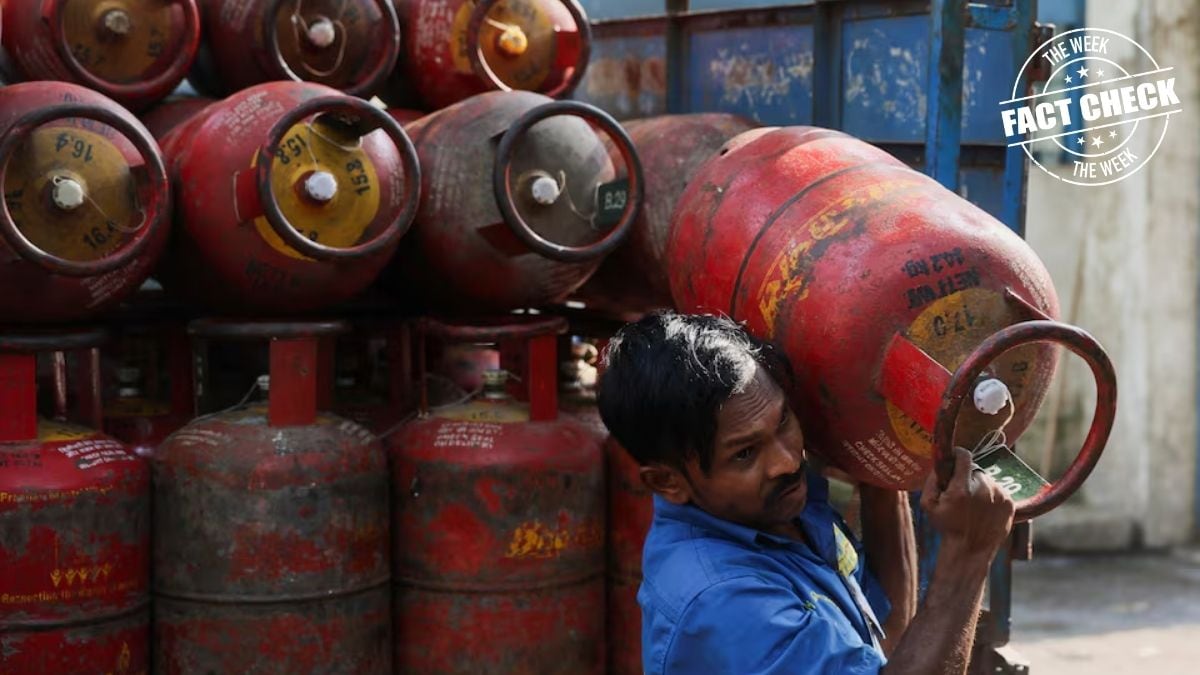
"On an average, 50 lakh cylinders have been delivered everyday in March and not a single dry-out has been reported at any distributorship in the country till now. The booking-to-delivery cycle remains unchanged at 5-6 days," the MoPNG reiterated, pointing out that LPG infrastructure has doubled in the country.
It also claimed that the rise in LPG connections from 14.52 crore to 33.39 crore—and distributors from 13,896 to 25,607—meant that India was more energy resilient now than in the past.
"Citizens are advised to rely only on verified information from official channels," the MoPNG added, pointing out that such reports were part of the "coordinated misinformation campaign" that official channels continue to debunk online.
