



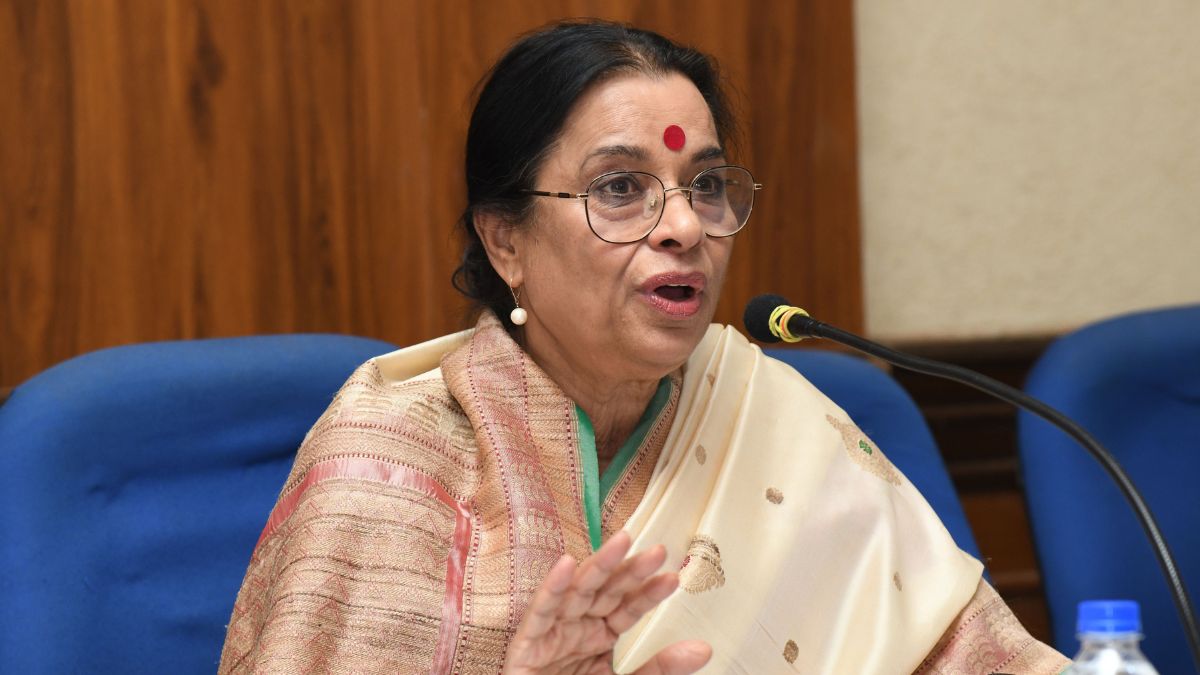
Women’s organisations on Tuesday urged all political parties to move quickly on implementing 33% reservation for women in Parliament and state Assemblies, saying the long wait for the reform must end now.
At a press briefing organised by Women Power Connect and the Centre for Social Research, speakers said the issue has already seen a 30-year legislative journey and should not be delayed further due to procedural hurdles like delimitation.
Dr Ranjana Kumari, Director of the Centre for Social Research and Chairperson of Women Power Connect, said it is time to move from promises to action. “We need to create a proper pipeline for women leaders. This is not just about passing a law, but about ensuring women actually get space in politics,” she said.
She pointed out that women still face major challenges in entering politics, including the influence of money and muscle power. “Politics is still controlled by money, men and mafia. Women have to fight this system, and parties must support them in doing so,” she said.
On the question of delimitation, Kumari said it should not be used as an excuse to delay implementation. “If something important is ready, we should accept it. Delimitation should not block this bill,” she said, adding that the real test will be whether the law is implemented in time for the 2029 elections. “The test of the pudding is in the eating; only then will we know the intent is clear.”
Speakers also highlighted that women’s representation in Parliament has grown from around 3% in the early years to about 13% now, but is still far behind global standards. They said passing and implementing the quota will send a strong message to the world about India’s commitment to equality.
Sharmistha Mukherjee said the reservation will help bring more women from backwards and marginalised communities into politics. “OBC, minority, and SC/ST women will come forward. Political parties will have to give them tickets. That was always the purpose of this reform,” she said.
Responding to concerns that women representatives are often controlled by male family members, Ranjana Kumari said the situation has changed over time. “Women today are more independent. In states like Bihar, women have shown that they can lead and make their own decisions,” she said.
The speakers also called for support across party lines. Kumari said all parties have spoken in favour of women’s reservation in the past. “Now they should come together and make it happen. The timing is always right to give justice to women,” she said.
She added that political parties often limit women’s roles to organisational work, but the time has come to give them real decision-making power. “Women should not just organise events or manage things. They deserve proper representation,” she said.
The groups also referred to a recent assurance by the Prime Minister and said any delay or deviation from that commitment would raise serious questions.
Calling it a moment of social and political change, the speakers said greater representation of women will make democracy more meaningful and inclusive. “This is not just about numbers. It will bring a larger cultural shift in how politics works,” Kumari said, urging all parties to rise above politics and ensure the law is implemented without delay.
