



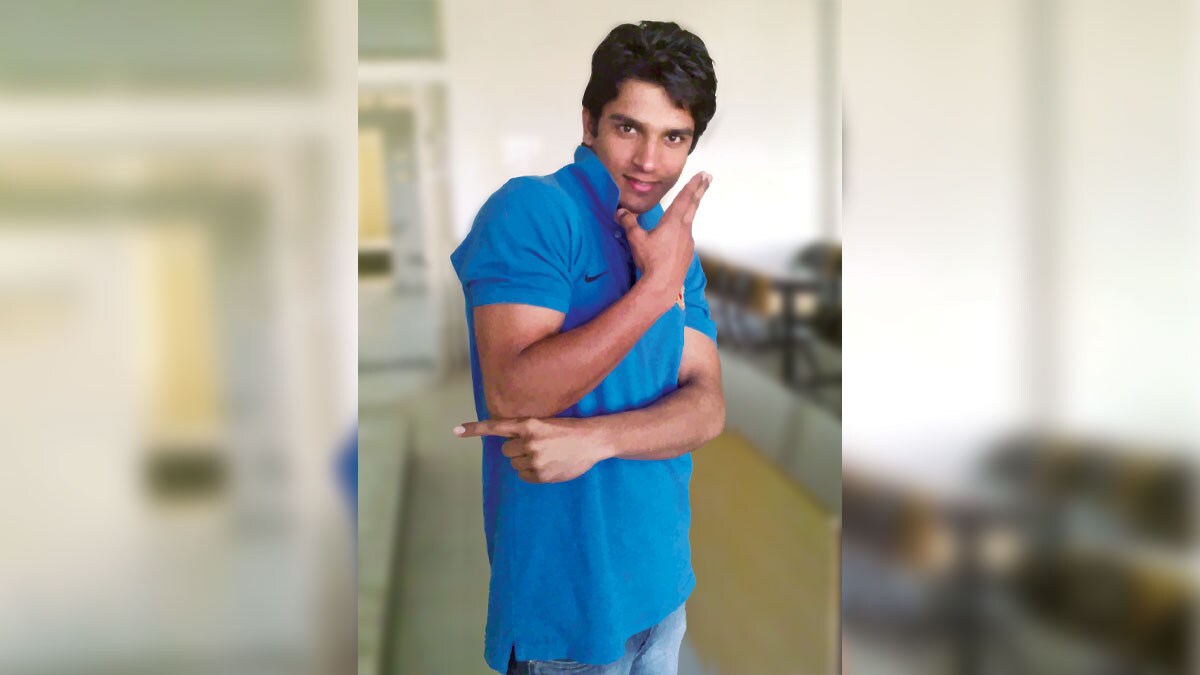
For more than a decade, Harish Rana’s life has been measured not in milestones but in hospital routines, the steady hiss of machines, feeding tubes that keep his body alive, and parents who have learnt to live with unending uncertainty.
On Thursday, the Supreme Court of India said it would consider whether to withdraw life-sustaining treatment for the 32-year-old man, who has remained in a permanent vegetative state for the past 13 years, as it reserved its order on a plea seeking passive euthanasia filed by his parents.
A bench of Justice J.B. Pardiwala and Justice K.V. Viswanathan, which met Harish’s parents in chambers before the hearing on January 13, described the matter as deeply sensitive and emotionally fraught.
“These issues are delicate. We are also mortals. Who are we to decide who lives or dies?” the bench observed, adding that it would examine whether life-sustaining medical treatment could be withdrawn in this case.
A life altered in seconds
Harish, then a resident of Delhi’s Mahavir Enclave, had left home in his teens to study in Chandigarh, chasing the ordinary dreams of a young man stepping into adulthood. On August 20, 2013, those dreams were shattered.
Harish fell from the fourth-floor balcony of his paying guest accommodation, suffering catastrophic head injuries. Doctors later assessed his condition as a 100 per cent disability. Since that day, he has never regained consciousness.
For 13 years now, Harish has existed in a permanent vegetative state, unable to speak, move or respond, dependent on tubes for breathing and nutrition. Medical reports placed before the court say the possibility of recovery is negligible.
For his parents, life has been an endless vigil. Their son breathes, but there is no awareness, no recognition, no communication, only a body kept alive by medical intervention.
Accelerating a natural death
During the hearing, the amicus curiae appointed by the court, representing Harish’s parents, urged the bench to permit passive euthanasia, describing it not as an act of killing but as allowing nature to take its course.
“This is a case of accelerating natural death,” the amicus argued, relying on the reports of two medical boards. Continuing life-sustaining treatment, she submitted, violated Harish’s right to live with dignity.
Explaining the process, the amicus said Harish would be shifted to palliative care, where invasive medical interventions would stop. Feeding tubes would be removed, and sedatives would be administered to ensure that he did not experience pain or distress.
“There will be no intervention. He will be made comfortable till his death,” she told the court.
Centre supports parents’ plea
Significantly, the Union government supported the parents’ request. Appearing for the Centre, Additional Solicitor General Aishwarya Bhati concurred with the amicus, stating that Harish’s condition was irreversible and that the continuation of treatment served no therapeutic purpose.
She emphasised that passive euthanasia did not involve causing death but merely refraining from artificial prolongation of life.
“The death should not be caused due to the omission. The death should be due to the underlying condition,” Bhati said, stressing that the act of withdrawing support should not itself become the direct cause of death.
She also urged the court to consider framing clearer guidelines that take into account the views and hardships of caregivers of terminally ill patients, pointing to the emotional and legal ordeal endured by Harish’s parents over the years.
“He has been in an irreversible permanent vegetative state for the last 13 years,” the ASG said. “He is on his skin and bones.”
Law, dignity and an unfinished conversation
Active euthanasia remains illegal in India. However, passive euthanasia — the withdrawal or withholding of life-sustaining treatment was first recognised by the Supreme Court in 2011 in the landmark Aruna Shanbaug case. In 2018, the court further legalised passive euthanasia and laid down detailed guidelines.
Bhati noted that if the court permits withdrawal of treatment in Harish’s case, it would be among the first instances where those guidelines are actually implemented.
As the bench reserved its judgment, the courtroom fell quiet, reflecting a question larger than law alone. For Harish’s parents, the plea is not about ending a life, but about ending a long, silent suffering.
