



In the mornings, the house smelled of tea and toast. By afternoon, there was the rustle of textbooks being rifled through. The evenings were the loudest. The television would be on, the kitchen would be alive with the clang of vessels, and three siblings would be speaking at once, arguing, laughing.
Nirmala Rana knew exactly who would come home first, who would ask for food, and who would disappear into their room. Ashok would return from work, take off his shoes, open the newspaper and call out to his children one by one, asking how their day had been.
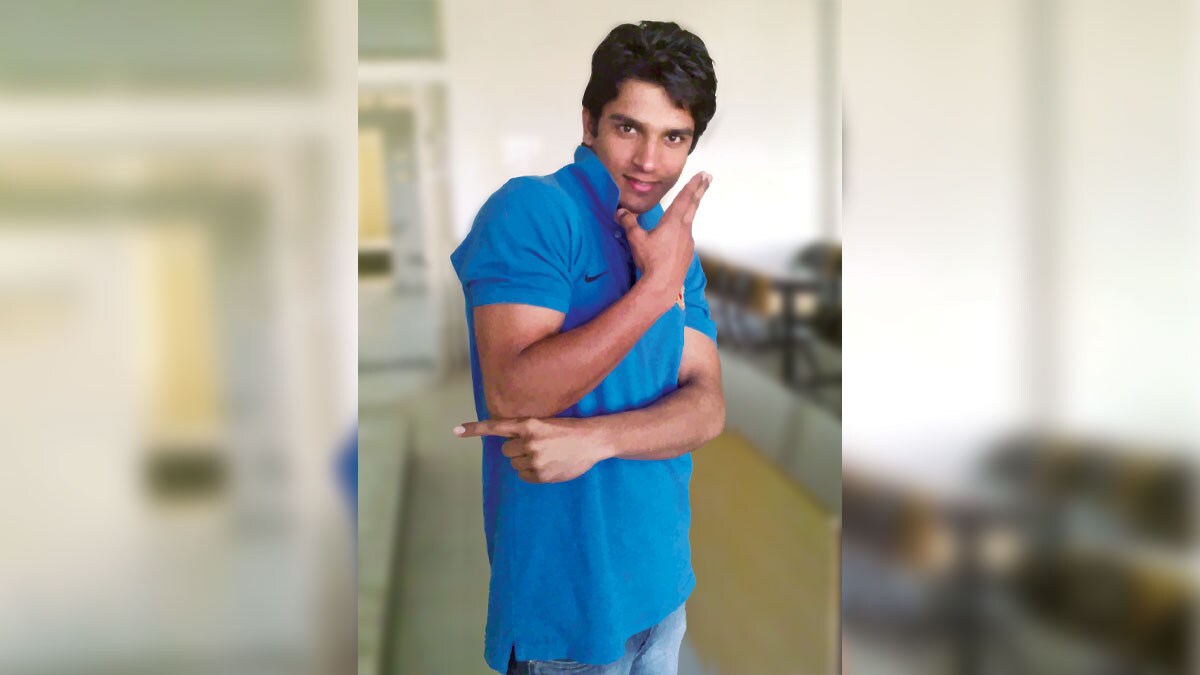
Harish, the eldest, moved through the house with quiet authority. He was disciplined, strong and ambitious—a final-year civil engineering student who spoke of site work and gym routines with equal seriousness. Ashish, younger by several years, followed him around, learning without asking. Their sister, the youngest, balanced studies and household work, navigating expectations that were never spoken aloud. It was a simple middle-class home in Delhi—a 25-year-old house built through years of savings and patience. A house where the future felt predictable, even secure.
That life ended on August 20, 2013.
The phone rang at 7.21pm. Harish had fallen from the fourth-floor balcony of his rented room near Panjab University in Mohali. By the time Ashok and Nirmala reached the hospital, he had already undergone emergency brain surgery. Doctors spoke in careful, technical terms: severe neurological damage, extensive trauma and irreversible injury. One sentence stayed with them the longest—the nervous system had dried up.
In the following weeks, they slept on the floor at PGIMER Chandigarh, took turns sitting outside the ICU, and learned to read medical charts and monitor screens. When there was no improvement even after two months, Harish was moved to AIIMS, Delhi. Machines changed, medicines were adjusted and the doctors did their best. Soon, though, the word ‘recovery’ disappeared from conversations. Harish was in a vegetative state.
In the next few years, medical bills piled up and they had to sell the house and move to a smaller, rented place in Raj Nagar, Ghaziabad.
At the centre of their lives now is a 6×4 ft room. Harish’s bed occupies most of it.
Every morning begins the same way. Nirmala wakes at dawn. She washes her son’s face gently, wets his lips, checks the feeding tube, and straightens his arms and legs as she has done thousands of times. She smoothens the bedsheet and speaks to him about the weather, medicines that have run out and visitors who may or may not come.
Sometimes Nirmala scolds him lightly; for a fleeting moment, this allows her to pretend he can hear, argue back, still be present.
“I carried him for nine months,” she says, still facing the bed. “Now I am saying I want him to be free. A mother should never have to say this.”
Harish cannot move or speak. He breathes through a tracheostomy tube and is fed through a gastrostomy tube. He needs help to relieve himself.
Nirmala remembers how he used to stand in front of the mirror, flexing his arms. “Dekho mere biceps (look at my biceps),” he would say, asking her to prepare protein-rich meals.
“Now,” she says, her voice breaking, “I prepare liquid food and pour it through a tube.”
Ashok sits quietly nearby, counting the day’s earnings. He used to work for a catering company, but is now retired. He gets 3,600 as pension every month. To keep his son alive, he sells sandwiches at cricket grounds.
Harish’s care costs nearly Rs25,000 a month, including medicines, physiotherapy and nutritional supplements. Often, something essential to the home has to wait.
Their younger son, Ashish, is the family’s backbone. He feeds his brother, cleans him, turns him over every few hours to prevent bedsores, watches for infections, and studies his blinks. His own life is on pause.
Their sister is married and lives nearby. She visits often and helps when she can, but the daily weight of care rests on Ashok, Nirmala and Ashish.
At times, Ashok leans close to Harish and says, “You are a brave boy.”
Harish blinks.
In July 2024, Ashok did something no parent wants to do—he approached the Delhi High Court seeking permission for euthanasia. The plea was declined.
The court said that as Harish was not on ventilator support, there was no case for passive euthanasia (withdrawing life-sustaining treatment). Removing the feeding tube would amount to active euthanasia, which is illegal in India. The Ranas, though, argue that in Harish’s case, the artificial feeding serves as life-sustaining treatment and hence qualifies for withdrawal under passive euthanasia law.
“Maa ke liye mrityu maangna chhoti baat nahi hoti (For a mother, asking for death is not a small thing),” says Nirmala. “Par aisi zindagi ka kya fayda (But what is the point of such a life)?”
Years of care had exhausted most of their resources. “This was not about wanting our son to die,” says Ashok. “It was about not being able to keep him alive like this any more. We were forced into court not because we wanted to let go but because we could no longer hold on.”
Their lawyer, Manish Jain, remembers the moment clearly. “By the time they came to us,” he says, “they had crossed every personal threshold. This petition was born out of compulsion, not choice.”
The family then approached the Supreme Court, which declined the euthanasia request, but directed the Uttar Pradesh government to extend medical support. On paper, the relief was substantial. In practice, it was fragile. Feeding tubes were often unavailable. Medicines ran out. Prescriptions had to be arranged privately.
“There are days when the doctor writes a prescription, but the medicine is not there,” says Ashok.
In 2025, they went to the apex court again, which told the Noida district hospital to set up a primary medical board to assess the situation. It later asked AIIMS to set up a secondary medical board for further evaluation.
The boards recorded intact brainstem function but total dependence on external support for feeding, posture and bodily functions. They reported that Harish’s condition had deteriorated and that the chances of recovery were negligible. “It’s a very sad report,” the court said. “And it will be a big challenge for us also. But we can’t keep the boy like this for all time to come.”
In India, assisted dying—the intentional act of causing death through a lethal injection or similar means—is illegal. It attracts criminal liability under the Bharatiya Nyaya Sanhita, either as murder or culpable homicide. A doctor assisting such an act would face charges of abetment to suicide.
Passive euthanasia is different. The distinction lies in action and omission. Stopping life support allows the underlying illness to take its natural course. The constitutional basis for this distinction lies in Article 21—the right to life and personal liberty—which the Supreme Court has interpreted to include the right to live with dignity.
When life is ending and medical intervention only prolongs suffering without hope of recovery, the court has held that dignity may lie in allowing death to occur naturally. In such a case, death is treated as a result of the disease or injury, and not because of the withdrawal of treatment.
India has no comprehensive statute governing end-of-life decisions. In that vacuum, courts have been forced to build safeguards, step by step. The judicial journey began with Aruna Shanbaug vs Union of India (2011).
Shanbaug, a nurse, had been sexually assaulted in 1973 and was in a vegetative state for decades. She breathed without a ventilator, responded to stimuli and was cared for lovingly by nurses at KEM Hospital in Mumbai. She could not be called dead, the court said.
However, the court did recognise that the right to live with dignity might, in limited circumstances, include the right of a dying person to a dignified death. Assisted dying was prohibited, but passive euthanasia could be permitted.
In the absence of legislation, the court laid down interim guidelines. Withdrawal of life support required the consent of family or next friend, approval by doctors acting in the patient’s best interest, and judicial oversight by a High Court.
This framework was revisited in Common Cause vs Union of India (2018). A Constitution bench held that the right to die with dignity was an inseparable facet of Article 21. Withdrawal of life-sustaining treatment was upheld as merely accelerating the conclusion of a natural process already underway. The court also recognised Advance Medical Directives, allowing individuals to record their wishes regarding refusal or withdrawal of medical treatment.
The safeguards, however, proved nearly impossible to implement. The advance directives had to be signed by witnesses and countersigned by a judicial magistrate of the first class. Multiple medical boards were required. The collector was involved. Magistrates had to visit patients. In reality, hospitals and families were paralysed by procedure.
In 2023, the Supreme Court acknowledged that its own framework had created insurmountable obstacles. It simplified the process. Advance directives could be attested before a notary or gazetted officer and stored digitally. Hospitals would constitute two medical boards, with doctors having at least five years’ experience. The collector’s role was removed. Magistrates only needed to be informed, not involved. If boards refused permission, families could still approach the High Court.
However, Harish’s case exposes the tension between law and life. A bench of Justices J.B. Pardiwala and K.V. Viswanathan has said that it wants to personally speak to Harish’s parents before taking a decision. This signals that the case is not just about medical reports, but also lived reality. The court now has to decide whether dignity, as promised by Article 21, can meaningfully reach families trapped in endless waiting.
Back in the small room in Ghaziabad, the Ranas are glued to Harish’s bedside. “We want his organs to be donated,” Ashok says quietly. “If he cannot live like a human being, then at least we should be able to see him live in someone else’s body.”
This thought has taken years to form. “Maybe someone else will walk,” he says. “Maybe someone’s child will breathe. Then we will feel that Harish is still somewhere in this world.”
Time has altered the family’s relationship with hope. In the early years, hope was loud and demanding. It came in the form of doctors’ reassurances, experimental medicines, new physiotherapy routines and the belief that youth itself might pull Harish back. Over time, that kind of hope exhausted itself.
What replaced it was something quieter. Now, hope exists in smaller, more fragile forms. It is the absence of infection. A day without fever. A feeding tube that does not clog. A bedsore that does not worsen. Survival has become incremental, measured not in milestones but in hours that pass without crisis. For Nirmala, hope is sometimes as simple as Harish remaining comfortable through the night. “Aaj shaant tha (today he was peaceful),” she says on such mornings.
Age weighs heavily on Ashok. He worries not just about money, but about time, his own failing strength, Nirmala’s health, and the unspoken question of what happens to Harish when they are no longer around.
In this suspended existence, the family’s plea is not a demand, but rather an appeal for closure and dignity. They are not asking the law to choose death. They are asking it to acknowledge life as they are living it.
Nirmala once again adjusts the bedsheet around her son’s body. “Bas dard na ho (just let there be no pain),” she whispers.
