



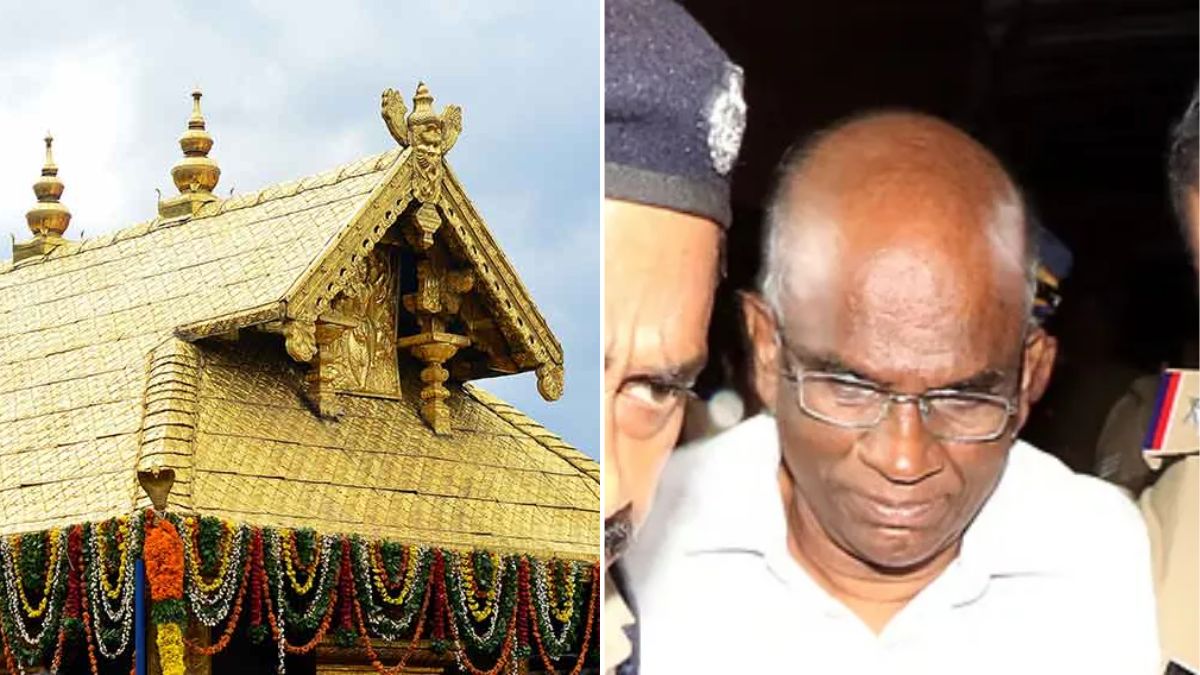
The Special Investigation Team probing the Sabarimala gold theft case made its most high-profile arrest yet on November 11, detaining former Travancore Devaswom Board president N. Vasu, who has close links to the CPI(M). Vasu’s arrest is a major setback for the CPI(M) and the ruling LDF, coming at a time when Kerala is entering a charged election season.
Born into a family with strong CPI(M) ties, Vasu rose through the ranks to hold several key positions—from Vigilance Tribunal Judge to president of the Travancore Devaswom Board. His ascent to these influential posts was widely seen as being backed by the CPI(M).
Before becoming Travancore Devaswom Board president, Vasu had served twice as Devaswom Commissioner. A staunch and trusted CPI(M) loyalist, he was known for aligning the Devaswom Board’s and Sabarimala’s major decisions with the party’s interests, even while occupying the ostensibly neutral post of Commissioner.
A native of Kulakkada in Kollam, Vasu was once an active and committed party worker. He became Kulakkada Grama Panchayat president at 27, after contesting his first local body election in 1979. He went on to serve two terms as panchayat president, and it was during his second term that he was appointed Vigilance Tribunal Judge.
During the V.S. Achuthanandan-led LDF government (2006–2011), Vasu served as Additional Private Secretary to Minister P.K. Gurudasan. Later, under the same government, he was appointed Devaswom Commissioner—a post he held from November 2010 to February 2013. When the Pinarayi Vijayan government came to power, Vasu was once again brought back to the position, serving from February 2018 to February 2019.
This period coincided with the Supreme Court verdict allowing women’s entry into Sabarimala, and the subsequent efforts by the state government to implement the ruling through police intervention—moves that triggered widespread protests and unrest across Kerala.
While the case was before the Supreme Court, Vasu oversaw the Devaswom Board’s legal responses and actions in alignment with the government’s position. Though he was removed from the Devaswom Commissioner’s post within a year, in a highly unusual move, he was appointed president of the Travancore Devaswom Board in November 2019.
Vasu’s arrest has punched a major hole in the CPI(M)’s defence in the Sabarimala gold theft case, which until now rested on blaming lower-level Devaswom officials.
With just a week remaining before the six-week deadline granted by the High Court for the SIT to submit its report expires, the investigation team will now have to accelerate all remaining arrest procedures. Notably, the Travancore Devaswom Board—which was headed by CPI(M) leader A. Padmakumar in 2019—is the eighth respondent in the case related to the disappearance of gold-plated sheets from Sabarimala. The High Court’s interim orders have kept the Board under continued suspicion. Earlier, the Devaswom vigilance report on the missing gold from Sabarimala sreekovil had indicated serious lapses and potential complicity of TDB officials.
Although the SIT is composed of state police officers, the investigation is being carried out under the supervision of the High Court. Interestingly, the SIT had questioned Vasu once earlier and released him. It is widely believed that the SIT was forced to summon him again and arrest him because of the court’s supervision.
