



Fourteen years ago, an Indian jail was thrown open for a human rights expert from the United Kingdom whose ‘inspection” report would decide the fate of India's extradition request for Surat bomb blast accused Mohammed Hanif alias Tiger Hanif. The case was coming up for hearing before a UK court the following month.
A professor in the Department of Forensic Medicine at the University of Dundee in Scotland set off on a ten-day trip to Gujarat where he was accompanied by a Delhi-based doctor to study the conditions in Surat jail where Hanif would be lodged after his extradition. The professor wanted to find out from jail inmates if they were ''ill-treated'' because Hanif, who figured on Interpol's most wanted list, had taken refuge in the UK's human rights law, which does not allow extradition of accused to countries where they might face torture.
The Union Home Ministry asked the Gujarat government for its consent, and access was given to the human rights expert to inspect the jail. That was 2012.
The UK court finally cleared Hanif’s extradition, only to be turned down eight years later by the then UK home secretary in 2020.
The setback to Indian investigating agencies wasn’t new.
The reason why the UK, Commonwealth countries and even European countries are a favourite destination for Indian fugitives of law is the human rights protections and built-in legal defences available to them.
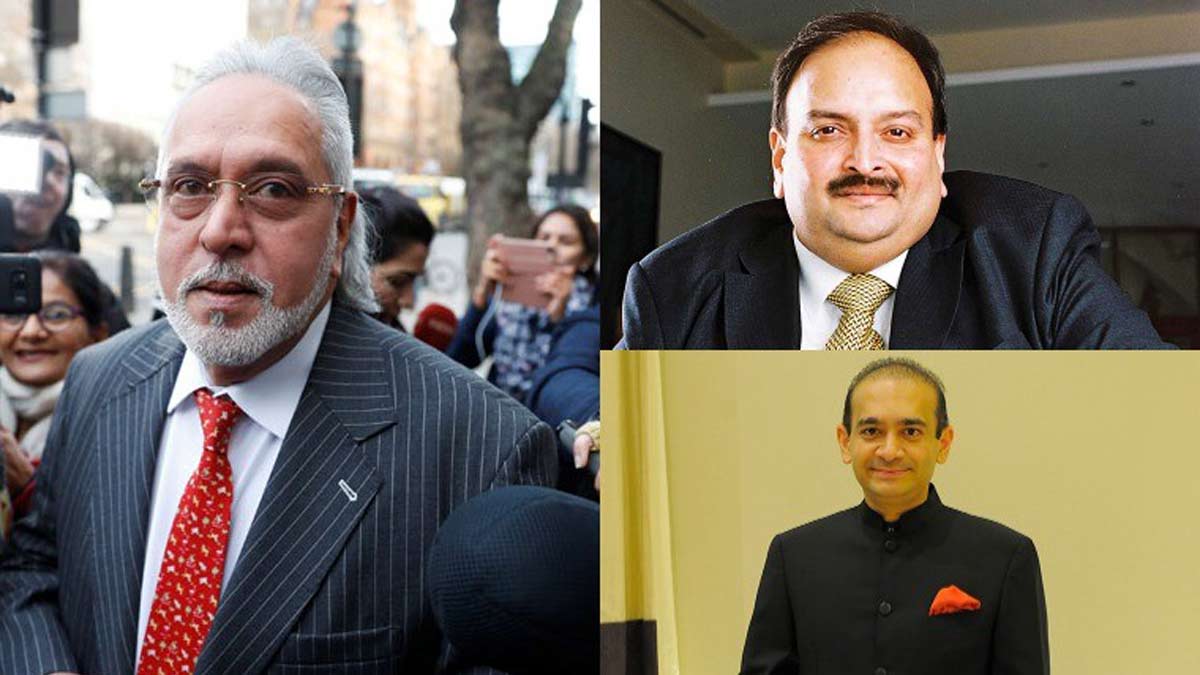
In recent years, similar reasons have been cited by fugitives like diamantaire Nirav Modi in a UK jail and a few others on bail, such as liquor baron Vijay Mallya, whose extradition requests in separate cases of money laundering are under various stages of scrutiny.
With the Indian government once again pulling out all the stops to bring fugitive businessman Mehul Choksi from Belgium, after failing to deport him from Dominica in 2021, the playbook is the same, with Choksi’s legal team raising concerns of degrading treatment and poor jail conditions in India.
Choksi, a prime accused in the multi-crore PNB bank scam, is wanted by Indian investigating agencies after he fled India in 2018 and took shelter in the island nation of Antigua and Barbuda. His sudden disappearance from Antigua and emergence in Dominica led Indian investigators to pursue his extradition from Dominica, but once again, his appeal to the Dominican Court on “humanitarian grounds” paved the way for his return to Antigua for medical treatment. Choksi is the uncle of Nirav Modi, the main accused in the PNB scam, who is fighting an extradition case in the UK.
With Choksi in detention in Belgium now—after he was arrested there in April—the Union Home Ministry is once again assuring the authorities of the “humane” and “dignified” treatment that will be given to him in Arthur Road jail in Mumbai to pave the way for his extradition to India. The MHA’s sovereign binding commitments, detailing the prison conditions to allay concerns of Belgian authorities, raises a critical question of how soon the Indian criminal justice system (which has changed its “colonial era” penal code to Bharatiya Nyay Sanhita) can rid itself of an image of poor delivery of justice, and defeat fugitives’ pleas in foreign courts that put pressure on the government to defend itself every time. Clearly, Indian investigators have been trying to find ways to overcome such legal tangles over the years.
There is both hope and uncertainty at this juncture.
A case in point is the recent extradition of 26/11 accused Tahawwur Rana from the United States earlier this year. The extradition was no cakewalk as Rana had used the same playbook and employed a British Barrister and Queen’s Counsel to cite international and Indian laws to claim the benefit of double jeopardy to prevent extradition, after raising an alarm over prison conditions and fear of torture in jail. It was senior counsel Dayan Krishnan, representing NIA pro bono, who demolished the Queen’s Counsel in the US court with arguments from the BNS laws, paving the way for a rare extradition from the United States.
“Rana’s case was in the 'terror' category,” pointed out an investigator, “where counter terror cooperation between India and the US played a huge role in bringing him back.”
In Choksi’s case, the charges relate to alleged money laundering and defrauding public sector banks, causing multi-crore losses to banks.
“Moreover, given the present fluctuation in diplomatic ties, with US President Donald Trump’s tariff tensions spilling across Europe, it remains to be seen how smoothly New Delhi’s concerns on economic offenders are addressed by Belgium,” said a government official.
Given the pace of each case of bringing back fugitives of law, from Hanif to Mallya, investigators say they are ready to cross several legal loops to lay their hands on Choksi in Belgium this time, putting an end to a cross-country chase.
