



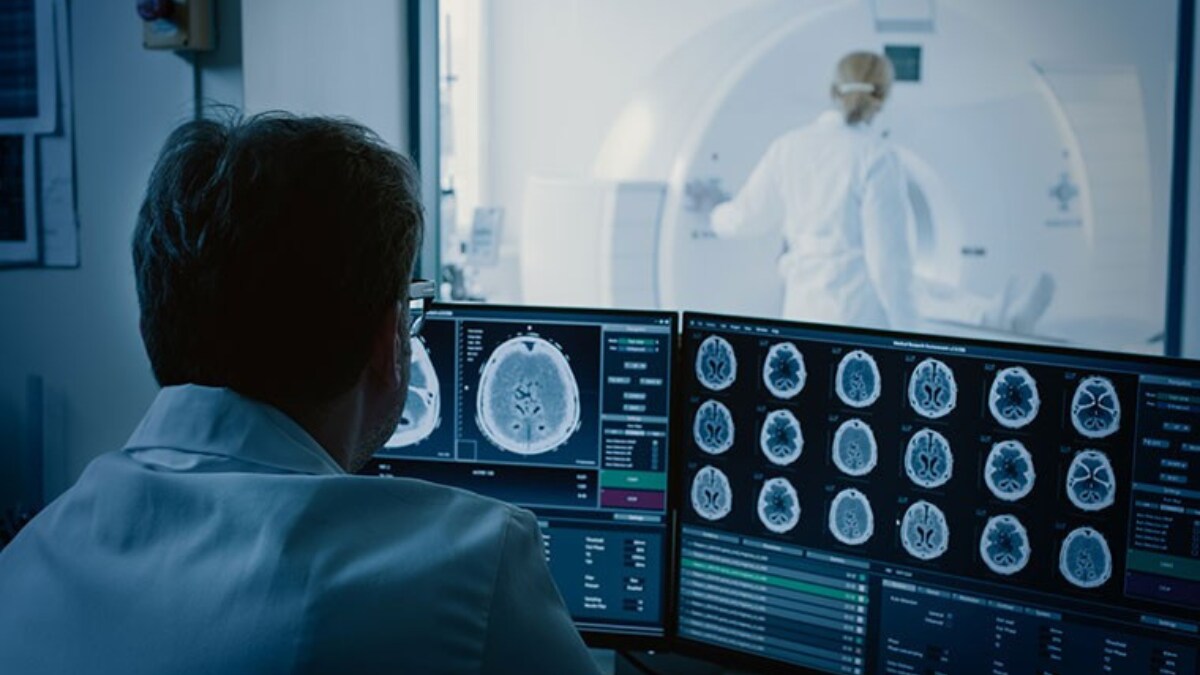
One in seven. That is the proportion of India’s stroke patients who are under 45 years, as per the ICMR National Stroke Registry that tracked 34,792 patients across 30 hospitals in 2020-22. Almost 14 per cent of the patients died before discharge, and another two-thirds were discharged with some kind of disability. High blood pressure, present in 74.5 per cent of stroke patients, topped the risk factors.
They are not grandparents. They are earning years, parents, and caregivers. They are the ones who get disabled in the decade when the country’s economic growth depends on their productivity. As nations prepare to mark World Stroke Day on October 29, the question is not about better post-stroke management but why our youth carry so much burden today.
The common thread
The registry points to one risk factor above the rest: hypertension. It is also the one the health system is best equipped to find and cheapest to treat. Nothing about it is mysterious. A cuff, thirty seconds and a daily tablet can separate a family’s ordinary year from a catastrophic one.
The latest National Family Health Survey offers a measure of comfort. NFHS-6 finds that 22.1 per cent of men and 19.4 per cent of women aged 15 and above have elevated blood pressure or are on medication, a slight fall from 24.0 and 21.3 per cent in NFHS-5. But a falling prevalence is not a controlled one. The WHO report on hypertension says that only 39 per cent of those Indians between the ages of 30 and 79 who have the condition are diagnosed, 33 per cent are treated, and 15 per cent have their blood pressure under control.
Nor is this an urban affliction. NFHS-6 puts elevated pressure at 26.2 per cent among urban men and 20.4 per cent among rural men, and at 23.5 and 17.8 per cent among urban and rural women. Roughly one in five rural men is affected, in the places where a missed reading is hardest to catch and the nearest stroke unit is farthest away.
Those figures begin at 30, because that is where national population-based screening begins. Between 18 and 30, the system has no routine contact at all. Yet the earlier trend is moving the wrong way. Between NFHS-4 and NFHS-5, prehypertension among men aged 15 to 24 rose from 38.9 to 44.5 per cent, and hypertension from 5.2 to 6.2 per cent.
What sits on the plate
The causes will not come as a surprise. The National NCD Monitoring Survey has shown that Indian adults are consuming 8 grams of salt per day as against the World Health Organization’s (WHO) upper limit of 5 grams.
Less than a third of Indians surveyed were even aware of high salt’s impact on health. In another space, India has demonstrated its capacity to act decisively. Industrial trans fat in food has been brought down to 2 per cent as per the law that came into effect from January 2022. This is an illustration of how Indian states have the capability to take on the food supply chain through legislation. Salt needs to be taken up in the same spirit with clear front-of-pack labels, reformulation targets for packaged food and healthier procurement by the public distribution system. A limit on the label will matter only if it trickles down to the local mithai wala and chaat thela.
A system that waits
The deeper problem is design. Our programmes wait for people to become patients. The youth rarely visit a clinic until they are injured or ill, and even if they do, they are not monitored, which means the very group in which the registry is finding strokes is precisely the least likely to be measured.
Closing that gap does not require new architecture. It requires three decisions. First, to take blood pressure measurements when young adults are at every routine clinic visit. Second, for continuity of care to be the system's duty and not the patient's virtue, through reliable medicine supply, simple regimens and follow-up that does not rely on memory. And third, to make the healthier plate the easier choice, so that prevention is not dependent on willpower or money.
The measure that really counts is not how many people got checked, but how many were kept under control a year later. Stroke is one of the few catastrophes we can see coming. It is a number nobody took and India does not need to wait for the next registry to tell us that.
(The author is the regional advisor, Asia, Global Health Advocacy Incubator)
The opinions expressed in this article are those of the author and do not purport to reflect the opinions or views of THE WEEK.
