



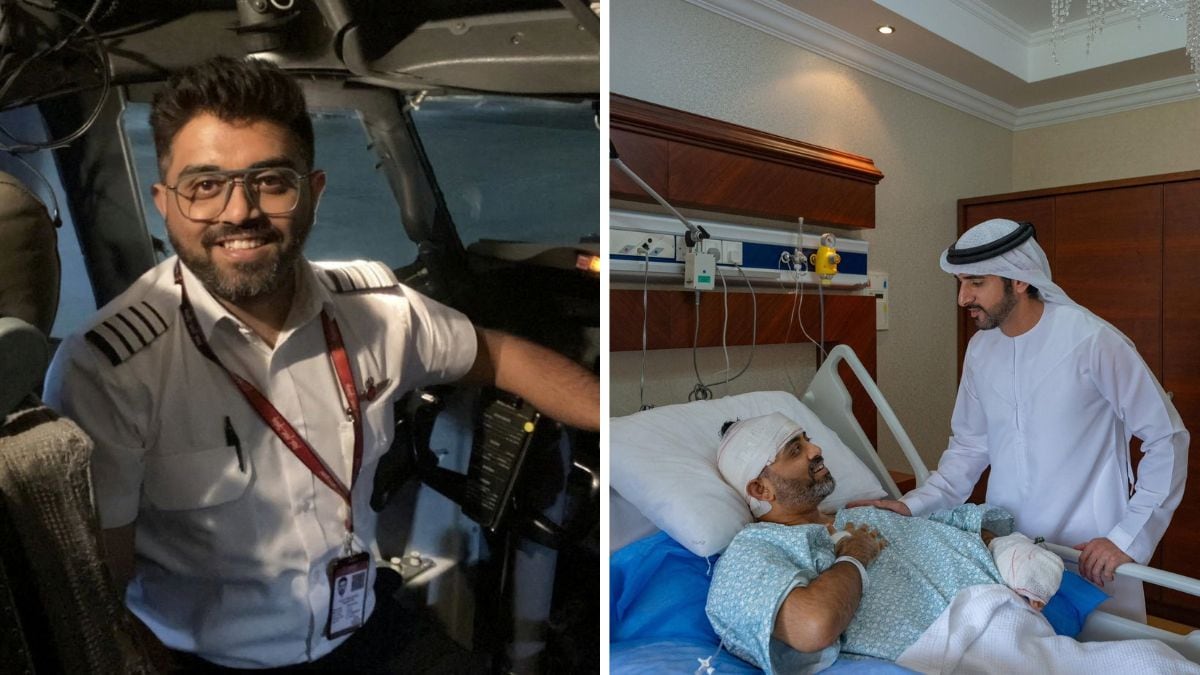
flydubai Indian pilot Smit Machchhar, who braved the odds and averted a potential 9/11-style attack, suffered severe head injuries after being attacked by his Omani co-pilot. The co-pilot, identified as Hamam al-Hammami, struck him from behind with a crash axe in the cockpit on the Dubai-Tel Aviv flight. He attempted to take control of the aircraft, with over 170 passengers and crew, and crash it in Israel.
According to reports, Machchhar suffered a "depressed skull fracture" during the attack.
As details of his heroism inside the cockpit emerge, reports indicate that despite severe injuries, heavy blood loss, and excruciating pain, Machchhar managed to unlock the cockpit door twice. Even with severely blurred vision, he was able to open the cockpit door, which eventually allowed the passengers to enter the cockpit and overpower the co-pilot.
What is a depressed skull fracture?
A depressed skull fracture happens when a skull breaks, and a piece of bone is pushed inward toward the brain. Unlike a linear fracture, which is a clean crack in the bone without displacement, a depressed fracture acts like a dent in a helmet, putting direct pressure on the protective layers of the brain or the brain tissue itself.
A skull fracture is a bone break in your skull. The injury is common after vehicle accidents, falls and sports injuries. While some skull fractures are mild and heal on their own, others may need surgery to prevent complications from affecting your brain.
What are the types of skull fractures?
According to Cleveland Clinic, there are several types of skull fractures, including:
Linear fracture: This is the most common type of skull fracture. It usually happens in the bone toward the top of your head, above your ears.
Depressed fracture: A break in your skull that pushes part of the bone closer to your brain. A depressed fracture can involve multiple cracks and fragments.
Basal (basilar) fracture: A break of the bones at the base of your skull. This includes the bones behind your face and the bones that are internal in your brain that you can’t see.
Diastatic fracture: A separation of the cranial sutures, or the bands of tissue that connect the bones in your skull together.
Combination or complex fractures: Fractures that may involve several of the above types or multiple areas of fractured bone.
What are the symptoms of a skull fracture?
The injury affects your brain; you may experience nausea and vomiting, confusion, slurred speech, vision loss, loss of feeling in parts of your body, difficulty with balance and coordination, and fatigue.
How long does it take to recover after surgery?
Reportedly, Machchhar underwent emergency surgery in Saudi Arabia, where doctors reconstructed his skull, before he was flown to the UAE.
The healing time for a skull fracture varies based on the type and severity of your injury. It could take several weeks to months for your bones to heal completely. Because a depressed fracture involves bone fragments sunken inward toward the brain, recovery usually unfolds in phases:
Surgical recovery and initial pain management typically take one to two weeks. This is followed by bone healing—known as osteogenesis—which takes six to twelve weeks, a phase during which strenuous activity and heavy exercise must be avoided. Neurological recovery then takes anywhere from three months to over a year; if there was an underlying concussion or traumatic brain injury (TBI), lingering symptoms like fatigue, headaches, mood shifts, or memory gaps gradually resolve.
