



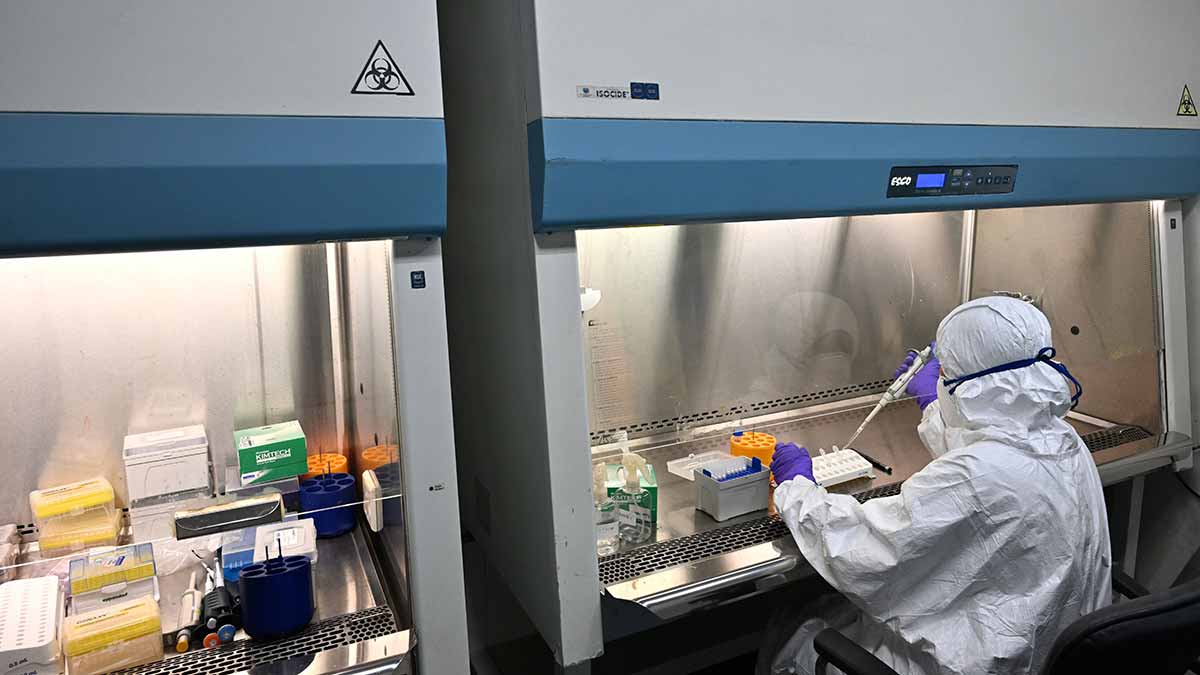
Nearly 200 people have been quarantined and several hospital wards placed under lockdown after a 28-year-old lab technician reportedly died of pneumonic plague in Russia's Irkutsk region.
The incident occurred at the Irkutsk Anti-Plague Research Institute, with the deceased identified as Darya Shipilova. She reportedly contracted pneumonic plague during laboratory work before being hospitalised in Shelekhov.
According to local media reports, she told medical staff that she had accidentally broken a test tube containing live bacteria while collecting samples for testing.
Shipilova was hospitalised on September 29 with severe pneumonia symptoms and placed on ventilator support before passing away on October 1.
Over 200 people, who she has been in contact, has been placed under quarantine.
Public events in Irkutsk have also been cancelled, local media reports said.
Irkutsk region Governor Igor Kobzev said that a suspected case of a "particularly dangerous infection" has emerged, and urged the public to remain calm.
In a post on Telegram on October 2, he said he has met the chief of the consumer safety watchdog Rospotrebnadzor to coordinate emergency containment measures.
"Rospotrebnadzor is implementing a full range of anti-epidemic measures," he said.
"All identified contacts have been placed under medical observation. As of today, the contacts show no signs of illness, and laboratory test results are negative," he added.
What is pneumonic plague?
Pneumonic plague is the most severe, contagious, and deadly form of plague caused by the bacterium Yersinia pestis. It is classified as a critical medical emergency due to its rapid onset and high mortality rate.
If left untreated, pneumonic plague has a near 100% case-fatality rate. However, with early intervention and administration of antibiotics, the mortality rate drops significantly.
The incubation period ranges from 1 to 3 days, but symptoms can escalate rapidly. Patients can experience severe respiratory failure, septic shock, and death within 24 to 48 hours of onset if treatment is delayed.
Antibiotics (such as streptomycin, gentamicin, levofloxacin, or doxycycline) must be administered within 24 hours of first symptoms to be effective.
