



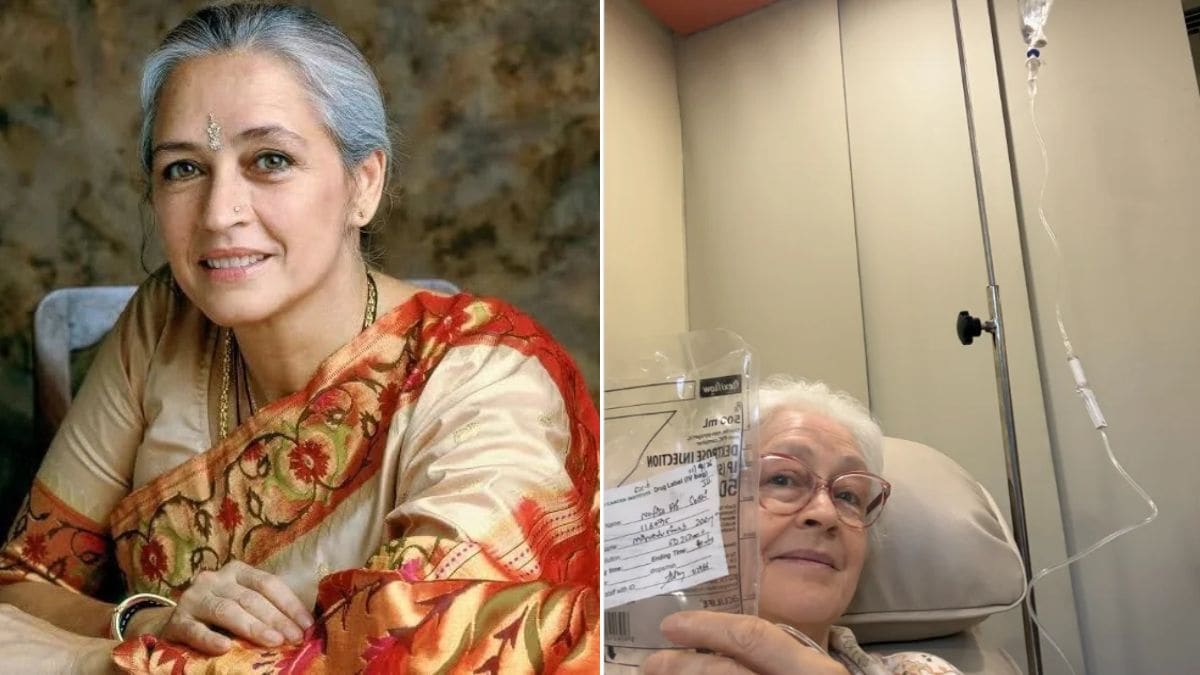
Veteran actress and former beauty queen Nafisa Ali Sodhi has revealed that her cancer has progressed, with recent PET/CT scans showing new cancer deposits on the surface of her liver. The actor, who has been battling recurrent ovarian and peritoneal cancer, has now shifted to targeted therapy as part of her ongoing treatment.
The 69-year-old actor, who has been open about her battle with cancer in her social media posts, described herself as continuing to “fight the good fight” and thanked her supporters for their encouragement throughout her cancer journey.
"My treatment protocol has changed and now I have been put on Targeted Therapy… fighting the good fight. Thank you for always keeping my support energy strong. In very simple terms, the PET/CT suggests that the ovarian/peritoneal cancer has progressed, with new deposits on the surface of the liver," an official Instagram post of the actress mentioned.
Nafisa Ali has worked across Hindi and regional cinema, including a role in the Malayalam film Big B (2007), starring Mammootty. Her other major movie roles include Major Saab, Bewafaa, Life... In a Metro, Guzaarish, Yamla Pagla Deewana and Saheb, Biwi Aur Gangster 3.
Nafisa Ali Sodhi's cancer journey
Nafisa Ali first shared her cancer diagnosis in 2018 and revealed that she was fighting stage 3 peritoneal and ovarian cancer. She underwent treatment including major surgery in 2019. In 2025, however, the actor revealed that her cancer had returned and she was resuming chemotherapy.
What is targeted therapy?
According to the Cleveland Clinic, targeted therapy is a cancer treatment that targets the genetic changes or mutations that turn healthy cells into cancer cells. It helps health care providers treat cancer cells without hurting healthy cells.
How does it work?
Oncologists first start by researching the genetic mutation that changes a healthy cell into a cancer cell. After this, they will will decide which parts of the cancer cell to target. They may focus on the cell’s surface or substances inside the cell. The drug will be focused on hitting the targeted areas of cancer cells, which may kill the cells or block the genetic instructions that make the cells multiply.
