



Driven by rapid technological breakthroughs, AI has evolved from a diagnostic tool into a vital partner for surgeons in the operating room. A British man has become the first person in the world to have a brain tumour removed via AI-assisted surgery.
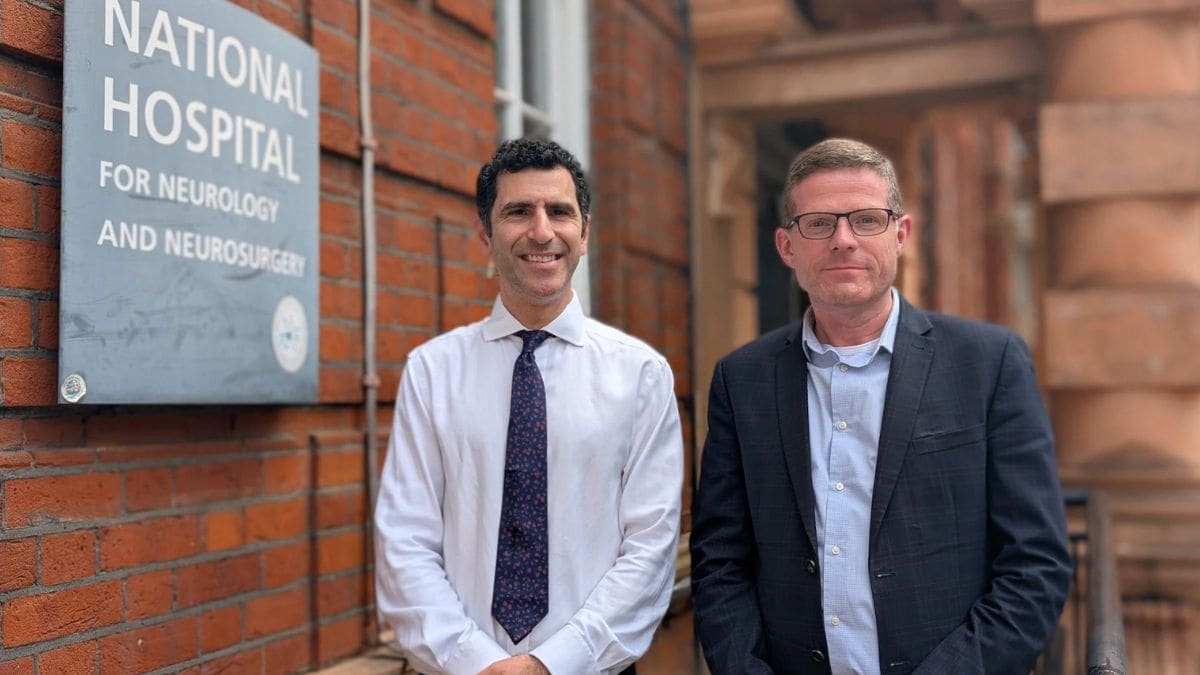
Rhys Hibbert (48) was operated on by surgeons at the National Hospital for Neurology and Neurosurgery (NHNN), part of University College London (UCL) Hospitals NHS Foundation Trust.
How AI was used to perform the brain surgery
According to the surgeons, live artificial intelligence was utilised to identify minuscule anatomy in the brain. AI colour-coded important structures to help surgeons know which areas to avoid while removing the tumour.
With so many vital brain functions packed closely together—including vision-controlling nerves—the surgical team noted that 'going a millimetre wrong can make a critical difference."
The surgery took place in May this year.
Hibbert said that the surgery had saved his eyesight.
AI made in the UK
Hani Marcus, a professor and consultant neurosurgeon, noted that the AI that assisted the surgery was made in the UK.
"It was developed "in-house" at the UCL Hawkes Institute and was trained using hundreds of videos of brain surgeries," said Marcus.
AI tools have already been used in other types of surgery in the UK.
How AI performed bowel resection surgery on a woman
In June, 'Eureka'- an AI developed in Japan- was used to perform a bowel resection on a woman at St Mark's, the National Bowel Hospital (part of London North West University Healthcare NHS Trust).
Rather than performing automated cuts or independent robotic actions, the AI acted as a real-time visual navigation aid during the procedure.
*Real-time anatomical colour-coding: Integrated alongside robotic or laparoscopic tools, the portable AI system continuously analyses live camera feeds from inside the body. It projects colour-coded, pulsing overlays onto the surgical monitors. For example, critical nerves glow green while surrounding connective tissue is highlighted in turquoise.
*Identifying hidden structures: Developed by Japanese medical experts using machine learning algorithms trained on thousands of annotated operative videos, the AI identifies subtle anatomical features and boundaries that may be obscured or difficult for the human eye to perceive.
*Enhanced safety and precision: The system alerts surgeons to vital structures before incisions are made, serving as what lead consultant surgeon Kapil Sahnan described as a surgical "Google Maps" or an "extra helping arm"—ensuring targeted bowel tissue is safely dissected while preserving delicate surrounding nerves and healthy tissue.
