



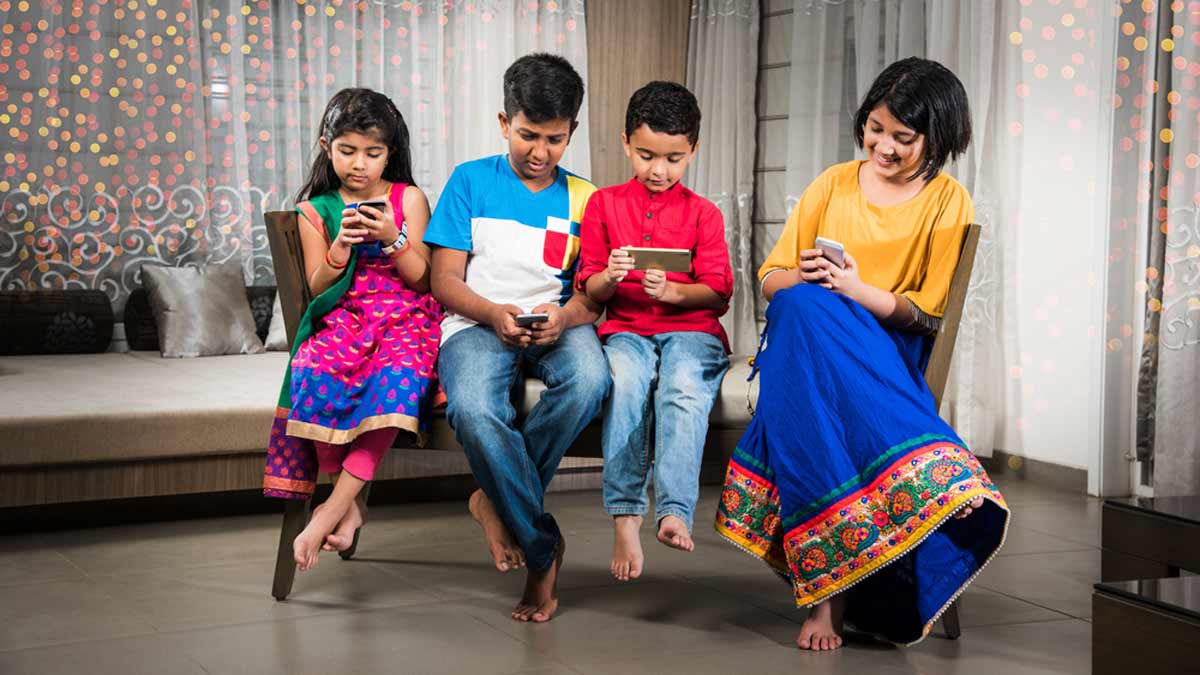
After years of rising concern over screen addiction, online harms, algorithmic manipulation and worsening youth mental health, Britain has moved toward some of the toughest restrictions on children's access to social media. The question is no longer whether social media affects children. It is whether societies are willing to act on what they already know.
For India, home to one of the world's largest populations of young internet users, the UK's decision is a glimpse into a future conversation that India cannot postpone forever.
For nearly two decades, social media companies successfully framed themselves as neutral platforms where users exercised free choice. That argument has become increasingly difficult to sustain.
Modern social media is not simply a communications tool. It is an attention-maximising machine. Platforms deploy sophisticated recommendation systems designed to increase engagement, often by amplifying emotionally charged content.
For adults, this raises concerns about misinformation and polarisation. For children, the concerns are deeper.
A growing body of research links excessive social media use to anxiety, depression, sleep disruption, body-image issues and compulsive behavioural patterns among adolescents.
The UK government's intervention reflects a broader recognition that children may require a different regulatory framework than adults. Societies already accept age restrictions for alcohol, tobacco, gambling and driving. The emerging question is whether algorithmically engineered digital environments deserve similar scrutiny.
The average British child enters a highly connected but relatively mature digital ecosystem. The average Indian child enters a digital environment that is expanding at breathtaking speed, often without equivalent digital literacy, parental supervision or institutional safeguards.
India has over 450 million internet users below 25. Cheap smartphones and low-cost data have democratised access. Yet, the same infrastructure has also exposed children to cyberbullying, online predators, misinformation, gambling content and addictive engagement.
Unlike many Western societies, India is navigating these risks while simultaneously trying to expand digital inclusion. Policymakers, therefore, face a difficult balancing act, that of protecting children without denying them access to opportunities that increasingly exist online.
“Childhood and adolescence are crucial years for brain development, learning, emotional growth, and building self-confidence. Excessive social media use can affect attention, sleep, academic performance, self-esteem, and emotional well-being, especially when children spend large amounts of time online," says Ruksheda Syeda, psychiatrist based in Mumbai. “Parents often have little control over the content, influencers, advertisements, and AI-driven recommendations that reach their children. Many platforms are designed to keep users engaged for longer, increasing the risk of unhealthy screen habits, exposure to harmful content, and unrealistic comparisons."
In India, where digital access is growing rapidly but online safety awareness is still evolving, limiting social media use among children can be an important step toward protecting their mental health, agree doctors. "Along with restrictions, children need guidance from parents, schools, and communities to develop safe and healthy digital habits," adds Syeda.
In India, the Digital Personal Data Protection Act includes provisions relating to children's data. Policymakers have discussed age verification mechanisms and parental consent requirements. Schools and educators have become increasingly vocal about smartphone dependence among students. Yet India's regulatory architecture remains fragmented.
Most debates still focus on privacy, content moderation or platform liability. Relatively little attention is paid to the design of platforms themselves, that have behavioural nudges that keep users engaged.
The central concern is not merely what children see online. It is how platforms are designed to hold their attention, say experts.
The UK's move signals a growing willingness among governments to regulate digital architecture rather than simply digital content.
The temptation in public debate is to frame the issue as a binary choice. Either governments ban social media for children, or they leave families to manage the problem themselves. But reality, say experts, is more complicated.
Outright bans often create enforcement challenges. Young people frequently find ways around restrictions. At the same time, the argument that parents alone should solve the problem is unfair, says Mohini Khurana, mother of a 15-year-old who is due to appear for her Class 10 exams this year, but "is ridiculously addicted to her phone".
"No previous generation of parents had to compete against platforms employing thousands of engineers, behavioural scientists and machine-learning systems designed to maximise user engagement. Expecting individual families to carry the entire burden is not fair," says Khurana.
Today, a 12-year-old with a smartphone can access the same information streams, advertising systems, political messaging and social pressures as an adult. The barriers that once separated childhood from adulthood have become increasingly porous.
As artificial intelligence, immersive platforms and increasingly personalised recommendation systems become part of everyday life, concerns about children's digital environments will only intensify.
The UK's move is therefore not merely a British story. It is an early chapter in a global debate over who bears responsibility for protecting children in the age of algorithmic influence.
