



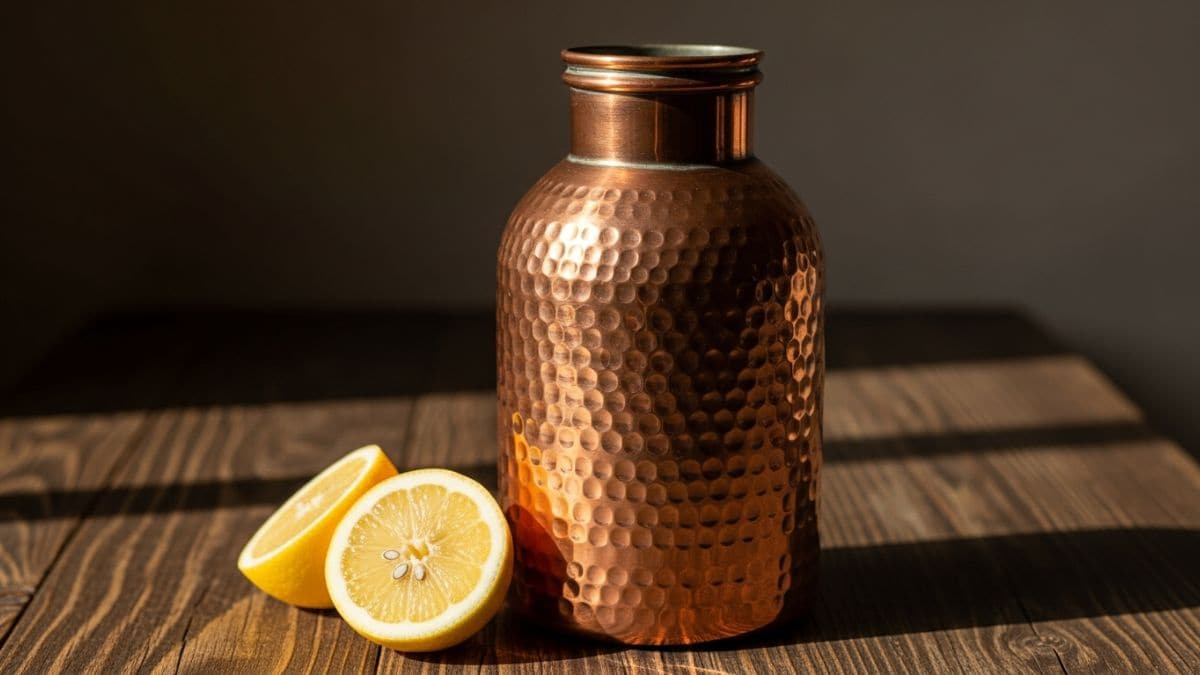
CLAIM:
Storing lemon water, cumin water, or hot water in a copper bottle can be harmful because acidic ingredients and heat may react with copper and increase copper leaching into the drink. According to the viral claim, improper use of copper bottles could potentially make the water toxic and negatively affect health.
FACT:
True. Scientific studies suggest that acidic drinks such as lemon water and prolonged storage, especially at higher temperatures, can increase copper leaching from copper bottles. Excess copper exposure may cause symptoms like nausea, stomach pain, and gastrointestinal discomfort, though occasional use of properly cleaned copper bottles for storing plain room-temperature water is generally considered safe for healthy individuals.
Summers are here, and so are the trendy copper bottles making a comeback in many households. From storing water overnight to carrying them as a wellness essential, copper bottles are often associated with traditional health benefits. But have you ever wondered if the very bottle meant to boost your health could actually turn toxic if used the wrong way?
In a viral YouTube shorts posted by Dr Manan Vora, an orthopaedic surgeon with over 44.7K subscribers on YouTube, he warns viewers that improper use of copper bottles may do “more harm than good.” In the video, he reacts to another clip in which a man claims, “How did one carelessness of mine turn lemon water into poison? After which my condition was never the same.”
Responding to the claim, Dr Vora says, “Drinking water in a copper bottle could be doing more harm than good if you are not using it correctly. To stay safe, follow these four rules.” He then explains that only plain water should be stored in copper vessels and warns against adding acidic ingredients. “No lemon, no cumin water. You have to store only plain water. If anything is acidic, it will react with copper and it will release harmful toxins in your drink,” he says.
He further cautions against pouring hot water into copper bottles, saying, “Boiling water or very warm water will increase copper leaching. This means more metals will come into your system.” Dr Vora also advises against using copper bottles as regular travel bottles, noting that only a small amount of copper exposure is needed for any potential benefits.
The doctor additionally highlights the importance of cleaning copper bottles properly. According to him, the greenish layer sometimes seen inside copper utensils is due to oxidation and should not be ignored. “Just rinsing with water isn’t enough. Clean it thoroughly,” he says, adding that while copper utensils have become a growing trend in Indian homes, “that is great only if used wisely.”
Is it dangerous to store lemon water in a copper bottle? Are we not using it the right way?
Scientific research does suggest that copper can leach into water under certain conditions, particularly when the liquid is acidic or stored for long durations. The overall risk depends on factors such as the type of liquid, storage time, temperature, and the amount of copper exposure.
A 2003 study examining the gastrointestinal effects of copper in drinking water found that higher copper concentrations were associated with a greater incidence of nausea. In the double-blind study, adult women were given drinking water containing different amounts of copper sulfate, after which researchers monitored symptoms such as nausea, vomiting, abdominal pain, and diarrhoea.
The researchers noted that, “Nausea was the most prevalent symptom reported,” and observed that “as Cu dose increased, the incidence of nausea increased.” The study identified a “NOAEL” (No Observed Adverse Effect Level) of 0.8 mg copper in 200 ml water, equivalent to 4 mg/L, for adult females.
The findings suggest that excessive copper exposure through drinking water may trigger gastrointestinal symptoms, especially at higher concentrations. However, the study focused on controlled copper dosing rather than everyday use of copper bottles alone.
Another 2022 experimental study explored how much copper leaches into drinking water stored in copper containers over different periods of time. Researchers stored water in copper vessels for durations ranging from 12 hours to 168 hours (seven days) and measured copper concentrations using ICPMS analysis.
The study found that copper levels gradually increased the longer the water remained stored in the copper vessel. According to the researchers, “the copper concentration… ranges from 0.009 to 0.823 mg/L, which indicates as time increases simultaneously copper content also raises in the stored water.” Importantly, even the highest recorded level after 168 hours remained “well within the permissible limits of World Health Organization and United States Environmental Protection Agency.”
However, the study also highlighted that several factors can increase copper leaching into water, including acidity, high temperatures, and prolonged stagnation. Researchers wrote that “copper leaching into water can be high due to the underlying conditions like acidic nature of water, hard rock terrain, high temperature,” along with longer storage periods.
The paper further noted that copper toxicity is possible when exposure becomes excessive. According to the study, “exposure to higher levels of copper can elicit acute adverse effects to the liver and also engender gastrointestinal symptoms like abdominal pain, cramps, nausea, diarrhea, and vomiting.” It additionally warned that acidic foods cooked or stored in copper cookware may contribute to excess copper exposure.
At the same time, the researchers emphasised that copper toxicity remains “unusual in healthy people without an inherited copper homeostasis deficiency.” The study concluded that while copper containers may still be used for water storage, people should be mindful of storage duration and overall copper intake from food, supplements, and water combined.
What experts say
According to Ms Aditi Prasad Apte, Senior Clinical Nutritionist at Aster RV Hospital, Bangalore, acidic beverages such as lemon water are generally not recommended for storage in copper bottles because the acidic medium may react with the metal and increase copper leaching into the liquid.
“Citric medium foods contain citric acid which can react with copper and leach into the water, leading to toxicity, also known as hypercupremia,” she explains. According to her, symptoms linked to excess copper exposure may include nausea and stomach pain. “So it is best to avoid storing lemon or other acidic drinks in copper bottles. Only room temperature plain water is suggested,” she says.
Speaking about hot water, Apte clarifies that pouring hot water into a copper bottle does not instantly make the water toxic. However, she notes that higher temperatures may increase copper release if the water remains stored for prolonged periods. “Hot water immediately doesn’t turn toxic or cause any harm, but high temperature can release copper into the water if it is stored for longer durations, leading to taste changes,” she says.
She further adds that occasional consumption of water stored in copper bottles is generally considered safe if proper precautions are followed. According to Apte, water ideally “should not be stored for longer durations beyond 8 hours,” and maintaining hygiene is essential. “Regular cleaning of bottles will help in preventing oxidation and maintaining copper bottles,” she says.
Apte also cautions that copper bottles may not be suitable for everyone. She notes that people with conditions such as Wilson’s disease , liver disorders, or kidney-related illnesses should avoid using them due to concerns around copper metabolism and excretion.
Addressing the greenish layer sometimes seen inside copper bottles, she explains that it is usually a sign of oxidation. “If water is stored and used repeatedly, it can lead to moisture build-up causing oxidation. Acidic drinks like lemon or kokum juice, along with poor cleaning and sanitisation, can also lead to bottle oxidation,” she says. According to her, consuming water from heavily oxidised copper bottles “is not suggested as it can be unsafe.”
This story is done in collaboration with First Check, which is the health journalism vertical of DataLEADS
