



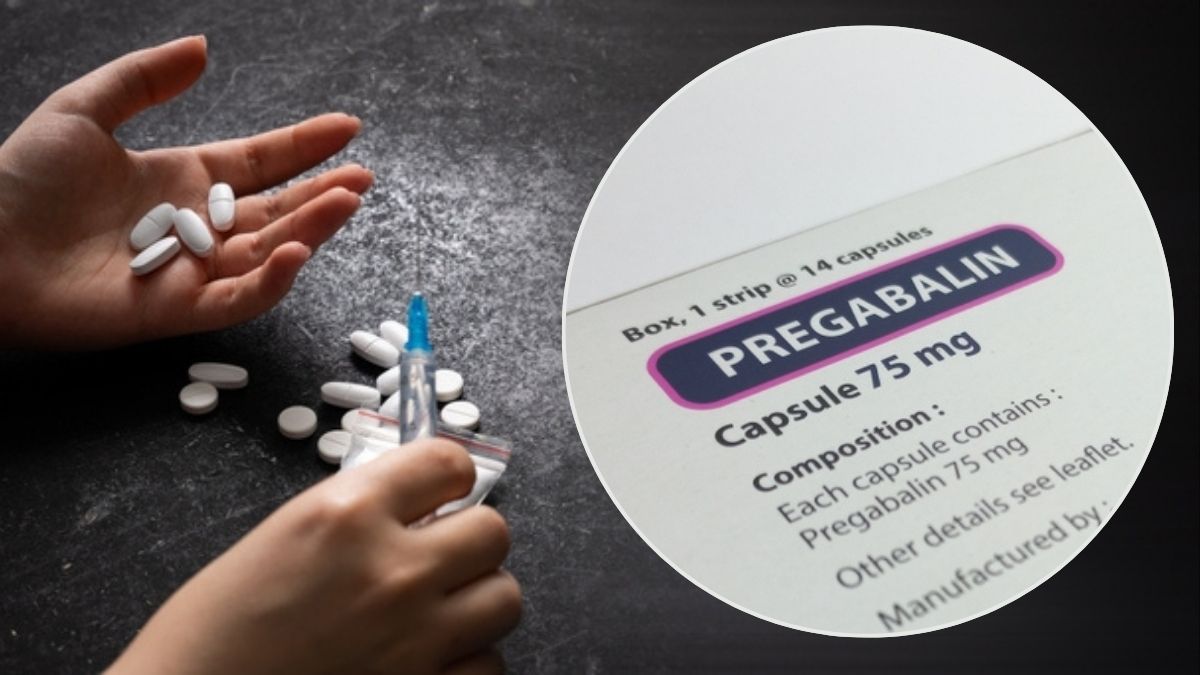
A widely prescribed painkiller will no longer be that easy to procure over the counter in India. The Union Ministry of Health and Family Welfare has moved pregabalin—a drug used to treat nerve pain, epilepsy, and fibromyalgia—into Schedule H1.
The H1 schedule of the Drugs Rules, 1945, is a stricter regulatory tier that requires a written prescription from a registered doctor and mandates that every sale be logged in a dedicated register at the pharmacy.
The official gazette notification of the May 13 order was published in the Gazette of India Extraordinary on May 20, 2026.
The trigger was a pattern of abuse that health authorities could no longer ignore. State governments had flagged the misuse of pregabalin—particularly among young people—for its sedative, euphoric, and dissociative effects when consumed in doses well above the therapeutic range.
Illegal stocks and unauthorised sales had also been seized across parts of the country in the past year. Pregabalin misuse is, however, nothing new.
A systematic review published in the CNS Drugs (Schjerning, Ole et al., 2016) journal found clinical and epidemiological evidence of pregabalin's significant abuse potential, with higher-than-prescribed doses producing euphoria and dissociation—effects that arise because the drug modulates voltage-gated calcium channels, dampening the release of excitatory neurotransmitters.
A separate study published in Drugs (Evoy et al., 2017) documented gabapentinoid misuse prevalence at 1.6 per cent in the general population, rising dramatically to between 3 and 68 per cent among those with a history of opioid abuse. This is precisely why unrestricted over-the-counter access to pregabalin is a particular risk in populations where "poly-drug misuse" is already established.
A 2025 case report published in Frontiers in Psychiatry even went on to note that patients who misuse pregabalin could develop a full dependence syndrome, including tolerance, compulsive use, and severe withdrawal. This is difficult to reverse once established, and disproportionately affects young, otherwise healthy individuals.
Punjab, in particular, was identified in peer-reviewed studies as a region where pregabalin misuse has reached concerning levels, often overlapping with existing patterns of opioid and alcohol use.
Under the revised Schedule H1 classification, manufacturers must display a prominent warning on all pregabalin packaging, and any violation will attract penal action under the Drugs and Cosmetics Act, 1940.
