



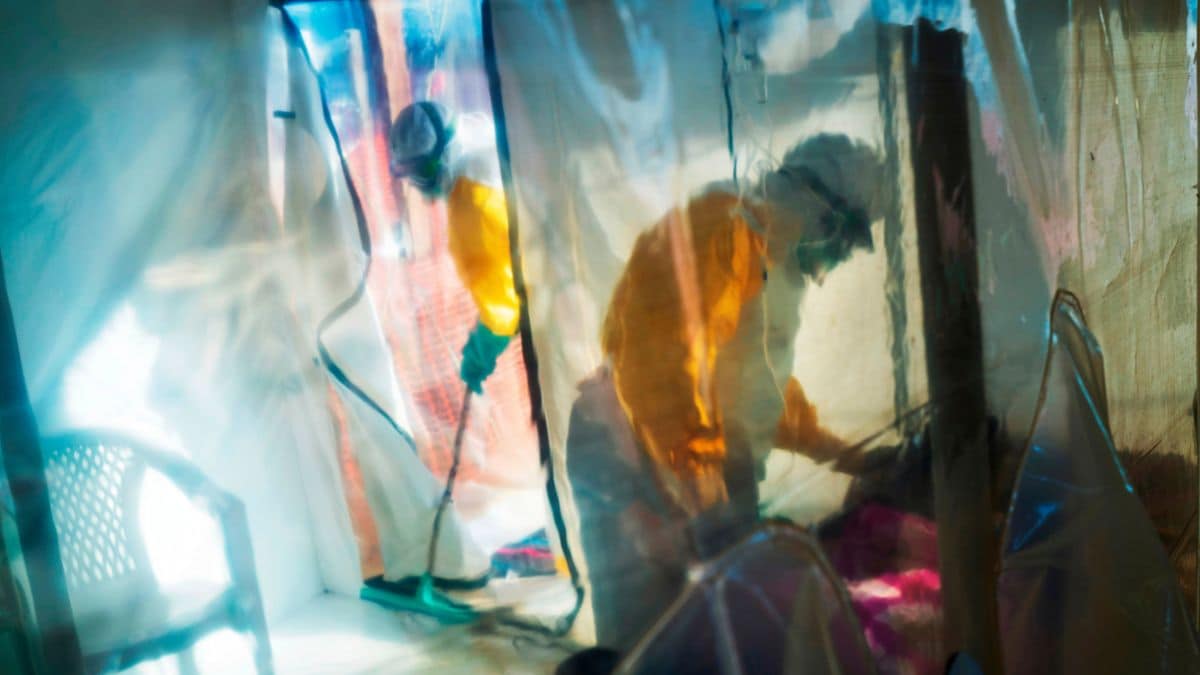
With over 100 deaths and around 500 suspected cases reported in the Democratic Republic of Congo, the World Health Organisation (WHO) has declared the recent Ebola virus outbreak in Africa a global health concern.
The rare Bundibuyo strain of the Ebola virus, which is causing the spread, is also a concern among the experts, as it does not have a vaccine at the moment. As per the WHO, the outbreak does not qualify as a pandemic and has not advised countries to close borders.
India's one and only case
It was in 2014 that India had an Ebola virus case. It was detected in a 26-year-old Indian national returning from Liberia. Though he had been treated and cleared in Liberia before boarding the flight, he tested positive on arrival at the secondary testing at Delhi Airport. He was immediately isolated and quarantined.
Reportedly, the risk of spread is usually low in countries like India, unless there is considerable international travel from Ebola-affected regions.
Amid the spread, the WHO has advised all countries to strengthen surveillance, testing and rapid response systems.
The Ministry of Health and Family Welfare, including teams from the National Centre for Disease Control (NCDC), Integrated Disease Surveillance Programme (IDSP) and the Indian Council of Medical Research (ICMR), reviewed the evolving Ebola situation.
A senior Health Ministry official said that while there was no cause for alarm, precautionary measures were being strengthened "as a matter of abundant caution". He assured that India's public health system remains "vigilant and fully prepared" to deal with any emerging situation.
Meanwhile, one US citizen working in the DRC has tested positive for Ebola. According to the CDC, six other US people were exposed to the virus as well. The officials are monitoring for signs of the virus, but they are currently asymptomatic. The couple's four children are also monitored.
