



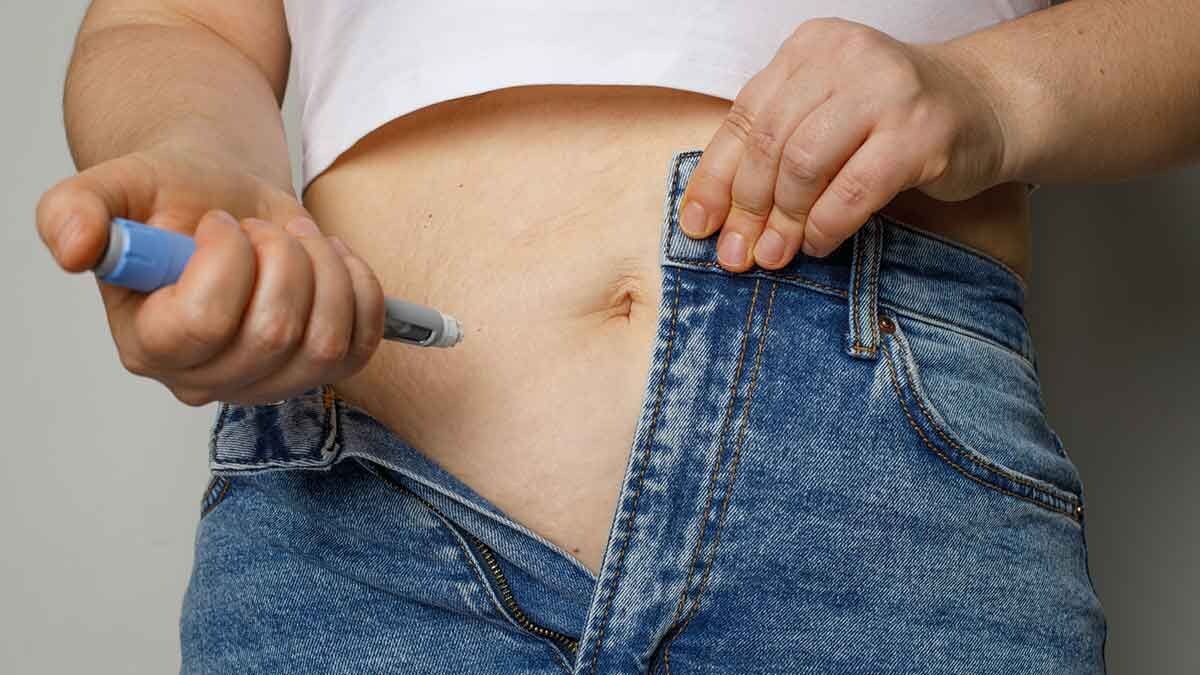
For years, weight loss has largely been spoken about as a journey of discipline — eat less, move more, stay consistent. But for millions struggling with obesity, the reality is often far more complicated. People spend years moving between diets, workout plans, nutrition advice, and periods of frustration, only to find the weight returning again and again.
Now, the conversation around obesity is rapidly changing. The rise of medications such as semaglutide, tirzepatide, and newer oral weight-loss drugs has transformed not only treatment options but also public perception of obesity itself. Across social media, transformations are everywhere, and celebrities are openly discussing their experiences, etc.
But as the world debates the arrival of these drugs and people openly share what they went through to achieve their target weight, a new question arises: what happens after the weight is lost? Can obesity medication simply be stopped?
Two major new studies suggest the answer may be more complicated than many expected.
What the SURMOUNT-MAINTAIN trial on tirzepatide found
Study, SURMOUNT-MAINTAIN, published in The Lancet on May 12, 2026, examined whether people who had already lost significant weight on tirzepatide could maintain those results if the treatment dose was continued, reduced, or completely stopped.
The phase 3b placebo-controlled trial was conducted across 20 sites in the United States and included adults with obesity or overweight individuals with at least one obesity-related medical condition. Participants had a BMI of 30 kg/m2 or above, or 27 kg/m2 and above with conditions such as hypertension or diabetes.
The study lasted 112 weeks and included two phases - a 60-week open-label weight-loss period followed by a 52-week double-blind maintenance phase.
After successfully losing weight on weekly tirzepatide injections at maximum tolerated doses of 10 mg or 15 mg, participants were randomly assigned into three groups. One group continued on the maximum tolerated dose, another reduced the dose to 5 mg, while the third switched to placebo.
Researchers wrote that “starting at week 84 (24 weeks after random allocation), participants could receive rescue tirzepatide if their weight regain exceeded 50%.”
The findings showed clear differences between those who continued therapy and those who stopped. According to the study, the “model-based estimate percent change in bodyweight from baseline to week 112 was –21.9% with maximum tolerated dose tirzepatide, –16.6% with 5 mg tirzepatide, versus –9.9% with placebo.”
The study also found that a much higher number of patients in the placebo group required rescue therapy because of major weight regain. Rescue treatment was needed in 67% of participants switched to placebo, compared with 25% in the lower-dose group and just 8% among those continuing maximum-dose tirzepatide.
The researchers concluded that “in adults with obesity, long-term treatment is often necessary to maintain bodyweight reduction and its associated cardiometabolic benefits.”
They also noted that lowering the dose may still offer meaningful benefits compared to complete discontinuation. “Reducing to 5 mg tirzepatide might provide a valuable alternative to discontinuation, although individuals’ treatment response might vary,” the study stated.
The most commonly reported side effects were gastrointestinal issues such as nausea, vomiting, and diarrhea, which researchers described as mostly mild to moderate in severity.
What the ATTAIN-MAINTAIN trial on oral orforglipron found
Another study, ATTAIN-MAINTAIN, published in Nature Medicine on May 13, 2026, explored whether people who had already lost weight on injectable obesity drugs could maintain those results after switching to an oral medication.
The phase 3b double-blind, placebo-controlled trial evaluated orforglipron, a once-daily oral nonpeptide GLP-1 receptor agonist.
Researchers noted that incretin-based therapies have transformed obesity management, but maintaining those benefits requires continued treatment. “Maintaining these health benefits requires ongoing administration, which can be challenging,” the study said.
The trial included participants who had previously lost weight using injectable tirzepatide or semaglutide during the SURMOUNT-5 study. Participants were divided into two cohorts - one involving previous tirzepatide users and the other involving semaglutide users.
They were then randomly assigned to receive either oral orforglipron once daily or placebo.
The study found that patients who switched to oral therapy maintained significantly more of their weight loss compared with those switched to placebo.
Among participants previously treated with tirzepatide, those receiving orforglipron maintained nearly 74.7% of their achieved weight loss, compared with 49.2% in the placebo group at week 52.
Similarly, among those previously treated with semaglutide, participants on orforglipron maintained 79.3% of their weight reduction, while the placebo group maintained only 37.6%.
Researchers wrote that “participants were better able to maintain the majority of weight loss achieved with injectable therapy when switched to orforglipron compared with placebo.”
The study also challenged the idea that obesity medications can simply be stopped once target weight is achieved.
“A common misconception among individuals with obesity, as well as some clinicians, is that OMMs (obesity-management medications) can be discontinued after achieving initial weight loss,” the authors stated.
They warned that stopping treatment may lead to “weight cycling and loss of improvements in cardiometabolic health such as increased insulin resistance or blood pressure.”
Researchers compared obesity management to chronic disease treatment models used in hypertension and cholesterol disorders, arguing that long-term persistence on therapy may be necessary for many patients.
The trial further suggested that oral medications like orforglipron could improve long-term adherence for patients who struggle with injectable therapies because of convenience, storage requirements, cost, or personal preference.
Gastrointestinal side effects remained the most common adverse events, though researchers described them as mostly mild to moderate in severity.
The authors concluded that “switching to orforglipron may be an effective approach for maintaining weight loss for those who do not continue injectable therapy.”
‘The body fights weight loss aggressively’
Dr Rajiv Kovil, Head of Diabetology and Weight Loss Expert at Zandra Healthcare, said the two studies reinforce a growing understanding in obesity medicine - losing weight may no longer be the hardest part; maintaining it is.
“It just shows that weight loss seems to be easy, but the maintenance of weight is the real battle now,” he said.
According to Dr Kovil, both the SURMOUNT-MAINTAIN and ATTAIN-MAINTAIN trials strongly support the idea that obesity should not be viewed as a temporary or cosmetic issue.
“These studies clearly show that obesity is not a cosmetic, temporary, short-term issue, but a chronic relapsing metabolic disease,” he said.
He noted that one of the most common questions patients ask after achieving weight loss is whether they can eventually stop medication altogether or transition to something simpler, such as an oral pill.
“A very central question patients ask is - after weight loss, can I transition to nothing or can I transition to an oral pill?” he said.
Speaking about the ATTAIN-MAINTAIN trial, Dr Kovil described the findings around oral orforglipron as particularly significant because they offer an alternative to long-term injectable therapy.
“The oral pill data was fantastic because it clearly showed that patients on semaglutide maintained nearly 80% of their earlier weight loss after switching to oral orforglipron, versus only around 37% with placebo,” he said.
He added that even participants previously treated with tirzepatide were able to maintain nearly 75% of prior weight loss after switching to the oral medication.
“So the strategy can be that nearly 80% of weight loss can still be maintained with an oral drug, while also preserving cardiometabolic benefits,” he explained.
Dr Kovil said he was especially interested in the SURMOUNT-MAINTAIN trial because it approached the problem differently - by examining whether continuing the same medication dose would sustain weight loss.
“My gut feeling after using tirzepatide for over a year was that patients would need to continue the maximum tolerated dose to maintain the benefits, and that is exactly what the trial proved,” he said.
According to him, patients who remained on the maximum tolerated dose maintained their weight loss far more effectively than those whose doses were reduced.
“People on the maximum tolerated dose almost completely maintained their weight loss, whereas those reduced to 5 mg saw lower maintenance rates,” he said.
Dr Kovil explained that the findings highlight how aggressively the body biologically resists weight loss over time. “The brain is a supercomputer. It tries to fight whatever changes are happening,” he said. “Once weight drops, hunger hormones rise again, satiety falls, and energy expenditure declines.”
He added that whether patients continue injectable drugs or switch to oral medications, obesity treatment will likely require long-term adherence. “You are going to require drugs for long-term treatment and long-term adherence,” he said.
“Because orforglipron is a non-peptide GLP-1, it is easier to manufacture and easier to scale. It could become a cheaper option for many patients,” he added.
Referring to earlier evidence from the SURMOUNT-4 trial, he noted that discontinuation has consistently been linked with major weight regain.
“In SURMOUNT-4, patients who stopped the drug regained nearly 14% weight in a very short period of time,” he said. “That means almost 50–60% of the lost weight returned quickly.”
According to Dr Kovil, future obesity treatment may increasingly involve phased or long-term strategies rather than short-term therapy.
“Weight loss treatment may eventually work like induction and maintenance therapy,” he said. “Patients may initially use stronger injectable drugs like tirzepatide or semaglutide, and once goals are achieved, transition to oral therapies depending on their risk profile and clinical needs.”
This story is done in collaboration with First Check, which is the health journalism vertical of DataLEADS
