



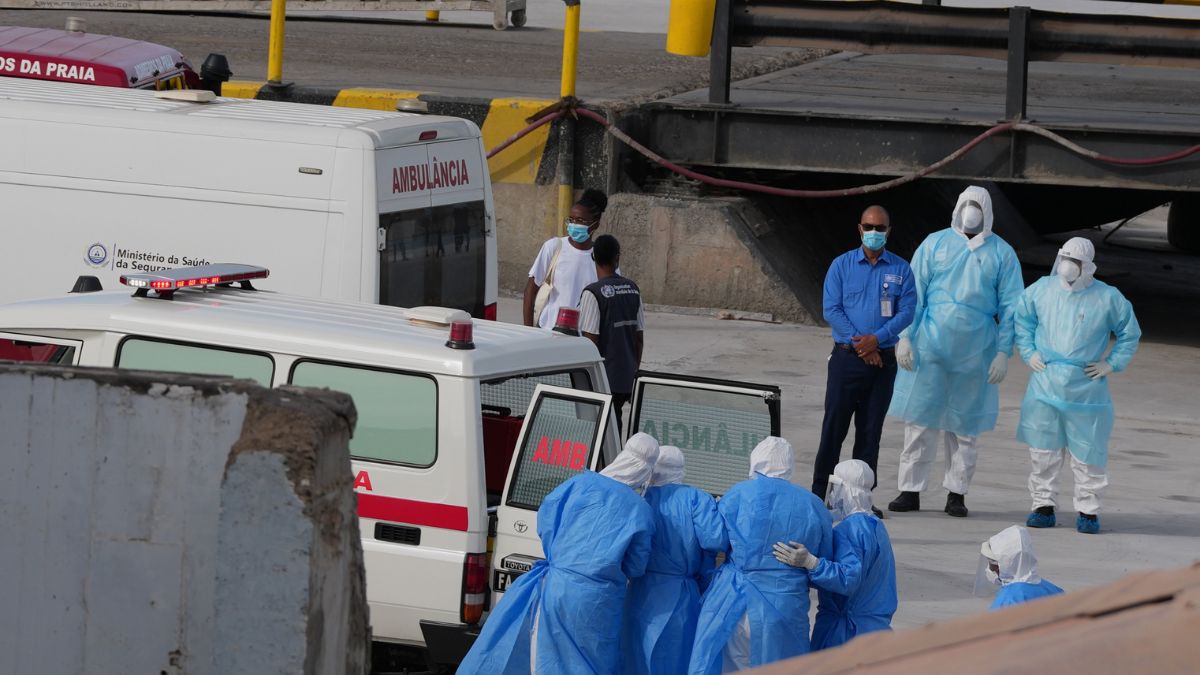
At least 23 passengers from the hantavirus-infected cruise ship MV Hondius have been evacuated from the ship and returned to their homes, including the United States. Experts are racing against time to determine if the deadly hantavirus outbreak that gripped the Atlantic cruise ship, which departed from Argentina, originated in the country.
According to the WHO, Argentina is consistently ranked as having the highest incidence of the rare, rodent-borne disease in Latin America.
In June 2025, the Argentine health ministry reported 101 hantavirus infections. Reportedly, it is roughly double that of the year prior.
The hantavirus found in South America, called the Andes virus, can cause severe and often fatal lung disease called hantavirus pulmonary syndrome.
According to the Argentine health ministry, the disease led to death in nearly a third of cases last year.
Three passengers have died, and another is in critical condition in South Africa due to hantavirus. Following Wednesday's evacuations from the ship, a separate case has been confirmed in Switzerland in a passenger who left the voyage early.
Usually, people become infected with hantavirus through contact with the urine, droppings, or saliva of infected rodents; however, human-to-human transmission is rare. Limited spread among close contacts has been documented in previous outbreaks involving the Andes strain.
The WHO confirmed that the first fatality aboard the vessel was a 70-year-old Dutch man who died on 11 April. His body remained on the ship for nearly two weeks before being removed at Saint Helena on 24 April. His 69-year-old wife subsequently flew from Saint Helena to South Africa; however, she collapsed at Johannesburg's O.R. Tambo International Airport and died in a hospital on 26 April. A third passenger, a German woman, died on board on 2 May.
The virus can incubate for between one and eight weeks, making it hard to know whether the passengers contracted the virus before leaving Argentina for Antarctica on 1 April, during a scheduled stop to a remote South Atlantic island, or onboard.
The current health emergency aboard the MV Hondius has highlighted a concerning trend in Argentina, where public health researchers report a significant surge in hantavirus cases attributed to the accelerating effects of climate change.
According to public health experts, higher temperatures expand the virus’s range because, in part, as it gets warmer and ecosystems change, rodents that carry the hantavirus can thrive in more places. People typically contract the virus from exposure to rodent droppings, urine or saliva.
