



Somewhere in the Pacific right now, the ocean is getting warmer. The result: a future with delayed rains and droughts, affecting harvests and the price of every meal on every plate. Yet our conversations about the planet remain the same: renewable energy, reducing plastic, cutting carbon. While these are significant conversations, perhaps we’re missing the point of our new reality: that we need to feed and support a growing population in a ‘do more with less’ world.
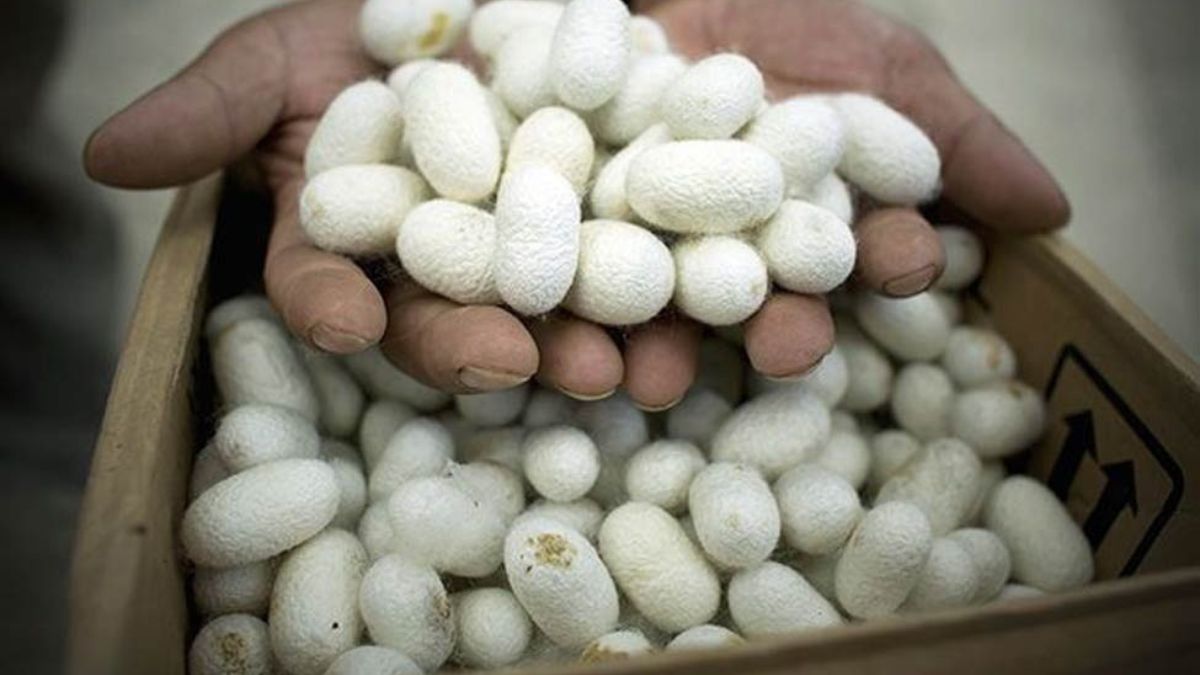
Meanwhile, somewhere in rural Karnataka, a farmer is raising Bombyx Mori, the silkworm, just like generations before her have. And this tiny insect that funded ancient Chinese armies, dressed the Romans and shaped the first ever global supply chain is quietly building a New Silk Road for the world, this time for nutrition, sustainability, and cutting-edge medicine.
Insects as biological infrastructure:
When we talk about silkworms, we think of fabric and not much else. When the silk is reeled away, the pupae that remains is written off as waste and have been discarded for centuries. But it is, in fact, a versatile source of protein, nutritionally dense with high bioavailability.
Silk proteins like fibroin and sericin have long been ingredients in luxe skincare for their potential to heal and regenerate. Break it down further and it contains amino acids that can double up as plant boosters, feeding circular agricultural systems where nothing is wasted.
Go deeper and you find peptides that can change the game for functional foods and supplements. Not to mention the oils that are rich in Omega 3,6 & 9, a sustainable alternative for conventional protein sources like fish and seed oils like soy, which have historically been linked to overfishing, deforestation and climate vulnerability.
That’s not where it stops. Silkworms function as living protein factories. In the biotech world, where huge expensive steel tanks are the norm to produce recombinant proteins from mammalian and bacterial cells, silkworms sweep in with biological magic pulling off complex tricks with proteins - folding, tweaking, finishing. Silkworms can be programmed to churn out proteins encoded by genes from other species, including humans.
This is a game-changer for bio-pharma to produce proteins like collagen, growth factors and even antibodies at a tiny fraction of what it usually costs. That means our diagnostic tools, vaccines, and therapeutic proteins can become more affordable, making health care more accessible globally.
Proteins are the molecular infrastructure of modern life. The global systems that produce these proteins, across both nutrition and life sciences, are under severe and compounding strain.
In 2020, the COVID pandemic exposed a global fragility, reinforcing the strategic importance for countries to discover, manufacture and scale biologics. When El Niño hit in 2024, fishmeal prices spiked 117 per cent in a single quarter which affected fish farms, poultry sheds, pet feed, and our entire food supply chain.
Silkworms present an answer to the protein challenge that not many other sources can match. Nutritionally dense, environmentally sustainable, biologically efficient, economically viable and quickly scalable. This is where India has an upper hand.
Our biodiversity and climate, generational sericulture knowledge, scientific talent, and decades of cost-efficient manufacturing are structural advantages that few countries can replicate.
India has a track record of solving the world's hardest problems at scale, whether it’s building UPI and Aadhar or supplying 60 per cent of the world’s vaccines by volume.
With silkworms, we’re uniquely positioned at the convergence of tradition and innovation. From farms to labs to market, silkworms offer India a rare chance not just to participate in the future of protein but to define it.
(The author is the co-founder of Loopworm, a silkworm-based biomanufacturing company)
The opinions expressed in this article are those of the author and do not purport to reflect the opinions or views of THE WEEK.
