



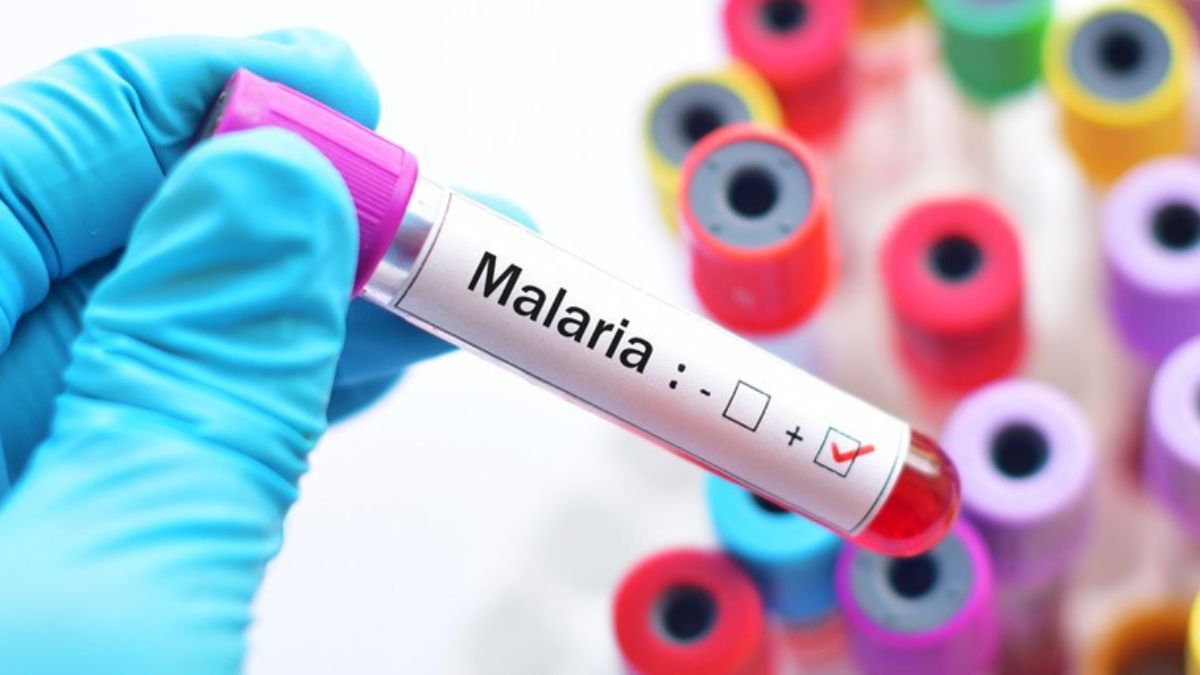
A new World Health Organisation (WHO) report shows that malaria infected an estimated 28.2 crore people and claimed 6,10,000 lives worldwide in 2024, underscoring how the disease continues to pose a major public health burden despite decades of global progress.
A major outcome of this year’s report is the alarming confirmation that antimalarial drug resistance is growing, especially in Africa, threatening to reverse gains achieved over the last two decades.
According to WHO, this resistant trend is becoming a central obstacle in the roadmap to malaria elimination. “Increasing numbers of cases and deaths, the growing threat of drug resistance and the impact of funding cuts all threaten to roll back the progress we have made over the past two decades. However, none of these challenges is insurmountable. With the leadership of the most-affected countries and targeted investment, the vision of a malaria-free world remains achievable,” said Dr Tedros Adhanom Ghebreyesus, WHO Director-General.
What is malaria, and how does it spread?
Malaria is an infectious disease caused by Plasmodium parasites and spread to humans through the bites of infected Anopheles mosquitoes. After entering the bloodstream, the parasite moves to the liver, where it multiplies. It later returns to the blood and infects red blood cells, which is when symptoms such as fever, chills and fatigue begin.
Transmission happens when a mosquito becomes infected after feeding on a person who already has malaria. The same mosquito can then pass the parasite to another individual during a later bite. Some parasite types can stay dormant in the liver for months, leading to relapses long after the first illness. Malaria can also spread through infected blood, including from mother to baby during pregnancy, through blood transfusions or by sharing needles, but these routes are far less common.
To reduce infections, global health programmes distribute insecticide-treated bed nets, preventive medicines and, more recently, malaria vaccines for children in high-burden countries. Travellers to at-risk regions are advised to use repellents, wear protective clothing, sleep under nets and take preventive medicines before and during their trip.
What the report highlights
The latest World Malaria Report shows that wider use of new prevention tools helped avert an estimated 17 crore cases and 10 lakh deaths in 2024. Dual-ingredient mosquito nets, expanded access to preventive medicines and the rollout of WHO-recommended vaccines played a central role in reducing infections in high-burden countries. Since the first malaria vaccine received WHO approval in 2021, 24 countries have added it to their routine immunisation schedules. Seasonal malaria chemoprevention has also scaled up significantly and is now implemented in 20 countries, reaching 5.4 crore children in 2024 compared with just 2 lakh in 2012.
Progress in eliminating malaria continues, with 47 countries and one territory now certified malaria-free. Cabo Verde and Egypt achieved certification in 2024, while Georgia, Suriname and Timor-Leste followed in 2025. Yet even with these gains, global cases rose to an estimated 28.2 crore in 2024, around 90 lakh more than the previous year. Deaths climbed to 610,000, and around 95 per cent of these were recorded in the WHO African Region, particularly among children under five. The report warns that rising antimalarial drug resistance is becoming a growing barrier to achieving global elimination targets.
“New tools for prevention of malaria are giving us new hope, but we still face significant challenges,” said the WHO Director-General.
This year’s report highlights increasing evidence of partial resistance to artemisinin derivatives, the backbone of malaria treatment after earlier drugs failed. Resistance has been confirmed or suspected in at least eight African countries, and there are emerging signs that partner drugs used alongside artemisinin may also be losing effectiveness. Progress toward reducing malaria deaths remains off track. The 610,000 deaths recorded in 2024 translate to 13.8 deaths per 100,000 population, far above the Global Technical Strategy target of 4.5 per 100,000.
The report also identifies a widening set of biological, environmental and geopolitical risks. Parasites carrying pfhrp2 gene deletions continue to undermine the accuracy of rapid diagnostic tests. Pyrethroid resistance has been confirmed in 48 countries, weakening the effectiveness of traditional insecticide-treated nets. Anopheles stephensi, a mosquito species that is resistant to many commonly used insecticides, has now spread to nine African countries, creating major challenges for controlling urban malaria.
Extreme weather events linked to climate variability are altering temperature and rainfall patterns, expanding mosquito habitats and increasing outbreak risks. Conflict and political instability in several regions have disrupted health services, delaying diagnosis, limiting access to treatment and hampering surveillance. The situation is further strained by stagnant global funding. Investments in malaria control reached 3.9 billion dollars in 2024, less than half of the 2025 target of 9.3 billion dollars. Cuts in Official Development Assistance have weakened routine surveillance, led to cancellations of malaria surveys and increased the risk of stock-outs of essential supplies.
Significance for India
The WHO report places India at the centre of the malaria situation in the South-East Asia Region. In 2024, the region recorded 27 lakh malaria cases across six endemic countries, representing less than one per cent of global cases. India alone accounted for 73.3 per cent of these cases and 88.7 per cent of all malaria deaths in the region.
India’s long-term progress is substantial. Between 2000 and 2015, malaria cases fell by 64.8 per cent, dropping from 2.36 crore to 83 lakh. The decline continued between 2015 and 2024, with a further 67.5 per cent reduction. Malaria incidence remained stable in 2024 at 1.9 cases per 1000 population at risk. Yet, while overall regional numbers did not change, India recorded an 11.1 per cent increase in estimated cases, largely due to localised outbreaks. Most districts still reported reductions, but the report notes that the rise shows how fragile progress can be.
Neighbouring Nepal reported a 146.7 per cent spike, from 15 to 37 cases. The WHO mentions that the increase “may be linked to its proximity and porous border with India”, underlining the need for cross-border coordination.
Globally, India reported approximately 20.7 lakh malaria cases, placing it far below the world’s highest-burden countries. Nigeria led with nearly 6.85 crore cases, followed by the Democratic Republic of the Congo with 3.51 crore. India’s burden remains significant for the region but comparatively lower globally.
Malaria deaths in the South-East Asia Region totalled 3900 in 2024, with India contributing 88.7 per cent of them. Deaths have dropped steadily over the years: nearly 60 per cent between 2000 and 2015, and 74 per cent between 2015 and 2024. India is on track to meet the Global Technical Strategy targets for mortality and incidence by 2025, alongside Bangladesh and Thailand.
The WHO also highlights gender patterns; 42.7 per cent of reported malaria cases in India were among females, the highest proportion in the region. This is interpreted as reflecting strong reporting completeness and differences in exposure.
India received 46 lakh insecticide-treated nets in 2024, making it one of the largest recipients outside sub-Saharan Africa. However, the number of people protected fell by 18 lakh compared to 2023.
The report also examined pfhrp2 gene deletions, which can undermine rapid diagnostic test accuracy. India showed extremely low prevalence at 0.2 per cent, based on samples collected between 2014 and 2020.
India’s advancement is further reflected in its exit from the High Burden to High Impact (HBHI) group in 2024, after significant declines in incidence and mortality. While the remaining 11 HBHI countries saw a 20 per cent rise in malaria cases since 2017, India moved into a more stable epidemiological phase.
Through steady declines, strong surveillance systems and targeted interventions, India remains firmly on track for its elimination goals. At the same time, the WHO notes that “these patterns highlight the importance of enhanced cross-border collaboration, targeted subnational responses and strengthened surveillance systems to address remaining transmission foci and sustain progress towards elimination.”
India’s framework for malaria
As per government data, India has made remarkable progress in malaria control through sustained political will, community engagement, and targeted interventions. Between 2015 and 2023, malaria cases declined by 80.5% and deaths by 78.3%, with over 122 districts reporting zero cases last year, positioning India on track to achieve “zero indigenous cases by 2027 and full elimination by 2030.”
India’s strategic approach integrates disease management, vector control, and community-driven interventions. Core strategies include robust malaria surveillance, universal access to testing and treatment, and enhanced vector control. “Testing, treating and tracking” remains central to case management, while vector control is optimised to prevent transmission. Efforts are also directed towards accelerating elimination, supporting research, and generating data to prevent the re-establishment of malaria. Behaviour Change Communication campaigns, inter-sectoral convergence, and capacity building of health professionals ensure that interventions are inclusive and sustainable.
High-burden areas are prioritised through the Intensified Malaria Elimination Project-3 (IMEP-3), targeting 159 districts across 12 states, with focused interventions for malaria-prone and vulnerable populations. Funding supports essential activities such as LLIN distribution, entomological surveillance, and data-driven monitoring systems, with integration of malaria services under Ayushman Bharat for wider reach.
This story is done in collaboration with First Check, which is the health journalism vertical of DataLEADS.
