



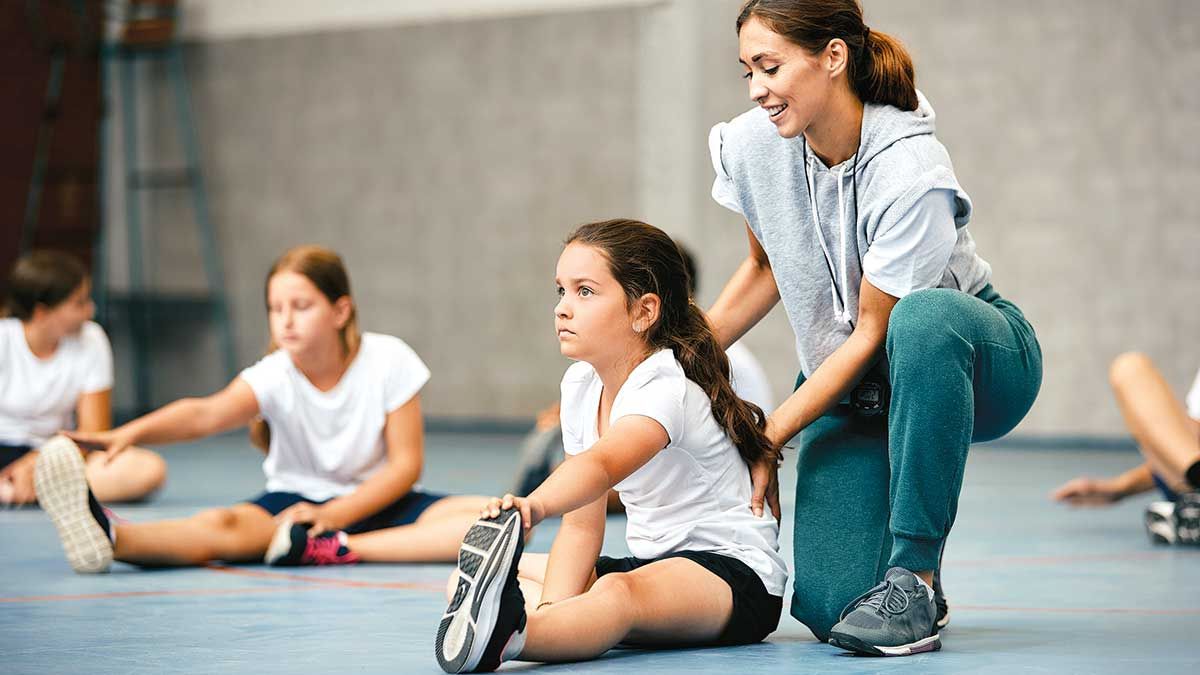
A US study published in the journal Psychology of Sport & Exercise found that children who performed a short sequence of high intensity exercise before taking a test scored significantly higher than those who rested beforehand.
Physical education and activity benefit not just physical health, but mental health and academic achievement as well, the lead researcher said.
The study included 25 children, ages 9 to 12, who took an academic test after performing high-intensity exercises or taking a seated rest break.
The nine-minute exercise sequence included high-knee walking, jumping jacks, lunges and squats that can be completed in a classroom. The children performed each exercise for 30 seconds, followed by 30 seconds of rest.
Children who exercised scored significantly higher on a verbal comprehension test.
Additionally, participants completed a cognitive task while wearing an EEG cap that measured a type of brain neuroelectrical activity called error-related negativity (ERN), that signals when a person makes a mistake. A stronger ERN means the person is more distracted by their mistake, making it harder to stay focused and do well. “With interval exercise, we actually see this decrease in this error-related response,” the study author said.
High ERN levels are linked to mental distraction and reduced focus and performance. “Short bouts of high intensity interval exercise are a feasible classroom-based intervention for improving brain function and academic achievement,” the study concluded.
