



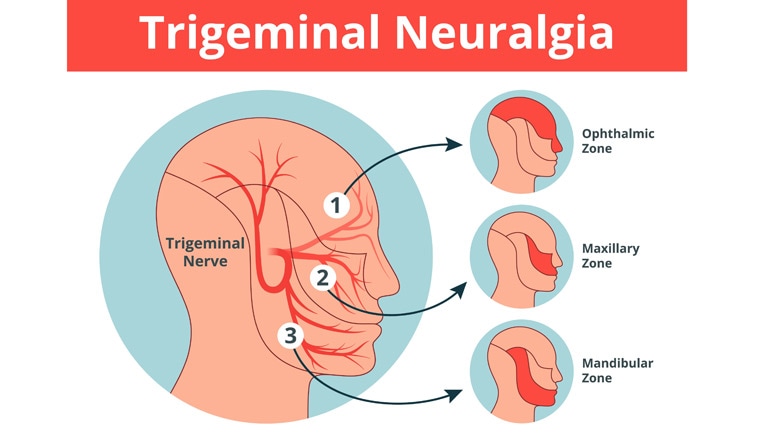
As the winter season approaches, people with trigeminal neuralgia may experience increased discomfort due to the cold weather. Trigeminal neuralgia is a neurological disorder that causes severe facial pain, often described as an electric shock. Experts have found a strong connection between cold weather and worsening symptoms of trigeminal neuralgia.
Trigeminal neuralgia affects a significant number of people in India, with varying rates of prevalence and incidence. Studies have shown that the condition is more common in women than men, with a ratio of 3 to 2. It also tends to occur more frequently in people between the ages of 53 and 57.

Although research on the disease in India is limited, studies have revealed similarities with global trends. For example, a study conducted at a hospital in India found that the average age of onset for trigeminal neuralgia was 54.8 years, and the female to male ratio was 1.6 to 1. Another study involving 200 patients in a neurosurgery department showed an average age of onset of 49.9 years, with a female to male ratio of 1.4 to 1. The mandibular branch of the trigeminal nerve was found to be the most commonly affected, followed by the maxillary and ophthalmic branches.
Cold weather can trigger nerve impulses and lead to the characteristic stabbing pain in the face associated with trigeminal neuralgia. It is important to understand this connection in order to effectively manage the condition, especially during winter. The statistics highlight the need for targeted interventions to address the impact of weather on trigeminal neuralgia.
