


Much has been said and written about the British East India Company but few people know that the Verenigde Oostindische Compagnie (Dutch United East India Company), which was established in 1604 and dismantled two centuries later, also played a pivotal role in world history. Formed as a combination of mercantile organisations from various cities in Holland, the company was involved in commerce in Asia and Europe and had a major hub in India. Besides the regular economic ties and the significant spice trade that took place, it also led to a two-way exchange of cultures and traditions between Netherlands and the Indian sub-continent.
Unlike the British East India Company that colonised the sub-continent and had a significant effect on Indian culture, VOC’s impact can be seen through architecture namely tombs where several Dutch inhabitants are buried and ware-houses across the Malabar region from where they functioned.
Indo-Dutch Cultural Heritage, a unique concert-seminar that will be held in collaboration with the Consulate General of the Kingdom of the Netherlands at Dr Bhau Daji lad Museum on November 27, will illustrate Dutch history in India. Touted as the first-of-its-kind jamming session between two historians and a musician, it will trace the stories, lifestyles, traditions, culture, business practices and the music of the Dutchmen settled so far from their homes and families in India.
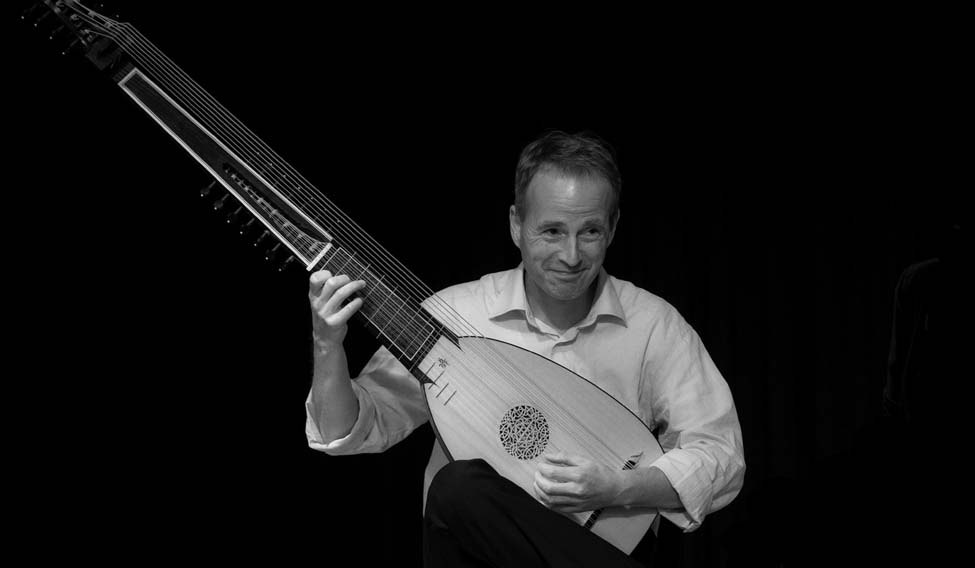
While historians Dr Anjana Singh and Bauke van der Pol will speak on the era of the VOC, Dutch musician David van Ooijen will recreate the music composed by the employees and sailors of the VOC on his string instrument, the lute. After a brief introduction by Singh and der Pol, Ooijen will make a short lecture-concert programme with a 'soundscape' of the music that might have been heard on the streets of the Dutch settlements in India. He will play the Dutch national anthem as it appeared in one of the earliest sources from around 1600, the time of the birth of the Dutch Nation, and music connected to the Dutch court. This will be followed by sailors’ song, and higher art music as might have been heard in the houses of the rich merchants in their fancy houses around Cochin, which was the VOC’s hub in India.
Ooijen, who is excited to perform as part of the concert says, “I will play music featuring Cochin's church bells, and from the services of the various religious present in Fort Cochin: a Portuguese/Spanish hymn from the Catholic church and a prayer from the Protestant Dutch. There will be music from the inn and the street life and a Jewish lullaby from the Jewish community. I’ve come across an interesting source of Indian music, written down by an Englishman in 1789, that provides a glimpse of European appreciation of Indian music. I will play a short selection of music taken from that source too.”
Having played solo music and accompanying singers on various lutes, historical guitars and shamisen, Ooijen has had a wide repertoire. However, he says that there is no music specific to the VOC, but during its regime, a lot of new compositions were created in Netherlands. Much of that music eventually was played in the settlements of the Dutch in India. The lute featured prominently in most of the compositions while the other major musical tools that were used included wind instruments and citterns (lute-like instruments) that were discovered by historians during ship wrecks.
“We have paintings and descriptions of music making in the various VOC settlements on harps, viola da gambas and keyboard instruments. There is an interesting manuscript source by a VOC employee travelling to the East, where part of the manuscript is filled with lute music,” adds Ooijen.
'Indo-Dutch Cultural Heritage' will be held on November 27 from 6pm - 9pm at the Dr Bhau Daji Lad Mumbai City Museum.