



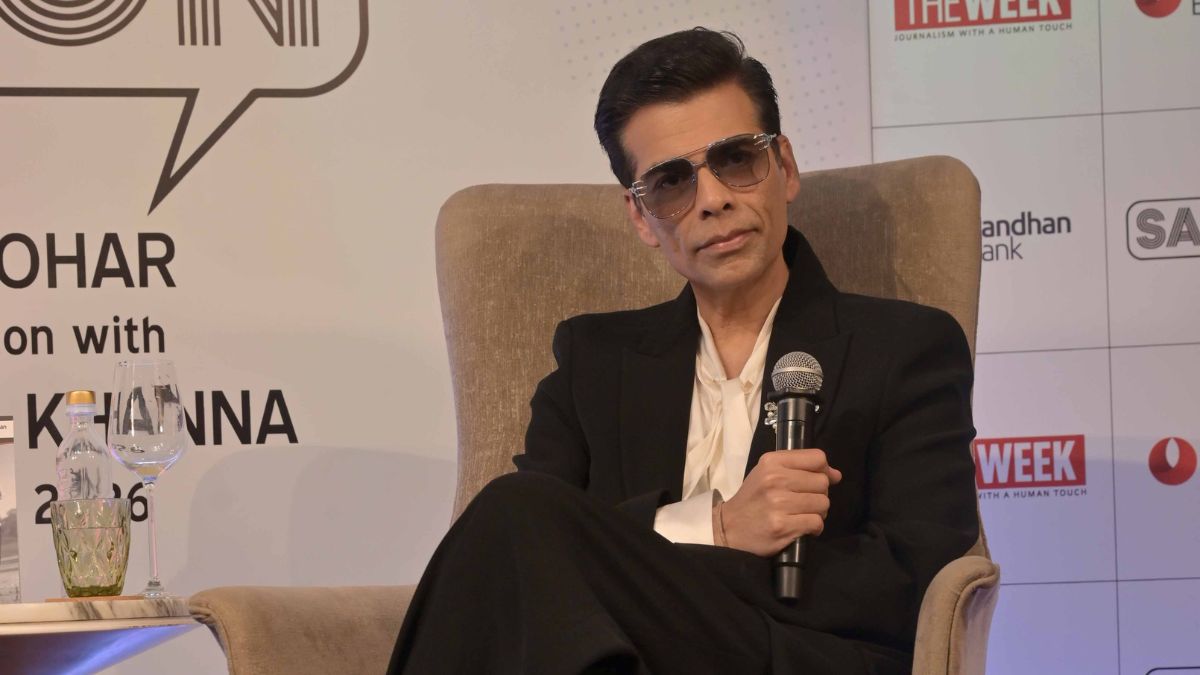
At THE WEEK Salon, sponsored by Bandhan Bank on Wednesday evening, filmmaker Karan Johar offered a candid, often disarming window into both the changing grammar of Bollywood and the deeply personal convictions that shape his storytelling.
In a wide-ranging conversation, Johar acknowledged the cyclical nature of the industry, one that, he said, is increasingly driven by herd mentality. “If one film works in a certain zone, there will be ten more,” he remarked, alluding to the current wave of hyper-masculine, high-testosterone cinema. With a touch of wit, he added, “Men will walk in slow motion for no reason… with beards and cigarettes apparently that’s what men think women like.”
Yet, Johar positioned himself firmly as a counterpoint to that trend. Calling himself a “born feminist,” he reiterated his commitment to telling stories rooted in emotional nuance and gender sensitivity, even when faced with backlash. Recalling criticism for portraying a male character performing classical dance in Rocky Aur Rani…, he said, “If I don’t have conviction in my own DNA, then why am I here?”
The conversation also turned to the future of Indian cinema. Johar predicted a return to cultural roots alongside a surge in spectacle-driven storytelling, powered by technology and AI. “There will be mythology, and there will be massive event films,” he said, while also noting the ongoing debates around nationalism, misogyny, and representation in popular cinema.
But perhaps his sharpest critique was reserved for the industry’s evolving relationship with stardom and publicity. Social media, he argued, has eroded the mystique that once defined film stars. “You know where they go, what they eat, what they wear there’s no mystery left,” he said. As a result, he believes films, not stars, will increasingly take center stage.
On the subject of public relations, Johar was unusually blunt. “Bollywood should stop doing PR,” he said, pointing to the rise of paid narratives that blur the line between genuine audience response and manufactured hype. “You can’t tell anymore what people actually like.”
Despite his stature, Johar appeared grounded in his understanding of the industry’s unpredictability. Reflecting on success and failure, he said neither should define one’s emotional equilibrium. “You can’t over-celebrate success or over-lament failure. It cannot dictate your joy and sorrow.”
In a moment that resonated with many in the audience, he distilled his philosophy into a quieter truth: “We have to find joy in small things a cup of coffee, a message from a friend, a beautiful morning.”
