



Back in the days of early Indian internet, a few children were quietly introduced to the world of Japanese animation, or anime. It began with the Japanese Indian arts exchange at the turn of the 1990s, which gave us hits like The Jungle Book Shōnen Mowgli (1989-1990) on Doordarshan and Ramayana: The Legend of Prince Rama (1993). We, millennials, were thrust into it as children.
Soon, evening cartoons came. Dragon Ball Z and Pokémon gained popularity. By the mid-2000s, when most of us were in high school, the internet gave us a window into a much larger cultural phenomenon, beyond Pikachu and Goku. It was some time around then that pop-culture enthusiasts such as myself discovered the boy made of rubber, Monkey D. Luffy, and his story to find the fabled treasure, the ‘One Piece’.
‘Revolutionary freedom’ did not need more embellishment for a high schooler. And One Piece had me reeled in, hook, line, and sinker.
Years later, in college, when I suffered a personal tragedy, Luffy and his nakama came to my rescue. I escaped into the voyage, joining the Mugiwara pirates, as they liberated the prisoners at Impel Down and headed on to Marineford to save Luffy’s ‘brother’, Fire Fist Ace.
Twenty-seven years on, we are still on that magical journey. The ‘rubber boy’ has managed to connect two generations, the millennials and the Gen Z—a cultural impact very few pop culture symbols have achieved.
Who is Monkey D. Luffy?
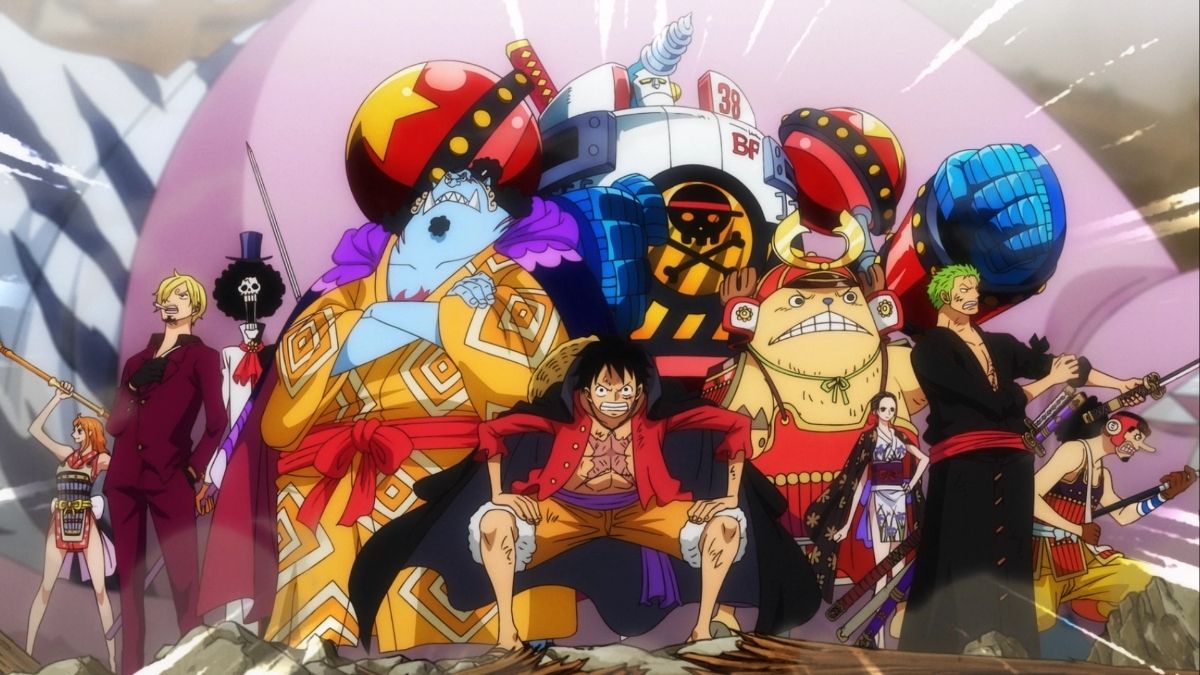
Monkey D. Luffy is the titular character in the popular Japanese manga and anime One Piece. He is a cheerful, happy-go-lucky, determined young captain of his rag-tag pirate crew, the ‘Straw Hat Pirates’ or the Mugiwara no Ichimi, named after the iconic thatched yellow strawhat with a red band.
This straw hat, along with a skeletal version of Monkey D. Luffy and crossbones, makes up the iconic silly-yet-powerful Jolly Roger of the Straw Hat Pirates. It is this flag that the Gen Z have adopted across the recent uprisings in South Asia and Southeast Asia.

From childhood, Luffy wanted to be a pirate. When he turned 17, he took a boat from a region called East Blue with the dream of becoming the King of Pirates. To do this, he needs to find the ‘One Piece’, the famed treasure of the deceased King of the Pirates, the infamous Gold Roger.
Luffy is goofy and young, but powerful due to the mythical ‘Devil Fruit’ he consumed ‘accidentally’. This Gomu Gomu no Mi (Gum Gum Devil Fruit) gives Luffy’s body the properties of rubber (or so it seems), but takes away his ability to swim. Sea water is a weakness for all Devil Fruit eaters, making it quite ironic that most of them are either pirates or Navy officers chasing them.
The making of ‘One Piece’
One Piece is a manga written and illustrated by author-artist Eiichiro Oda. Born in 1975, Oda became a mangaka in his teenage years after discovering the budding industry in Japan, then headlined by Akira Toriyama’s Dragon Ball. After Oda got recognised for his works at 17, he began work as an assistant for artists at the Weekly Shōnen Jump magazine.
In Japan, manga is the equivalent of a comic book. This monochrome comic strip is usually written and illustrated by the same author or mangaka, and published in weekly print magazines like the Weekly Shōnen Jump.
Popular manga are usually picked up by Japanese animation studios to make a colourful series called anime. Unlike the Western system of adaptations, anime development usually involves the mangaka. This means that they usually follow the creative direction the manga intended.
As of date, One Piece officially holds the following Guinness World Records:
Most Copies Published for the Same Comic Book Series by a Single Author: Eiichiro Oda holds the record as mangaka for 41.66 crore copies printed and circulated from December 1997 to July 2022, with over 50 crore copies worldwide total. It was first awarded in 2015 for 32.09 crore copies and then updated in 2022.
Most DVDs Released by a Serial Anime TV Programme: The One Piece anime series saw 300 DVD releases from Avex Pictures Inc. (Japan) between February 21, 2001 and July 3, 2024. They clinched the record in 2024.
The Straw Hat Jolly Roger
One Piece is a story with overarching themes. Ever since the manga first came out in 1997 and the anime began broadcasting in 1999, it captured the minds of young millennials like me. But One Piece’s true achievement is its impact on the older Gen-Z, who saw their childhood and teenage years heavily impacted by the English versions of the manga released from 2002, paired with the wide availability of English-dubbed versions of the anime on the internet.
As of January 2025, the One Piece anime has released 1,155 episodes in Japanese with English subtitles. These include the filler episodes, small side stories with no impact on the original plot that the animation studio puts out whenever the mangaka takes a break and when the anime overtakes the manga in development.
The Straw Hat Pirates, led by Monkey D. Luffy, fly their Jolly Roger, while systematically taking down the dubious and oppressive systems put in place by the all-powerful ‘World Government’. It is a story of seemingly powerless group of young people, who join a crew as citizens who underwent injustices, eventually become a family of friends, and liberate one region after the other from the clutches of the ‘World Government’, which governs the world in the anime/manga through the overarching military might of the ‘Navy’ and secret agencies like the ‘Cipher Pol’.
Luffy’s dream of absolute freedom and his defiance of a corrupt World Government mirror the real-world youth demands for civil liberties and transparent governance.
In 2025, Straw Hat Jolly Roger has been the symbol of the underdog rebellious youth fighting various kinds of oppression. If you look at the themes explored through the two decades of storyline, spanning the following story arcs, you see why it is relevant.
Romance Dawn Arc (1997–2000): Youth aspiration, freedom from oppression, small-town injustice, the struggle against local corruption
Arlong Park Arc (1998): Racism, systemic oppression, bribery and corruption
Drum Island Arc (2000): Healthcare inequality, medical monopoly, societal neglect
Alabasta Arc (2000–2002): Civil war, environmental disaster, government manipulation, information control
Skypiea Arc (2002–2004): Colonialism, indigenous dispossession, religious authoritarianism
Water 7 or Enies Lobby Arc (2004–2007): Government overreach, judicial corruption, extraordinary rendition
Sabaody Archipelago Arc (2008): Slavery, human trafficking, abuse by elites, social stratification
Marineford Arc (2009–2010): Media manipulation, ‘World Government’ populism, state violence, public executions
Fishman Island Arc (2011): Deep-rooted racism, generational trauma, integration struggles
Dressrosa Arc (2013–2015): Dictatorship, media deception, forced labour
Whole Cake Island (2016–2018): Child abuse, arranged marriage, familial control, nepotism
Wano Arc (2018–2022): Isolationism, dictatorship, national trauma, jingoism, cultural preservation
Egghead Arc (2022–2025): State surveillance, scientific ethics, government censorship
From 2026, the Elbaph Arc begins.
As a millennial, even after 1,100-odd episodes, the anime transports me to the high seas. The highly relatable underlying themes that the series explores have, over time, shaped the way we millennials view the world.
But it is still the lasting impact it had on the generation that succeeded us that truly impressed me. To move the youth of multiple nations across the world is no small feat. The race for the ‘One Piece’ continues, and the Luffy in all of us seems to have put the World Governments on notice.
