



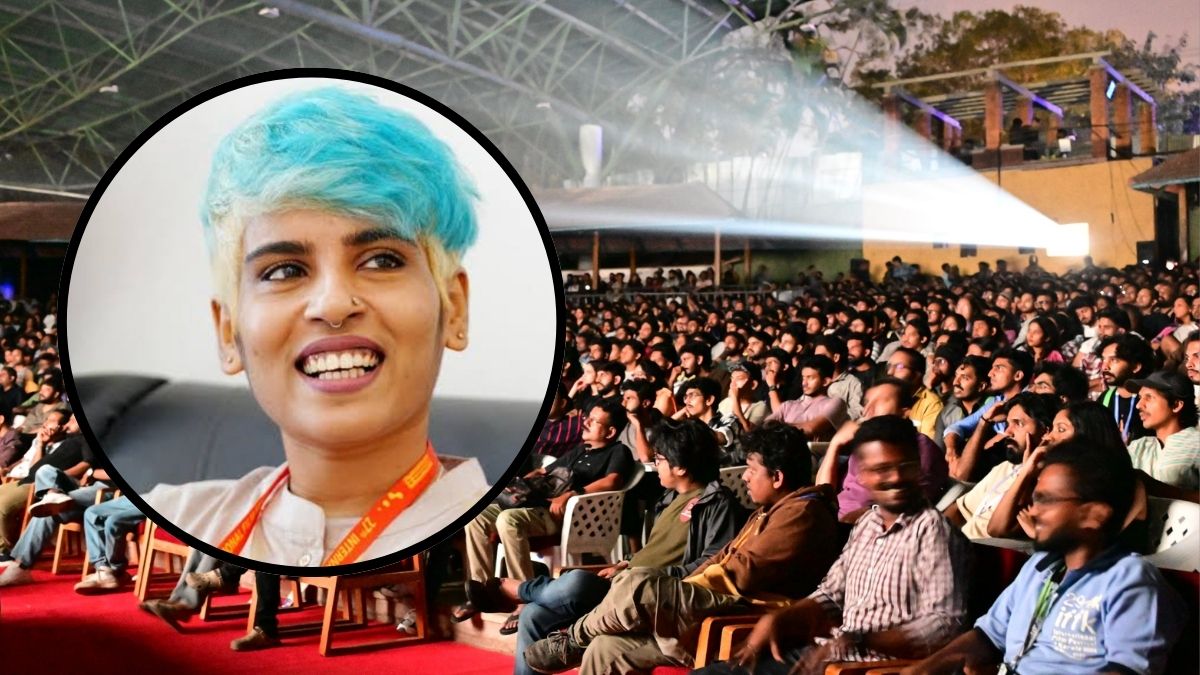
Deepika Susheelan, acclaimed film curator and programmer and artistic director of the 27th edition of the International Film Festival of Kerala (IFFK), has lashed out against procedural flaws in the 30th edition of the festival.
On December 11, the Union Ministry of Information and Broadcasting (I&B) denied censor exemption to all 187 films selected for the IFFK—which was scheduled to begin on December 12—citing failure to submit applications within the stipulated timeline.
Subsequently, the Ministry granted exemption to 150 films and later cleared 18 more as the festival began, leaving 19 films without approval when the event commenced.
The denials soon escalated into a political controversy, prompting the state government to challenge what it described as a “shadow ban” by announcing that it would screen all the films regardless.
Susheelan, however, noted that misrepresenting procedural lapses as political or ideological targeting only diverts attention from the real issue: failure to follow due process. “If one is committed to freedom of expression and institutional integrity, the least expected is adherence to protocol and timelines, not public grandstanding after administrative negligence,” she wrote in an open post.
In a letter to the Secretary of the I&B Ministry dated December 11, Kerala Chalachitra Academy Chairman Resul Pookutty claimed that this year’s submission timeline for censor exemption was consistent with last year’s. However, Susheelan pointed out that this was not the precedent followed in earlier editions of the IFFK.
The former artistic director emphasised that the censor exemption process is not instantaneous and requires a minimum of one month, allowing film programmers sufficient time to respond to clarifications. “Ideally, for a festival held in December, the list of films requiring censor exemption—along with synopses and other documents—should be submitted at least by the first week of November. That is how we have done it in the past. The exemption order is supposed to be in hand at least 15 days before the commencement of the event,” she noted.
Notably, the Chalachitra Academy submitted its request to the I&B Ministry seeking exemption from certification provisions for 187 films only on December 3.
Sources in the Ministry of External Affairs (MEA) confirmed to THE WEEK that the I&B Ministry routinely consults the MEA when foreign nationals and films are involved, and that this has been standard practice across film festivals. The sources also said the Academy’s request was made at the last minute and that clearances cannot be processed within a matter of hours.
Susheelan further observed that if censor exemption is denied—a decision for which the Ministry typically does not provide detailed reasons—there are clear and lawful avenues available to contest it. “To be able to do that, applications must be made well in advance, anticipating such situations. The festival has previously used these mechanisms and has proudly screened films critical of the Ministry, fully within the legal framework. In this instance, however, no such attempt appears to have been made,” she wrote.
She added that the IFFK has always been a festival with a strong commitment to artistic freedom and to making political statements through its programming, and that earlier teams knew how to act strategically.
“This is not new terrain. We have had our ways before,” she noted, while adding that instead of pursuing due process, the organisers appear to have opted for public outrage. “This raises serious questions about intent. If the objective was a PR stunt, then it must be said that the purpose has been served.” What is now being framed as an attack on freedom of expression, she argued, is in reality a case of procedural failure followed by convenient posturing.
Experts also caution that the current confrontational posture adopted by the Chalachitra Academy, with the backing of the state government, could have long-term consequences.
“The most worrying consequence lies ahead. Such mishandling directly endangers upcoming editions of the IFFK, inviting heightened scrutiny, tighter controls, and avoidable complications for future submissions, screenings, and the participation of international filmmakers,” Susheelan warned.
Earlier, National Award–winning filmmaker Dr Biju also criticized the Chalachitra Academy for the delay in submitting films for censor exemption. “In general, films screened at international festivals must comply with the laws of the host country. In India, foreign films without certification can be screened only with the permission of the I&B Ministry. This has always been the practice—not just in Kerala, but also at festivals in Goa, Pune, Kolkata, Bengaluru, and elsewhere,” he noted.
