



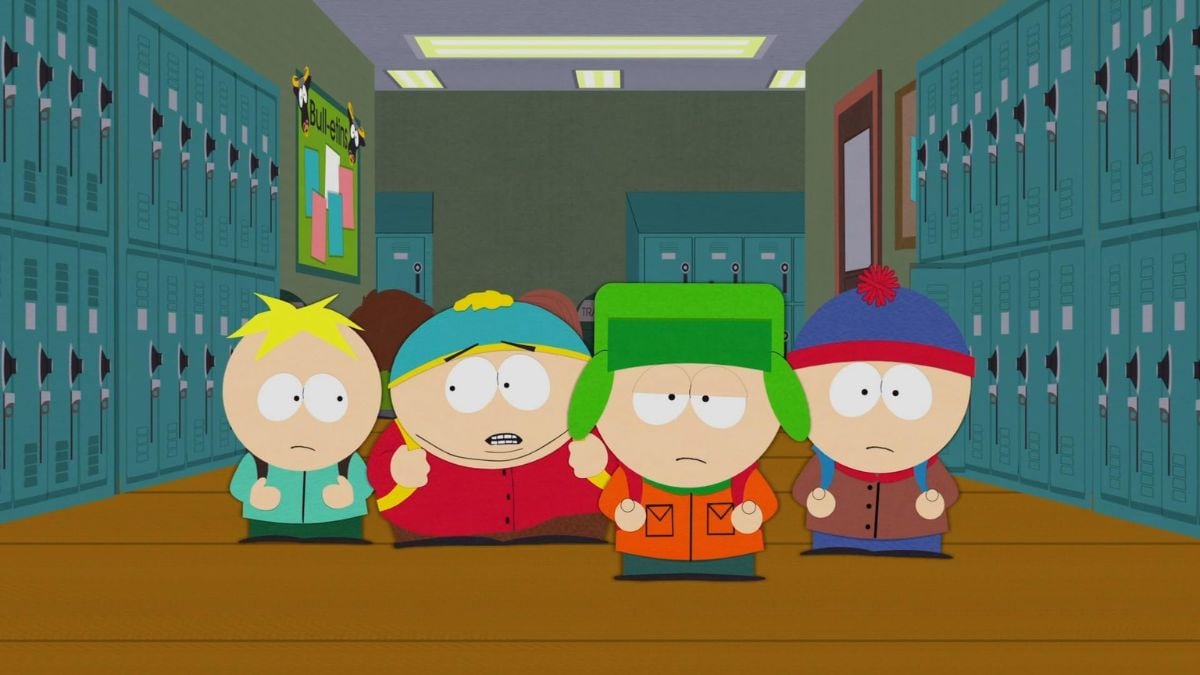
For over 25 years, South Park has served as a harsh reality check on modern culture. Trey Parker and Matt Stone’s unhinged and unfiltered animated series has used satire to skewer religion, politics, celebrity worship, and virtually every sensitive topic that exists. But as debates over free speech, political correctness, and platform responsibility have intensified, the show’s explosive commentary shows no signs of slowing down.
Recent episodes over the last couple of years have reignited questions about the role of provocative comedy in a post-social media age. In 2023, the show sparked a fresh firestorm with the episode “The Worldwide Privacy Tour”, which parodied Prince Harry and Meghan Markle’s media tour. This had provoked many headlines across the United Kingdom and calls for boycotts.
The next year, its sharp takes on gender identity and corporate activism led to renewed criticism from both conservative and progressive commentators, proving that South Park continues to offend, regardless of the viewpoint. In comparison, Donald Trump’s outbursts about his representation in the latest season’s premiere feel comparatively trivial to the cast and creators.
South Park’s history is a graveyard of banned episodes, lawsuits, death threats, and public apologies. These episodes weren’t just edgy; they caused actual ripples across media, politics, and global institutions.
‘201’ (Season 14, Episode 6)
Subject: Depiction of the Prophet Muhammad
Arguably, the most controversial South Park episode ever made. “201” addressed censorship, religious extremism, and the fear of retaliation from radical groups. It was the second instalment of a two-part arc. The episode depicted the Prophet Muhammad in a bear suit, an intentionally absurd move mocking the taboo surrounding any visual depiction of the Prophet. It stirred a very chilling reaction: a radical Islamic group called Revolution Muslim issued a threat implying that Stone and Parker would probably suffer the same fate as Theo van Gogh, a Dutch filmmaker murdered in broad daylight for criticising Islam.
The Comedy Central channel responded by censoring nearly all mentions of the Prophet and bleeping out major plot points. The full episode has never aired again and is even absent from official platforms. “201” was not only controversial, but it also became a symbol of self-censorship in Western media, raising difficult questions about free expression, artistic risk, and religious sensitivities.
‘Trapped in the Closet’ (Season 9, Episode 12)
Subject: Scientology and Tom Cruise
This episode pulls no punches in mocking Scientology, one of Hollywood’s most powerful and intriguing mysteries. The show portrayed it as a religion based on the sci-fi beliefs of Xenu and Thetans, two central beings in actual Scientology. The satire is razor-sharp and uncomfortably specific, directly naming celebrities and known Scientologists like Tom Cruise and John Travolta. The most infamous moment involved Cruise “trapping himself in a closet” and refusing to come out; a metaphor many took as commentary on persistent rumours about his sexuality.
The backlash was swift and layered. Cruise allegedly used his influence at Paramount (which shares ownership with Comedy Central under Viacom) to pressure the network to pull reruns of the episode. Reports claim that he threatened to walk out of Mission: Impossible 3’s promo campaigns if this problem was not dealt with. Founding cast member Isaac Hayes, himself a Scientologist and the voice of the recurring character Chef, quit the show, claiming the episode ridiculed his faith. Both Stone and Parker have ridiculed the claims.
‘Bloody Mary’ (Season 9, Episode 14)
Subject: Catholicism and religious icons
Another controversy-stirrer from Season 9. In the episode, a statue of the Virgin Mary is shown to be “bleeding from her an*s”, and local townspeople interpret it as a miracle until the Pope declares otherwise. The episode is another in the long list of South Park’s biting satires on religious hysteria, false miracles, and blind faith. But the reaction this time was fiery.
Catholic groups like the Catholic League condemned the episode as blasphemous. Several broadcasting channels across the US refused to air it, with League president Bill Donohue calling for the resignation of network executives. Comedy Central quietly pulled the episode from regular rotation and reruns. While no lawsuits emerged, it cemented South Park’s reputation for being “equal-opportunity blasphemers”.
‘The China Problem’ (Season 12, Episode 8)
Subject: China, Hollywood, and censorship
One of South Park’s most impactful episodes. In “The China Problem”, the boys believe China is planning to invade America and are on a misguided campaign against everything Chinese.
Meanwhile, Stan’s father, Randy, relives traumatic memories of watching “Indiana Jones and the Kingdom of the Crystal Skull”, which he believes was “screwed over” by George Lucas and Steven Spielberg, showcasing disturbingly literal visuals. The episode mocks not only the Chinese government but also Hollywood’s willingness to alter films to satisfy Chinese censors.
The consequences for “The China Problem” would arise a decade later. After another episode, “Band in China” (2019), revisited these themes, the Chinese government banned all of South Park. Every clip, episode, and mention was entirely scrubbed from China’s tightly controlled internet. The icing on the cake would be the creators’ response. They issued a fake apology oozing with sarcasm, making comparisons of leader Xi Jinping with Winnie the Pooh and criticising the level of freedom in China. This was South Park at its peak, doubling down rather than backing down.
‘With Apologies to Jesse Jackson’ (Season 11, Episode 1)
Subject: Race, the n-word, and social sensitivity
In this episode, Randy Marsh accidentally uses the racial slur on national TV. The incident ignites a town-wide debate about race, forgiveness, and the limits of apology. While civil rights activist Jesse Jackson himself makes an appearance (and insists Randy “kiss his bu**ocks”), the real strength of the episode lies in how it satirised both white liberal guilt and Black cultural trauma.
Reactions were intense. The show received criticism from the NAACP, and some media said the humour went too far, while others praised the episode’s message about the lasting pain of racial slurs. It spurred a fresh discussion about whether satirical intent lessens harm and how comedy should address race.
‘The F Word’ (Season 13, Episode 12)
Subject: Homophobia and Linguistic Evolution
This episode sees the boys attempt to change the meaning of the infamous “F slur” to describe loud, obnoxious Harley riders. The episode portrays the term as unrelated to its anti-gay roots, but LGBTQ+ advocacy organisations vehemently disagreed.
GLAAD condemned the show and disregarded the intention; the repeated use of the slur reinforced its hurtful impact.
The episode raised countless philosophical and linguistic debates: can society reclaim and repurpose offensive language? Although South Park argued yes, critics argued no. The episode is at the centre of developing discussions about cultural ownership, language, and identity.
‘All About Mormons’ (Season 7, Episode 12)
Subject: Mormonism and religious belief
As it explores the origins of the Mormon faith, this humorous episode casts doubt on its historical veracity and paints Joseph Smith, its prophet, as a fraud. The refrain “dumb, dumb, dumb, dumb, dumb” is repeated several times throughout the story. Even though the episode doesn’t use overt animosity, many Latter-day Saints found its tone to be arrogant and contemptuous.
Despite the lack of significant demonstrations or prohibitions, religious experts and Mormon communities voiced their opinions, and some viewers charged that the programme was singling out a simple, misunderstood group. Ironically, the episode served as the inspiration for the popular Broadway musical The Book of Mormon, which won nine Tony Awards and adopted the same irreverent tone.
‘A Scause for Applause’ (Season 16, Episode 13)
Subject: Consumer activism and religious relics
When it is discovered that a fragment of Jesus’s DNA discovered on a relic is fraudulent, people stop being Christians and start joining “scauses”—false causes that are advertised on wristbands. The episode savages the performative nature of modern activism, comparing it to consumer fads.
While some organisations criticised the show for making fun of religious artefacts and belief systems, others saw it as a scathing critique of hashtag activism and flimsy virtue propaganda. Even though the episode wasn’t as intense as others, it generated enough criticism to restore South Park’s standing as a provocateur of cultural war.
‘Douche and T*rd’ (Season 8, Episode 8)
Subject: Electoral cynicism
Faced with choosing a new school mascot, the students must vote between a giant douche and a t*rd sandwich. Many picked up the razor-sharp allegory for the 2004 US election race between George W. Bush and John Kerry. The show criticised voter indifference and made the case that political decisions are frequently phoney and demoralising.
Although the satire resonated with many disenchanted voters, political commentators and educators criticised the episode for promoting civic disengagement, especially among younger audiences. It was frequently cited in debates over whether satire motivates or paralyses political action.
‘Royal Pudding’ (Season 15, Episode 3)
Subject: British royalty
This episode is remembered by many as one of the best satires on the British royal family. Timed perfectly with Prince William and Kate Middleton’s wedding, “Royal Pudding” features the princess being kidnapped by a cult and subjected to bizarre rituals. UK tabloids like The Daily Mail slammed the episode as grotesque and “an American insult to our monarchy.”
While the British monarchy has often been a source of satire, South Park’s portrayal went too far for some, prompting discussions about respect for cultural institutions and the American tendency to mock foreign traditions.
