



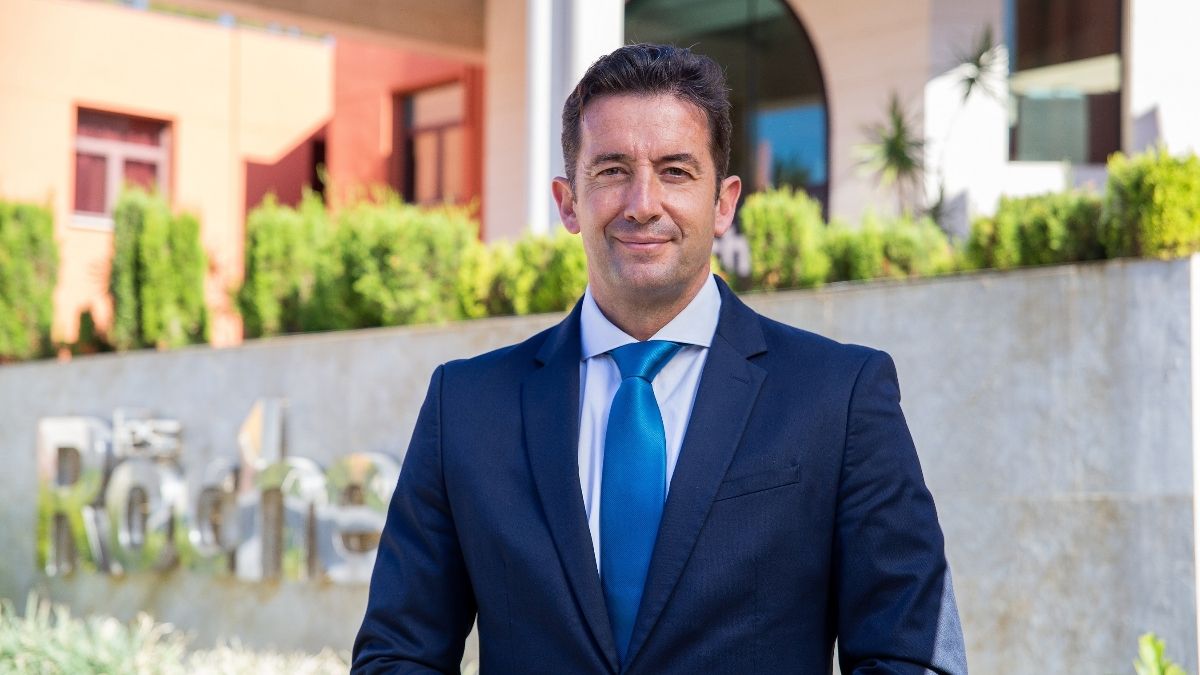
Artificial intelligence may be transforming the hospitality industry, but human leadership, adaptability and professional excellence will remain indispensable, says Carlos Díez de la Lastra, CEO of Les Roches, a global hospitality management institution.
In an interview with THE WEEK, he discusses the widening demands on hospitality graduates, the need to integrate industry experience into academic programmes, and India's potential to emerge as a global talent hub. He argues that the focus must shift from producing more graduates to ensuring they are equipped to meet the needs of an increasingly technology-driven, internationally connected industry.
Q. As AI reshapes hospitality, what are the three skills every graduate must possess?
Les Roches CEO: If I had to choose only three, I would start with human leadership. Hospitality remains, above all, a people business. The ability to build trust, inspire teams and understand others will continue to define great professionals.
Second, adaptability. According to the World Economic Forum's Future of Jobs Report 2025, 39 per cent of workers' core skills are expected to change by 2030. In that context, the ability to learn continuously becomes a strategic advantage.
Third, professional excellence. Whether in luxury hospitality, culinary arts or experience design, strong operational foundations still matter. Technology can enhance performance, but it cannot replace judgment, care or human connection.
Q. Hospitality employers often complain that graduates lack practical skills. Where is the education system falling short?
Les Roches CEO: The gap exists, but hospitality cannot afford to treat it as an abstract workforce debate.
The challenge for education is not simply keeping curricula up to date. It is preparing students for a world that is changing continuously. Institutions need to move beyond teaching knowledge and focus on developing capabilities.
That means exposing students earlier to industry, international environments, real projects and practical decision-making. We should not only teach what employers need today; we should prepare graduates for responsibilities that may not yet exist.
At Les Roches, a student completing a four-year degree can graduate with up to 18 months of industry experience through three internships in international hospitality environments. Working with leading global hospitality brands gives students exposure to different cultures, operating models and guest expectations, helping them develop the adaptability, confidence and leadership capabilities that employers increasingly seek.
Q. Which human skills will remain relevant as AI takes over routine hospitality tasks?
Les Roches CEO: AI can automate a process, but it cannot replace a relationship.
Technology can handle routine tasks, yet hospitality still depends on human judgment. Reading a guest's mood, leading a team through a service failure and building trust across cultures remain difficult to replicate.
The skills that will become even more valuable are empathy, communication, adaptability and the ability to make good decisions in unexpected situations. As technology advances, the qualities that make hospitality exceptional become even more human.
Q. Should hospitality schools prepare students to become entrepreneurs rather than restrict their training to hotel careers?
Les Roches CEO: Absolutely. Hospitality today extends far beyond hotels. Our graduates build careers across luxury hospitality, private aviation, cruises, sports, events, retail and many other sectors linked to the experience economy.
That is why entrepreneurship and innovation can no longer sit at the edge of the curriculum. They must be embedded throughout the educational journey. Innovation today is not only about technology; it is about finding new ways to create value, improve experiences and respond to changing customer expectations.
We need graduates who can manage businesses, but also create opportunities, challenge assumptions and drive change.
Q. India produces a large number of hospitality graduates. Are they industry-ready, or does the system need a reset?
Les Roches CEO: India's ambition isn't the problem; calibration is. Tourism and hospitality already support 84.63 million jobs, or 13.34 per cent of India's total employment for 2023-24, and the government's Vision@2047 aims to attract 100 million inbound tourists.
The question is not whether India is producing enough graduates. The question is whether those graduates are being prepared for the realities of a global industry.
The strongest outcomes come when students spend more time in real operating environments, develop international exposure and acquire both technical skills and leadership capabilities. Quantity is important. Readiness is essential.
Q. Internships are central to hospitality education, but how can institutions prevent students from being used as cheap labour?
Les Roches CEO: The test is straightforward: does an internship give students real responsibility, or does it keep them busy?
The best internships expose students to decision-making, accountability and meaningful learning opportunities. They should leave with stronger skills, broader perspectives and greater confidence than when they arrived.
Internships need clear learning outcomes, structured evaluation and commitment from employers who see interns as future talent, not temporary support.
Q. With wellness, sustainability and personalisation reshaping luxury hospitality, what changes are needed in the curriculum?
Les Roches CEO: The industry is evolving too quickly for schools to update curricula after the fact. We need to evolve alongside it.
Wellness, sustainability and personalisation are no longer specialist topics. They have become part of the core guest expectation.
At the same time, luxury hospitality increasingly intersects with technology, design, data and experience creation. Hospitality education must therefore remain multidisciplinary, industry-connected and future-oriented, while preserving what has always mattered most: understanding people.
That also requires a much closer dialogue with industry. Curricula should not be developed in isolation; they should evolve with the businesses that will ultimately employ our graduates.
At Les Roches, we increasingly build learning experiences alongside industry partners. Our Future Talent undergraduate programme with Meliá Hotels International is one example, helping students develop capabilities aligned with the needs of a global hospitality company while creating a talent pipeline for the future.
Our collaboration with Jetex reflects the growing importance of private aviation and premium travel experiences, while specialised pathways in areas such as luxury cruise management demonstrate how hospitality skills continue to create opportunities far beyond traditional hotel environments.
In India, we see this same philosophy through our associated campus, the Indian School of Hospitality near New Delhi, where students benefit from a combination of international expertise, industry engagement and exposure to one of the world's most dynamic hospitality markets.
Ultimately, the goal is not simply to update curricula. It is to ensure graduates are equipped to lead in an industry where luxury, sustainability, technology, travel, sport, wellness and hospitality are becoming increasingly interconnected.
Q. Can India become the world's leading hospitality talent hub as global demand for skilled professionals rises?
Les Roches CEO: Absolutely. India has the talent, the scale and the ambition.
The World Travel & Tourism Council estimates that Travel & Tourism could support 91 million additional jobs globally by 2035, yet also warns of a workforce shortfall of more than 43 million people if talent development challenges are not addressed.
That creates a significant opportunity for India. The next step is strengthening the connection between education and industry through international partnerships, faculty exchange, mobility opportunities and globally recognised qualifications. The objective should not simply be to produce talent for India, but to develop professionals capable of building careers anywhere in the world.
Q. Young people increasingly prefer careers in technology and finance. How can hospitality education attract the next generation?
Les Roches CEO: Hospitality must be presented for what it really is today, not for what people assume it to be.
A hospitality education can lead to careers in luxury hospitality, sports, events, private aviation, cruises, consulting, branded residences, luxury retail and many other sectors.
Young people increasingly look for purpose, international opportunities and human connection. Hospitality offers all three. The industry does not have a relevance problem; it has a storytelling challenge.
Q. What are the three most important reforms governments and universities should introduce to prepare hospitality graduates for the next decade?
Les Roches CEO: First, we need to bring education and industry closer together. Students should spend more time learning from real businesses, real projects and real operational environments.
Second, international exposure and multicultural learning should no longer be considered optional. Hospitality is a global industry, and future leaders must learn to work with people from different cultures, perspectives and backgrounds.
Third, we must focus as much on human capabilities as on technical ones. Technology will continue to evolve, but leadership, adaptability, communication and the ability to understand people will remain critical.
The future of hospitality will belong to professionals who can combine technology, business understanding and human leadership. Education systems must prepare them accordingly.
