



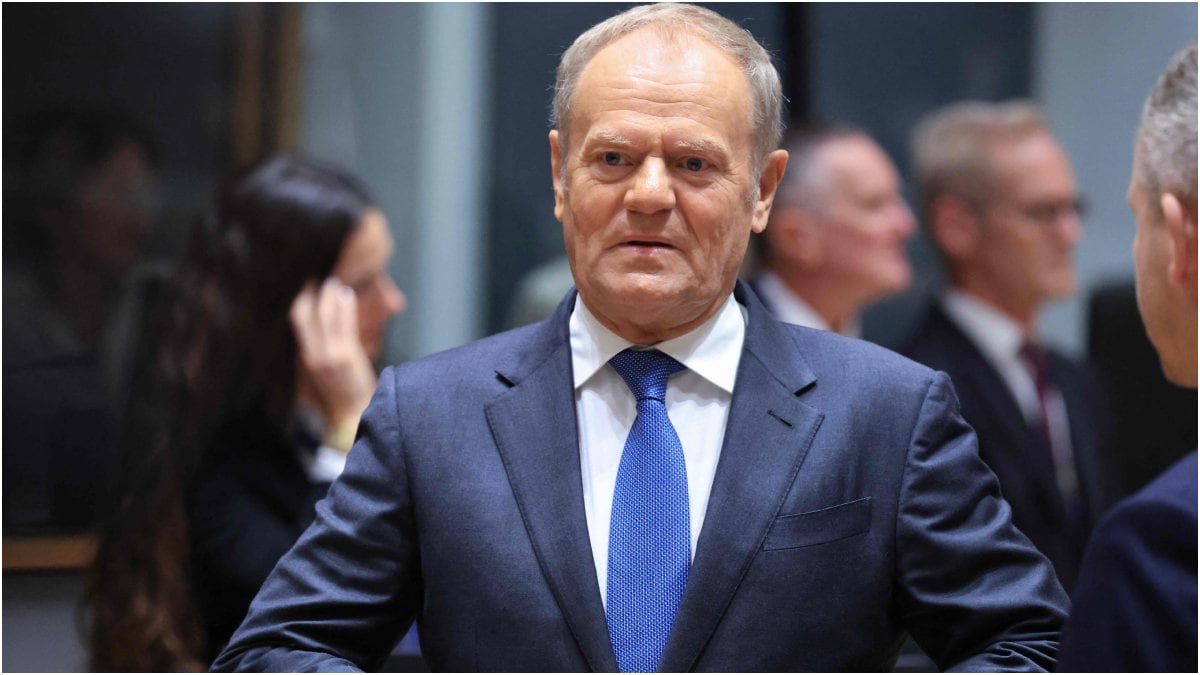
Polish Prime Minister Donald Tusk is scheduled to visit India this week. The last visit to India by a Polish prime minister was in 2010, also by Tusk. In the intervening years, he served as President of the European Council in Brussels from 2014 to 2019, one of the European Union’s most influential leadership positions.
Between 2015 and 2023, Poland was governed by a coalition led by the right-wing Law and Justice (PiS) party. Tusk returned as prime minister in December 2023, leading the Civic Coalition (KO), a centrist, liberal-conservative political alliance whose principal component is his Civic Platform party.
Poland was among the first countries to embark on the transition from communist rule to democracy and from a centrally planned economy to a market-based system. On January 1, 1990, it launched its ambitious “shock therapy” programme of economic transformation. Since then, the country has undergone a remarkable transformation and is widely regarded as one of the major economic success stories of Central and Eastern Europe.
When Poland began its transition, its per capita income was around 40 per cent of the EU average. Today, it exceeds 80 per cent. With an economy valued at over $1 trillion, Poland has also joined the ranks of the world’s 20 largest economies. In recent years, Poland’s economy has grown at a robust pace, expanding by 3.6 per cent last year compared with the EU average of 1.5 per cent.
Poland has the largest economy in Central and Eastern Europe and the sixth-largest in the European Union, surpassing Sweden and Belgium. With a population of around 38 million, it is the EU’s fifth-most populous member state and sends 53 members to the European Parliament. Its economic weight and political standing give it considerable influence within EU institutions. Donald Tusk’s tenure as President of the European Council from 2014 to 2019 is a testament to Poland’s growing prominence within the Union.
Since the start of the war in Ukraine, Poland has also emerged as a frontline state in the EU and NATO’s support for Kyiv. Poland also hosts around one million Ukrainian refugees, the second-largest number in Europe after Germany. With Ukrainian airspace closed, rail connections from Poland have become a crucial route for reaching the Ukrainian capital. During his visit to Ukraine in 2024, Prime Minister Narendra Modi travelled from Poland to Kyiv aboard a special VIP train, popularly known as Rail Force One.
During the same visit, India and Poland elevated their relations to a strategic partnership and agreed on an Action Plan for 2024–2028 to strengthen cooperation in political dialogue, defence, trade and investment, energy, mining, connectivity, science and technology, health, and cybersecurity.
Since then, several positive developments have taken place, including the conclusion of the India–EU Free Trade Agreement and the signing of the India–EU Security and Defence Partnership. India has also elevated its relations with several other EU member states. Meanwhile, New Delhi has intensified its engagement with both Moscow and Kyiv, seeking to promote localised non-attack arrangements and protect global maritime trade and seafarers.
Against this backdrop, Prime Minister Tusk’s visit offers an opportunity to identify concrete proposals for strengthening India–Poland ties and explore the scope for a greater Indian role in efforts to resolve the Ukraine conflict.
A major focus of the visit is likely to be economic cooperation. With both the Indian and Polish economies expanding, bilateral trade, currently estimated at around $5–6 billion, offers considerable scope for growth. Tusk is expected to meet business leaders in both New Delhi and Bengaluru. Several Indian companies are already active in Poland’s manufacturing and IT sectors, with Indian investments in the country estimated at around $3 billion.
Polish rail vehicle manufacturers and defence companies are already active in India, while the Polish Space Agency is keen to explore cooperation with ISRO. LOT Polish Airlines has operated direct flights from Delhi since 2019, further strengthening connectivity. People-to-people ties are also growing, with around 3,500 Indian students pursuing studies across various disciplines at Polish universities. The academic relationship has deep historical roots: Sanskrit has been taught at Jagiellonian University in Kraków since 1860.
As India seeks to deepen its economic and security ties with the EU in trade, investment, technology, the green transition and defence, Poland, with its dynamic economy and growing influence within the Union, could emerge as an important partner. Donald Tusk’s visit to New Delhi and Bengaluru may offer an opportunity to strengthen specific economic and defence ties while advancing India’s broader engagement with the European Union.
(The author is Professor and Jean Monnet Chair at Centre for European Studies, Jawaharlal Nehru University.)
