



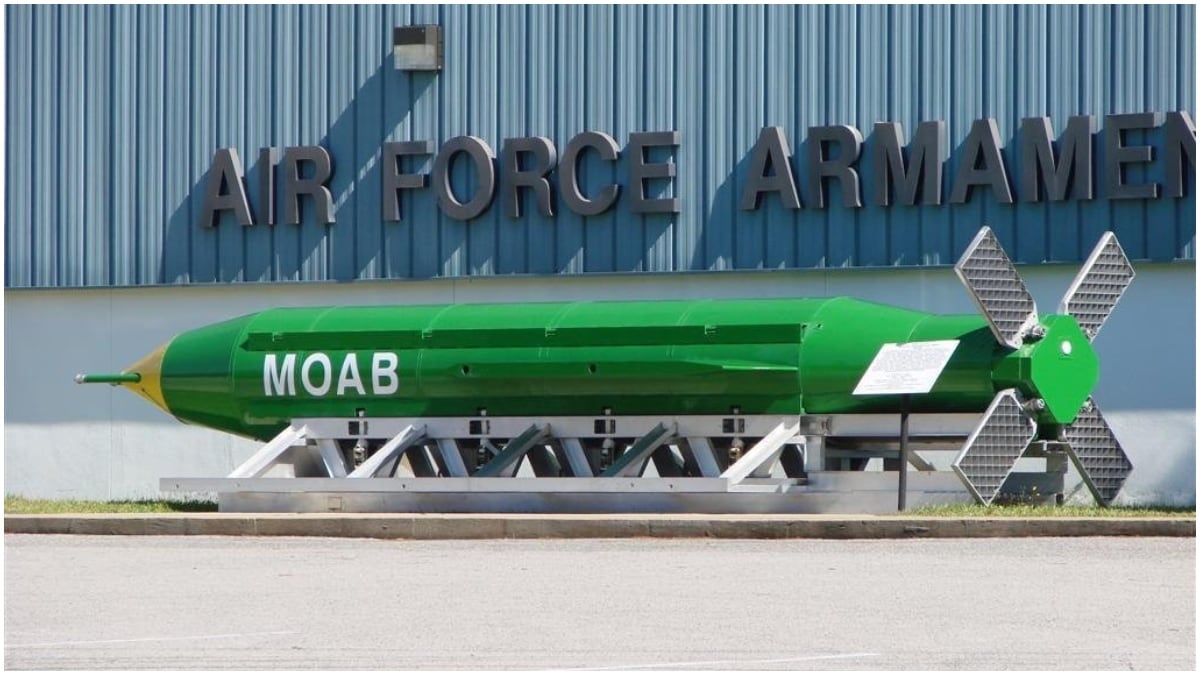
The United States is considering dropping the “mother of all bombs” on Iran to destroy the Islamic Republic's energy infrastructure and nuclear sites, a fresh report said. These GPS-guided bombs are capable of destroying an area equivalent to nine city blocks, reports claim.
The development comes amidst talk of POTUS Donald Trump greenlighting a fresh offensive against Tehran ahead of the midterm elections. If the claims are found true, Iran may consider pre-emptive strikes on US military assets in the region, older reports had said.
The GBU-43/B Massive Ordnance Air Blast bomb, or MOAB, is nicknamed the “mother of all bombs” because it is the USA's most powerful non-nuclear bomb. The giant weapon was developed during the days of the Iraq War, reportedly with the objective of causing an enormous explosion before hitting the ground.
How big is a MOAB?
"Weighing in at approximately 11 tons, it contains 18,700 lbs of H-6 explosive, which was originally developed for underwater explosions due to its low sensitivity to shock and stable storage characteristics. This is the largest quantity of explosive in any non-nuclear weapon in the US inventory (although there are larger weapons by weight, they contain less explosive due to having heavier casings designed to penetrate targets)," an academic article showed.
Apart from causing a massive blast on all sides, it would make the ground rattle—giving US forces on the ground a great psychological advantage over their rivals. However, its monstrous explosions can take out fortified bunkers, caves, and tunnels, apart from tearing through anything and everything on the surface.
Needing a large aircraft to transport and ultimately drop it, the GBU-43/B is a thermobaric weapon, meaning that it uses the oxygen in the air at the detonation site. (Thermobaric bombs scatter the explosive fuel like an aerosol, making it possible for them to ignite the surrounding atmosphere.) Since there is no oxidiser, the bomb can carry more of the explosive fuel component, reports showed.
Weighing 21,600 lbs, it was dropped previously by an MC-130 aircraft operated by Air Force Special Operations Command to target an ISIS cave and tunnel complex and personnel in Afghanistan. Interestingly, Donald Trump was the US President when the said strike was carried out in 2017. It was the first confirmed battlefield use of the MOAB.
Can MOAB take out Iranian strongholds?
Using bunker-busters is one thing and dropping a MOAB another. There are doubters in the Pentagon regarding the effectiveness of GBU-43/Bs against deep underground facilities in Tehran. They were originally designed to destroy caves and tunnels under soft layers or a vast area around ground zero. Layers of concrete and granite safeguard Iran's assets underneath, and there is no guarantee the MOAB can penetrate through them.
"It doesn't penetrate the heaviest defences of rock and concrete (there's a different bomb called the MOP for that), and instead is used on soft to medium targets. When dropped in the right place in a contained environment like a cave system, though, the MOAB could do great damage, particularly given its property of sucking the air away," a DW report from 2017 said.
Needless to say, the bomb's massive blast radius raises concerns of civilian casualties—the same people whom Trump once pledged to save from the tyranny of the Mullahs.
"While US officials warn that deploying it is unlikely to force Iran’s capitulation or achieve a strategic military victory, it could provide Trump with an additional option, short of restarting full combat operations, to alter the conflict’s current status quo," CNN said in a report while confirming the possibility of the bomb's usage.
