



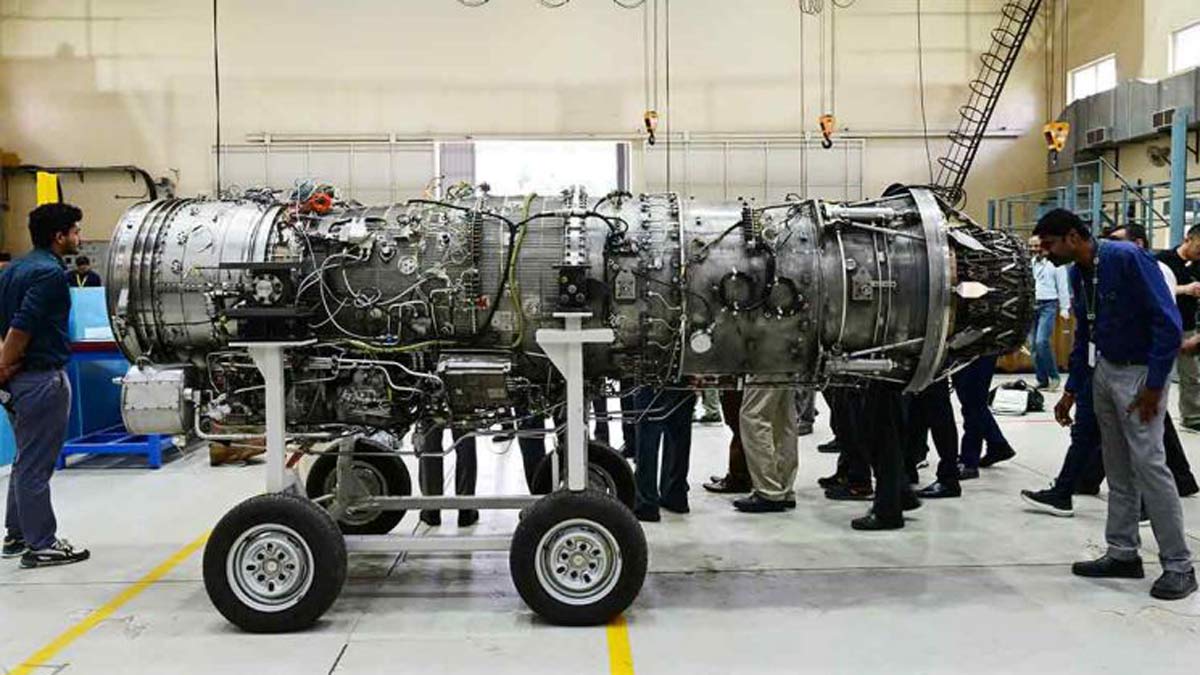
India's indigenous aero-engine development efforts have marked a major achievement as the Kaveri Derivative Engine (KDE) successfully cleared crucial high-altitude and flight trials in Russia, recording a peak dry thrust of 48.5 kilonewtons (kN).
The Kaveri dry engine, developed by the Defence Research and Development Organisation's Gas Turbine Research Establishment (GTRE), is the non-afterburning version of the original Kaveri engine. It is intended to power India's Ghatak unmanned combat aerial vehicle (UCAV).
What makes this achievement important is the fact that the engine produced a peak dry thrust higher than the 46 kN it was expected to deliver during the trials.
“Kaveri successfully cleared tough trials in Russia some time back and recorded a peak dry thrust of 48.5 kilonewtons (kN) — beyond 46 kN it was expected to deliver,” the Times of India quoted a source as saying.
The focus will now shift to certification, integration and further flight testing.
“Now, the next phase is its certification and integration with UCAV Ghatak and thereafter its flight trials,” the source said.
According to the source, the engine could be ready for induction in two to three years after successfully completing flight trials in cooperation with the Indian Air Force.
The latest trials were conducted at the Central Institute of Aviation Motors (CIAM) and the Gromov Flight Research Institute in Russia.
According to an NDTV report, the Kaveri engine underwent tests at CIAM under conditions designed to replicate high-altitude flight, where air pressure and temperature fall sharply.
The engine subsequently underwent flight testing aboard a modified Ilyushin Il-76 flying testbed. It was tested across different ambient pressures, thrust requirements and Mach numbers.
The results will now be examined by the Centre for Military Airworthiness and Certification (CEMILAC), according to defence sources quoted by NDTV. CEMILAC will assess the test results and other parameters before granting airworthiness clearance.
However, important stages still remain before the indigenous engine can enter operational use. It must complete certification, integration with the intended platform and subsequent flight trials.
Clearing these hurdles could pave the way for the Kaveri Derivative Engine to power the Ghatak UCAV and other similar unmanned platforms.
