



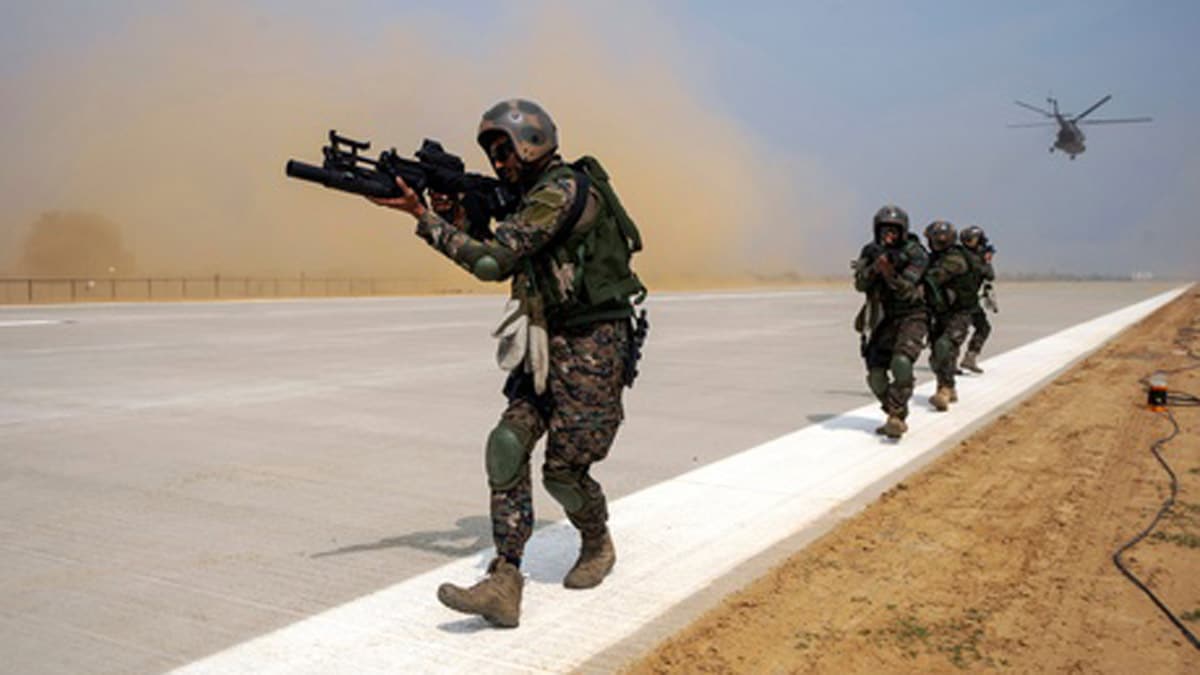
The Indian Army has introduced a series of changes to its dress regulations and personal appearance guidelines aimed at aligning military traditions with India's national ethos while modernising and standardising dress regulations across the force. The changes were introduced in the newly issued Army Uniforms-2026 Pamphlet.
The Army has described the move as part of its effort to reflect India's evolving sovereign identity in military traditions.
One of the major changes is the introduction of the indigenous Bandi jacket as part of formal civil dress. The closed-neck coat can be worn with a full-sleeved shirt, matching formal trousers and closed footwear.
The Army has also removed several colonial-era features that had continued in military customs. These include the removal of the pouch belt from Mess Dress Nos. 5 and 6, making the carriage of swords by Reviewing Officers optional, and discontinuing archaic terminology such as "Royal".
Another major change relates to the use of swords during ceremonial events. Under the new regulations, swords will only be carried by parade commanders, contingent commanders and designated personnel during major ceremonies such as Republic Day, Independence Day, Army Day parades and Guards of Honour. The manual specifically states that Reviewing Officers will not carry swords on parade.
The reforms also extend to winter uniforms. The Army has introduced a new Battle Jacket, which will gradually replace the existing jersey-based winter uniform known as Dress 3A. The transition is expected to be completed by June 2029, after which the Battle Jacket will become the standard winter outerwear for all ranks.
The manual also lays down detailed rules governing personal appearance, military bearing and conduct while in uniform. It prohibits radical hairstyles, unauthorised beards, visible electronic gadgets, tattoos, body piercings and cosmetic make-up while in uniform.
In addition, the Army has restricted the wearing of uniforms at political gatherings, religious events, protest venues, weddings, private parties and paid media appearances without authorisation.
According to the Army, the changes are intended to strike a balance between preserving long-standing military traditions and removing residual colonial-era practices. The manual describes the reforms as a progressive review aimed at preserving the dignity, functionality and enduring traditions of the force while aligning its dress regulations with contemporary Indian ethos.
The Army says the Army Uniforms-2026 Pamphlet represents a deliberate move towards greater standardisation, simplification and modernisation of dress regulations in keeping with the evolving character of the service.
